<?xml version="1.0" encoding="utf-8"?><feed xmlns="http://www.w3.org/2005/Atom" ><generator uri="https://jekyllrb.com/" version="3.10.0">Jekyll</generator><link href="https://alalunw.github.io/feed.xml" rel="self" type="application/atom+xml" /><link href="https://alalunw.github.io/" rel="alternate" type="text/html" /><updated>2026-06-10T12:21:08+00:00</updated><id>https://alalunw.github.io/feed.xml</id><title type="html">Thoughts_In_Tremolo</title><subtitle>Thoughtful essays, visual storytelling, and project-based explorations at the intersection of technology, culture, and the human experience.</subtitle><author><name>AlaluNW</name></author><entry><title type="html">Not Like Us: The Feud That Rewrote Hip-Hop</title><link href="https://alalunw.github.io/2026/06/10/Drake-Kendrick-Not-Like-Us/" rel="alternate" type="text/html" title="Not Like Us: The Feud That Rewrote Hip-Hop" /><published>2026-06-10T00:00:00+00:00</published><updated>2026-06-10T00:00:00+00:00</updated><id>https://alalunw.github.io/2026/06/10/Drake-Kendrick-Not-Like-Us</id><content type="html" xml:base="https://alalunw.github.io/2026/06/10/Drake-Kendrick-Not-Like-Us/"><![CDATA[<p><img src="/assets/img/posts/drake_kendrick/oilportrait.png" class="lightboxable" alt="Drake vs Kendrick Lamar portrait" /></p>

<p>I remember where I was when “Not Like Us” dropped. Not because the song itself demanded that kind of recall — it’s a bouncy Mustard beat with a chant-along hook, the kind of thing that sounds like it was written in fifteen minutes — but because of what happened around it. Within hours, the track had escaped hip-hop. It was on sports broadcasts. It was in group chats from people who hadn’t listened to a rap song since “In Da Club.” The Democratic Party used its cover art to mock the Trump–Epstein connection. The US men’s ice hockey team played it after beating Canada at the 2026 Winter Olympics. A diss track about a Canadian rapper had become the closest thing my generation has to a universal signifier for dominance.</p>

<p>That should have been the end of the story. But it wasn’t. What followed — the lawsuits, the Super Bowl, the three-album counteroffensive, the federal judge calling Drake’s case “logically incoherent” — turned a rap feud into something stranger and more consequential: a referendum on what hip-hop is actually for. And the answer to that referendum says something uncomfortable about what the culture has become.</p>

<hr />

<h2 id="i-the-original-sin-ghostwriting-and-authenticity">I. The Original Sin: Ghostwriting and Authenticity</h2>

<p>Hip-hop’s obsession with authenticity is not arbitrary. It is structural. Unlike rock or jazz, where the instrument mediates between performer and audience, rap is naked language. The MC stands on stage with nothing but words — their words, presumably — and the audience’s trust rests on the premise that those words are theirs. When that premise breaks, something fundamental breaks with it.</p>

<p>This is why the ghostwriting question has haunted hip-hop since its golden age, and why it matters to the Drake–Lamar feud in ways that go far beyond Quentin Miller.</p>

<h3 id="the-precedents">The Precedents</h3>

<p>Big Daddy Kane co-wrote some of Biz Markie’s best-known lyrics. The two had been friends since 1984, both members of the Queens-based Juice Crew collective, and Kane — already recognized as one of the most technically gifted MCs in the genre’s history — lent his pen to his friend’s recordings. Brian Coleman’s <em>Check the Technique</em> documents this on page 47. The arrangement was collaborative and open, the kind of creative exchange common in a scene where crews functioned as artistic units. Nobody called it fraud. It was understood as community.</p>

<p>Dr. Dre’s relationship with ghostwriting is more systematic and more revealing. As RBX explained in the book <em>How to Rap</em>, writing <em>The Chronic</em> was a “team effort” — RBX himself ghostwrote “Let Me Ride.” “Dre doesn’t profess to be no super-duper rap dude,” RBX said. “Dre is a super-duper producer.” The D.O.C. wrote lyrics for Dre during the N.W.A era. Jay-Z ghostwrote “Still D.R.E.” (1999), and Snoop Dogg confirmed the full story: “He wrote Dre’s shit and my shit and it was flawless… It was Jay-Z and he wrote the whole fucking song.” Dre himself told <em>Blaze</em> magazine that when Jay-Z first submitted the lyrics, “he wrote about diamonds and Bentleys. So I told Jay to write some other shit. Jigga sat for 20 minutes and came back with some hard-ass, around-the-way L.A. shit.”</p>

<p>Wikipedia acknowledges that “most of Dr. Dre’s raps are written for him by others, though he retains ultimate control over his lyrics and the themes of his songs.” Aftermath producer Mahogany described the process: “It’s like a class room in [the booth]. He’ll have three writers in there. They’ll bring in something, he’ll recite it, then he’ll say, ‘Change this line, change this word,’ like he’s grading papers.”</p>

<p>The Dre model — producer-as-auteur, rappers-as-interpreters — is a tradition that hip-hop has mostly made peace with, because Dre’s genius was never in the words. It was in the sound. The vocals were one instrument among many, and Dre’s control over the final product was understood as compositional rather than performative. He wasn’t pretending to be something he wasn’t.</p>

<h3 id="the-quentin-miller-leaks">The Quentin Miller Leaks</h3>

<p>Drake did not have that alibi.</p>

<p>In June 2015, Meek Mill accused Drake of not writing his own raps, claiming that a previously unknown Atlanta rapper named Quentin Miller had been ghostwriting for him. The accusation landed differently than the Dre stories, because Drake’s entire brand was built on personal confession — on the premise that his lyrics were diaries, that the vulnerability was real, that the voice was his and his alone. Miller had writing credits on several tracks from Drake’s <em>If You’re Reading This It’s Too Late</em> (2015), but the “co-writing” framing masked what reference tracks revealed: Miller had recorded full demos — complete verses, performed in a flow and cadence meant to be replicated — that Drake then re-recorded with minor variations. On July 30, 2015, Funkmaster Flex leaked Miller’s reference track for “R.I.C.O.,” Drake’s verse on Meek Mill’s <em>Dreams Worth More than Money</em>. The reference was damning: not a sketch or a suggestion but a near-complete performance, with Drake’s final version following Miller’s cadence and wordplay closely enough that calling it “collaboration” required a generous definition of the word.</p>

<p>Drake responded with “Charged Up” and “Back to Back,” and the hip-hop community regarded him as the victor over Meek Mill. But the wound never fully closed. In 2018, Pusha T’s “Infrared” likened Drake’s use of Miller to “Donald Trump winning with Russian assistance” — a metaphor that captured the essential accusation: illegitimate power, gained through hidden manipulation. On “Duppy Freestyle,” Drake tried to flip the narrative by noting that he had helped write Kanye West’s lyrics on “30 Hours” (2016). It was a curious defense: <em>I’m not a ghostwriter’s client, I’m a ghostwriter myself.</em> Pusha T responded with “The Story of Adidon,” which <em>Pitchfork</em>’s Sheldon Pearce described as character assassination — revealing Drake’s hidden son, attacking his racial identity, and using a photo of Drake in blackface as cover art. Drake never released a response track and, in 2019, conceded that he lost.</p>

<p>The pattern was set: Drake could win the popularity contest, but every time the question of authenticity was raised, he lost something that charts couldn’t measure.</p>

<h3 id="lamars-clean-slate">Lamar’s Clean Slate</h3>

<p>Kendrick Lamar has never faced a ghostwriting accusation. He is the sole credited writer on “Not Like Us” — one of the only chart-topping singles in modern history penned by a single person. This is not incidental to his brand. It <em>is</em> his brand. Lamar’s entire artistic identity rests on the premise that his words are his and his alone, and that the density, literary quality, and emotional specificity of those words derive from a mind that cannot be replicated by committee. When Lamar criticized rappers who use ghostwriters on “King Kunta” (2015), media outlets interpreted it as a shot at Drake — and they were probably right.</p>

<hr />

<h2 id="ii-two-models-of-the-rapper">II. Two Models of the Rapper</h2>

<p>Drake and Lamar didn’t just feud. They embodied two fundamentally different theories of what a rapper should be.</p>

<h3 id="drake-the-pop-empire">Drake: The Pop Empire</h3>

<p>Drake’s model is pop crossover through maximal collaboration and relentless output. He works with dozens of writers and producers. He releases music at a pace that makes his peers look inactive. He absorbs trends — Atlanta trap, Afrobeats, UK drill, dancehall — with an eclecticism that Doreen St. Félix, writing for <em>The New Yorker</em>, described as a “complicated virtue out of riding genres and trends” that made him “oddly impervious to attempts to puncture his credibility.” <em>Rolling Stone</em> and <em>MSNBC</em> characterized his approach as a “rapper turned pop star” trajectory, comparable to 50 Cent, LL Cool J, and Nelly: catchy, broad-appeal, released regularly, but “inauthentic to hip-hop culture” in the eyes of its gatekeepers.</p>

<p>The model works. By 2026, Drake has broken Michael Jackson’s record for most number-one hits on the Hot 100 (his 14th, “Janice STFU,” from the album <em>Iceman</em>). He became the first artist to hold the top three positions on the Billboard 200 simultaneously, with <em>Iceman</em>, <em>Habibti</em>, and <em>Maid of Honour</em> all released on May 15, 2026. <em>Iceman</em> debuted at number one with 463,000 units. By any metric the music industry recognizes, Drake is the most commercially successful rapper alive.</p>

<h3 id="lamar-the-literary-tradition">Lamar: The Literary Tradition</h3>

<p>Lamar’s model is the literary tradition — concept albums, singular authorial voice, depth over frequency. <em>The Ringer</em> compared his trajectory to Nas, Tupac Shakur, and the literary wing of Kanye West: focused on profundity and ambition, challenging, released less frequently. His albums are events, not products. <em>good kid, m.A.A.d city</em> (2012) was a short film. <em>To Pimp a Butterfly</em> (2015) was a jazz-inflected dissertation on Black identity. <em>DAMN.</em> (2017) was a structural experiment that could be played in reverse. <em>GNX</em> (2024) was a surprise drop that debuted at number one with 319,000 units and saw all twelve tracks hit the Hot 100, occupying the entire top five.</p>

<p>When Barack Obama was asked in January 2016 whether Drake or Lamar would win a rap battle, he answered: “Got to go with Kendrick. I think Drake is an outstanding entertainer. But Kendrick — his lyrics…” The trailing ellipsis did more work than any complete sentence could have. The President of the United States, however informally, had identified the fault line: entertainer versus lyricist, performance versus substance.</p>

<h3 id="the-foundational-text">The Foundational Text</h3>

<p>The fault line was visible from the beginning. “Buried Alive Interlude,” the two-minute track Lamar recorded for Drake’s <em>Take Care</em> (2011), was the original wound. Lamar, then relatively unknown, shared how meeting Drake felt like an introduction to the tempting but potentially harmful world of celebrity, luxury, and fame. He expressed complex feelings — both desiring and fearing what success might bring, especially after witnessing Drake’s life of luxury — and shared his impatience at discovering he was the same age as Drake, who had already achieved everything Lamar was still reaching for. <em>GQ</em> described the track as foreshadowing the themes that would eventually lead to their feud. Lamar’s fraught relationship with fame became a recurring theme in his music, and it always stood in contrast with Drake’s celebration of it.</p>

<p>The parallel was not lost on commentators. <em>The Ringer</em> compared the Drake–Lamar divide to the Nas–Jay-Z feud of 2001 — another battle between authenticity and commerciality — and to Michael Jackson versus Prince: “numbers versus ‘real’ art.” These comparisons were not exact, but they captured something essential: the two men represented not just different styles but different value systems, and the culture was being asked to choose.</p>

<hr />

<h2 id="iii-the-2024-escalation">III. The 2024 Escalation</h2>

<p>J. Cole lit the fuse. On Drake’s “First Person Shooter” (October 2023), Cole named himself, Drake, and Lamar the “big three” of modern hip-hop. According to DJ Akademiks, Lamar was annoyed by the request to appear on the track and began writing diss lyrics. On March 22, 2024, he appeared on Future and Metro Boomin’s “Like That” and rejected the “big three” framing entirely: “motherfuck the big three, nigga, it’s just big me.”</p>

<p>Cole responded with “7 Minute Drill” on April 5, then immediately apologized and removed it from streaming. <em>Slate</em> called the apology “artistic cowardice.” Cole later explained that he had wanted to “say just enough to where it looked like I said something” without damaging his relationship with Lamar. <em>Billboard</em> observed that Cole’s withdrawal “cleared the way” for a direct confrontation between Drake and Lamar.</p>

<p>What followed, between April 13 and May 5, was the most concentrated exchange of diss tracks in hip-hop history:</p>

<ul>
  <li><strong>April 13</strong>: Drake’s “Push Ups” leaked, mocking Lamar’s height, his collaborations with Taylor Swift, and his stature relative to other rappers. Drake officially released it on April 19, alongside “Taylor Made Freestyle” — which used AI-generated vocals imitating Snoop Dogg and Tupac Shakur to goad Lamar into responding. Shakur’s estate threatened legal action, and Drake took the track down on April 26.</li>
  <li><strong>April 30</strong>: Lamar released “Euphoria” — a six-minute dismantling of Drake’s character, mocking his AI stunt, his parenting, his cosmetic procedures, and his rapping ability. The title referenced the HBO series on which Drake is an executive producer.</li>
  <li><strong>May 3</strong>: Lamar posted “6:16 in LA” on Instagram, parodying Drake’s timestamp song series, revealing that members of Drake’s camp were leaking information to him, and threatening to expose Drake’s darkest secrets if he didn’t withdraw.</li>
  <li><strong>May 3</strong>: Drake released “Family Matters,” alleging that Lamar was a domestic abuser and that his creative partner Dave Free was the biological father of one of Lamar’s children. Twenty minutes later…</li>
  <li><strong>May 3</strong>: Lamar released “Meet the Grahams,” accusing Drake of sexual predation, running a sex trafficking ring, and — building on Pusha T’s 2018 revelation — having fathered a secret child.</li>
  <li><strong>May 4</strong>: Lamar released “Not Like Us.” It accused Drake of pedophilia and of exploiting Atlanta’s hip-hop culture. It was catchy, danceable, and devastating.</li>
  <li><strong>May 5</strong>: Drake released “The Heart Part 6,” denying Lamar’s allegations and reiterating his own. Lamar did not respond. The exchange was over.</li>
</ul>

<p>The verdict was near-unanimous. <em>The Ringer</em>, <em>Complex</em>, <em>Rolling Stone</em>, <em>Pitchfork</em>, and virtually every major outlet declared Lamar the winner. The consensus was not merely about lyricism — though most critics found Lamar’s bars sharper and more varied — but about a kind of structural superiority. Lamar had outmaneuvered Drake at every turn: releasing “Meet the Grahams” within twenty minutes of “Family Matters,” weaponizing the delay between Drake’s recording and release, controlling the tempo of the exchange. He had, in the language of battle rap, set the time and place for every round.</p>

<hr />

<h2 id="iv-not-like-us-as-cultural-event">IV. “Not Like Us” as Cultural Event</h2>

<p>“Not Like Us” was not just a diss track. It was a phenomenon — the kind of cultural object that escapes its genre and becomes a shared reference point for people who have never listened to a Kendrick Lamar album.</p>

<h3 id="the-numbers">The Numbers</h3>

<p>The streaming records tell the story: 12.8 million single-day streams. 81.2 million weekly streams by a rapper. Fastest rap song to 100 million streams (9 days), 200 million (19 days). One billion streams by mid-January 2025. 823.5 million US on-demand streams in 2024 alone. 10 million copies sold in the US by July 2025. It debuted at number one on the Hot 100 and returned to the top spot three separate times — the first non-holiday song in history to do so. It broke “Old Town Road”’s record for most weeks atop the Hot Rap Songs chart.</p>

<p>These are not diss-track numbers. These are <em>cultural-event</em> numbers.</p>

<h3 id="the-pop-out">The Pop Out</h3>

<p>On Juneteenth 2024, Lamar hosted <em>The Pop Out: Ken &amp; Friends</em> at the Kia Forum in Inglewood. He played “Not Like Us” five consecutive times. Dr. Dre introduced the performance. Crips and Bloods danced on stage together. The concert was both a victory lap and a statement about what Lamar believed hip-hop could be: not just competition, but community. Not just destruction, but — in the most literal sense — <em>peace</em>. Rival gang members sharing a stage while a Compton rapper’s song about a Toronto rapper played on repeat was a spectacle that no amount of streaming data could capture.</p>

<h3 id="the-grammys">The Grammys</h3>

<p>On February 2, 2025, “Not Like Us” won all five of its Grammy nominations: Record of the Year, Song of the Year, Best Rap Performance, Best Rap Song, and Best Music Video. It tied as the most-awarded song in Grammy history. Lamar wore a Canadian tuxedo — a denim jacket and jeans — on the red carpet, a visual joke at Drake’s expense that required no explanation.</p>

<h3 id="the-super-bowl">The Super Bowl</h3>

<p>Nine days later, Lamar performed at the Super Bowl LIX halftime show before 133.5 million viewers — the most-watched halftime performance in history. He opened with “I wanna play their favorite song but you know they love to sue.” During “Not Like Us,” he delivered “they tried to rig the game but you can’t fake influence” while the crowd shouted “A-minor” in unison, filling in the censored word “pedophile.” Serena Williams crip walked on stage. Samuel L. Jackson appeared as Uncle Sam. The performance was not just a musical event but a political one: an entire cultural establishment — the NFL, Apple Music, the American television audience — had become complicit in the performance of Drake’s defeat. The censoring of the word “pedophile” would later become a legal argument: Drake’s amended lawsuit cited it as evidence that even Lamar’s own team recognized the lyric was defamatory.</p>

<hr />

<h2 id="v-the-lawsuit">V. The Lawsuit</h2>

<p>Drake’s response to losing the rap battle was to sue his own record label. I want to be careful with how I frame this, because the legal questions are real and the institutional dynamics are worth taking seriously — even if the optics were catastrophic.</p>

<h3 id="the-pre-action-petitions">The Pre-Action Petitions</h3>

<p>On November 25, 2024, Drake filed a pre-action petition in New York state court against UMG and Spotify, alleging RICO Act violations and claiming they had used “illegal tactics” to inflate “Not Like Us” streams, “deceiv[ing] consumers into believing the song was more popular than it was in reality.” The next day, he filed a second petition under Texas law, adding a defamation claim — UMG had “failed to halt release of a song falsely accusing him of being a sex offender” — and alleging a “pay-to-play” scheme between UMG and iHeartRadio. On December 20, Spotify denied “any arrangement” with UMG.</p>

<h3 id="the-federal-lawsuit">The Federal Lawsuit</h3>

<p>On January 15, 2025, Drake filed a formal defamation lawsuit in US District Court for the Southern District of New York against UMG. Kendrick Lamar was not named as a defendant. Drake alleged that the song had caused break-in attempts at his home, forced him to hire increased security, and required him to move his son outside Toronto. He accused UMG of “choosing corporate greed over the safety and well-being of its artists.”</p>

<p>The key lyric at issue: “Certified Lover Boy? Certified pedophiles” — a reference to Drake’s 2021 album <em>Certified Lover Boy</em>, and a line that labeled not just Drake but his head of security (Chubbs), his first OVO signee (PartyNextDoor), and an associate imprisoned for human trafficking (Baka Not Nice) as “certified pedophiles.”</p>

<p>I understand why Drake filed. The accusation is the most damaging thing you can say about a person in the English language, and it was broadcast to over a hundred million people. If it were false — and no court has found it true — the harm is incalculable. But the venue was the problem. You cannot sue your way out of a cultural defeat, and the moment Drake walked into a courtroom, he conceded the one arena where Lamar had already beaten him: the court of public opinion.</p>

<h3 id="umgs-motion-to-dismiss">UMG’s Motion to Dismiss</h3>

<p>On March 17, 2025, UMG filed a motion to dismiss, arguing that “Drake lost a rap battle that he provoked and in which he willingly participated” and should “accept the loss like the unbothered rap artist he often claims to be.”</p>

<h3 id="the-dismissal">The Dismissal</h3>

<p>On October 9, 2025, Judge Jeannette Vargas dismissed the suit. Her ruling was comprehensive and, at times, scathing:</p>

<ul>
  <li>The case was “logically incoherent.”</li>
  <li>Lamar’s lyrics were “nonactionable opinion.”</li>
  <li>A “reasonable listener” understands that diss tracks are not “fact-checked verifiable content.”</li>
  <li>New York law does not permit defamation lawsuits for statements of opinion.</li>
</ul>

<p>Drake appealed on October 29, 2025. The appeal is pending.</p>

<p>The dismissal was not just a legal victory for UMG. It was a cultural ruling on the nature of rap itself. Judge Vargas effectively confirmed what the hip-hop community had always understood: diss tracks are a rhetorical form with their own conventions, their own logic, and their own relationship to truth. To treat “Certified Lover Boy? Certified pedophiles” as a literal factual assertion was, in the court’s view, to misunderstand the genre entirely. The ruling meant that rappers could continue to say outrageous things about each other without fear of litigation — but it also meant that the most damaging accusation in the English language, leveled in the most public possible way, was legally just “opinion.” That is a result worth sitting with, regardless of which side you were on.</p>

<hr />

<h2 id="vi-the-fan-war">VI. The Fan War</h2>

<p>The Drake–Lamar feud was not just a dispute between two artists. It was an ideological proxy war fought by millions of fans who had never met either man.</p>

<p><em>Vice</em> noted that fans “vehemently oppose playing the other’s music,” a tribalism that distinguished the feud from the Jay-Z–Nas era, where many listeners were fans of both. Metro Boomin contrasted the two eras explicitly, suggesting that the current stan culture made the conflict more zero-sum: you were on one side or the other, and your choice signaled not just musical preference but moral and aesthetic values. Pablo Hawkins, a cultural critic, observed that fans were being judged by the <em>passion</em> of their fandom rather than the quality of the music itself — a dynamic that replaced aesthetic judgment with loyalty testing.</p>

<p>I find this the most troubling dimension of the whole affair. In the Jay-Z–Nas era, you could admire <em>The Blueprint</em> and <em>Stillmatic</em> simultaneously. The music was the music, and the beef was the beef, and the two were separable. The Drake–Lamar feud made them inseparable. To stream “Not Like Us” was to declare allegiance. To listen to Drake at all was to be suspect. The music became a loyalty oath, and the loyalty oath became a referendum on what hip-hop ought to be — as though the genre were a monolith with a single correct answer, rather than a tradition capacious enough to contain both <em>Illmatic</em> and <em>The Blueprint</em>, both <em>To Pimp a Butterfly</em> and <em>Take Care</em>.</p>

<p>The weaponization went beyond music. The Democratic Party referenced “Not Like Us”’s cover art to criticize the Trump–Epstein relationship. Kamala Harris’s 2024 presidential campaign and the Democratic National Convention invoked the song. The US men’s ice hockey team played “Not Like Us” after defeating Canada at the 2026 Winter Olympics. The Cleveland Cavaliers used it when eliminating the Toronto Raptors from the 2026 NBA playoffs. The song had become a kind of universal signifier for dominance — “we beat you, and you are not like us” — detached from its original context and repurposed for any conflict with a sufficient power imbalance.</p>

<p>Lamar himself seemed ambivalent about the song’s cultural metastasis. On “Watch the Party Die” (September 2024), he expressed a desire to shift hip-hop away from glorifying luxury and toward deeper meaning — a mission statement that sat uneasily alongside the spectacle of playing “Not Like Us” five times at a concert while Crips and Bloods danced on stage. The tension between Lamar’s stated values and his willingness to weaponize the feud’s most crowd-pleasing moments was real, and it pointed to a problem that no diss track could resolve: once a cultural object enters the stream, it belongs to everyone, and its author’s intentions become irrelevant.</p>

<hr />

<h2 id="vii-the-current-state-2026">VII. The Current State: 2026</h2>

<p>Both artists are bigger than they were before the feud. This is the paradox that nobody predicted: the most destructive conflict in modern hip-hop history left both combatants richer, more famous, and more culturally central than they were when it started.</p>

<h3 id="drake-iceman">Drake: <em>Iceman</em></h3>

<p>On May 15, 2026, Drake released three albums simultaneously: <em>Iceman</em>, <em>Habibti</em>, and <em>Maid of Honour</em>. <em>Iceman</em> debuted at number one on the Billboard 200 with 463,000 units. “Janice STFU” became his 14th number-one on the Hot 100, breaking Michael Jackson’s record. He was the first artist to hold the top three positions on the Billboard 200 concurrently.</p>

<p>The music itself told a complicated story. “What Did I Miss?” called out DeMar DeRozan and LeBron James for their public alignment with Lamar. “Make Them Pay” dismissed the “big three” framing, criticized J. Cole, and repeated the UMG manipulation allegation. “Ran to Atlanta” defended Drake’s Atlanta collaborations and featured Future — a sign that at least one of Lamar’s 2024 allies had reconciled with him. Pinocchio imagery ran throughout the album, Drake seeming to acknowledge — or weaponize — the authenticity question rather than resolve it.</p>

<p>The critical reception was lukewarm. Metacritic scored <em>Iceman</em> at 50. <em>Consequence</em> called it an “unearned victory lap.” <em>Pitchfork</em> described it as “cold, lumpy self-pity.” Drake had won the numbers game again, but the same critique that had shadowed him since 2015 — that the music was thin, that the persona was hollow, that the commercial instincts outpaced the artistic ones — persisted.</p>

<h3 id="lamar-gnx-and-the-grand-national-tour">Lamar: <em>GNX</em> and the Grand National Tour</h3>

<p>Lamar’s <em>GNX</em>, surprise-released on November 22, 2024, debuted at number one with 319,000 units. All twelve tracks hit the Hot 100, occupying the entire top five. Metacritic scored it at 87. It received eight Grammy nominations and won Best Rap Album; “Luther” won Record of the Year. Lamar became the most-awarded rapper in Grammy history with 27 wins.</p>

<p>The Grand National Tour with SZA (April–December 2025) grossed $358.7 million across 47 shows with 1.7 million attendees — the highest-grossing co-headlining tour ever. The Seattle show broke the record for highest-grossing hip-hop concert at $14.8 million. The tour included a deposition skit referencing Drake’s lawsuit — a theatrical mockery of the legal proceedings that underscored Lamar’s comfort with the feud’s narrative.</p>

<h3 id="j-cole-the-peacemaker-who-wasnt">J. Cole: The Peacemaker Who Wasn’t</h3>

<p>J. Cole’s <em>The Fall-Off</em>, released in February 2026, was nearly finished before the feud escalated. Lamar had been set to appear on two tracks, but Cole removed the collaborations after the falling-out. The album’s centerpiece, “What If,” depicted an alternate timeline where Tupac and Biggie made amends — a gesture that read as both wistful and impotent, the confession of an artist who had withdrawn from the fight and now watched from the sidelines as the culture burned without him.</p>

<hr />

<h2 id="viii-what-it-all-meant">VIII. What It All Meant</h2>

<p>The Drake–Kendrick Lamar feud was not primarily about who wrote whose raps, or who streamed more, or who won more Grammys, or whether a federal court would let a rapper sue his label over a diss track. It was about two irreconcilable visions of what hip-hop is and what it ought to be.</p>

<p>Drake’s vision is expansive and democratic: rap as pop, as entertainment, as a vessel for melody and collaboration and cross-genre experimentation, measured by its reach. More listeners, more streams, more hits, more features, more albums. The model works — it works so well that Drake is now the most commercially successful rapper in the history of the medium — and its defenders can point to the numbers as proof that the music connects with people on a scale that purist alternatives never will.</p>

<p>Lamar’s vision is rigorous and aristocratic: rap as literature, as confession, as a singular authorial statement, measured by its depth. More craft, more meaning, more cultural weight, more permanence. The model works too — it works so well that Lamar is now the most critically decorated rapper alive, with a Pulitzer Prize, 27 Grammys, and a Super Bowl halftime show that 133.5 million people watched — and its defenders can point to the cultural resonance as proof that the music matters in ways that streaming numbers cannot capture.</p>

<p>I land on the literary side, and I want to be honest about that. Not because pop is illegitimate — it isn’t, and Drake’s catalogue contains genuinely great songs — but because the literary tradition is what makes hip-hop an art form worth defending rather than merely a content delivery system. When rap is at its best — when it is Lamar constructing a multi-album narrative about Black identity, or Nas painting Compton block by block, or Outkast turning the South into a mythological landscape — it does something that no other art form can do. It makes language itself into an instrument. That capacity depends on a relationship between the artist and their words that is intimate and unmediated. The moment you treat the MC as a performer of other people’s ideas — the moment you make the voice interchangeable — you lose the thing that makes the art form irreplaceable.</p>

<p>These two visions have always coexisted in hip-hop, and they have always been in tension. The Jay-Z–Nas feud was their first great articulation. The Michael Jackson–Prince comparison is their pop-cultural analogue. What made the Drake–Lamar feud different was its scale: the streaming era’s incentive structures, social media’s tribalizing dynamics, and the legal system’s reluctant engagement with rap as a rhetorical form combined to create something that was not just a feud but a cultural reckoning.</p>

<p>Judge Vargas’s ruling was the final paradox. By declaring that “Not Like Us” was “nonactionable opinion” — that a reasonable listener understands diss tracks are not “fact-checked verifiable content” — she affirmed the genre’s autonomy at the exact moment that the genre’s most popular practitioner was trying to use the courts to settle an artistic dispute. The law said: this is art, not fact. The marketplace said: this is content, not art. The fans said: this is war, not content. And the two artists, richer and more famous than either of them could have imagined in 2011, when a young Compton rapper recorded a two-minute interlude about fame on a Toronto pop star’s album, continued making music on opposite sides of a divide that no verdict, no streaming record, and no Super Bowl performance could bridge.</p>

<p>They are not like each other. They never were. That was the whole point.</p>

<hr />

<p>End.</p>]]></content><author><name>Connor Hall</name></author><category term="essay" /><category term="Kendrick Lamar" /><category term="Drake" /><category term="Hip-Hop" /><category term="Not Like Us" /><category term="Feud" /><category term="Ghostwriting" /><category term="Super Bowl" /><category term="UMG" /><summary type="html"><![CDATA[]]></summary></entry><entry><title type="html">The Journal</title><link href="https://alalunw.github.io/2026/06/07/the-journal/" rel="alternate" type="text/html" title="The Journal" /><published>2026-06-07T11:00:00+00:00</published><updated>2026-06-07T11:00:00+00:00</updated><id>https://alalunw.github.io/2026/06/07/the-journal</id><content type="html" xml:base="https://alalunw.github.io/2026/06/07/the-journal/"><![CDATA[<h2 id="the-journal">The Journal</h2>

<p>There is now a <a href="/journal/">journal</a>.</p>

<p>It sits apart from the essays — a separate space for shorter, less formal writing. Diary entries, working notes, things that don’t need the architecture of a long-form piece but still deserve a place to live.</p>

<p>The essays will continue as they always have: researched, structured, built to last. The journal is for what happens between them — the unfinished thoughts, the daily observations, the things that are still taking shape.</p>

<p>It has a timeline sidebar and a reading pane. Entries are dated, location-tagged where relevant, and kept brief. The idea came from watching how some creators use a journal format alongside their main output — a running log that sits next to the polished work rather than beneath it.</p>

<p>You can find it <a href="/journal/">here</a>, or through the navigation bar.</p>

<p>End.</p>]]></content><author><name>Connor Hall</name></author><category term="essay" /><category term="journal" /><category term="update" /><summary type="html"><![CDATA[The Journal]]></summary></entry><entry><title type="html">Book: Surprise, Kill, Vanish — The Secret History of CIA Paramilitary Armies, Operators, and Assassins</title><link href="https://alalunw.github.io/2026/05/27/Surprise-Kill-Vanish-Review/" rel="alternate" type="text/html" title="Book: Surprise, Kill, Vanish — The Secret History of CIA Paramilitary Armies, Operators, and Assassins" /><published>2026-05-27T00:00:00+00:00</published><updated>2026-05-27T00:00:00+00:00</updated><id>https://alalunw.github.io/2026/05/27/Surprise-Kill-Vanish-Review</id><content type="html" xml:base="https://alalunw.github.io/2026/05/27/Surprise-Kill-Vanish-Review/"><![CDATA[<p><img src="/assets/img/posts/surprise-kill-vanish/skv_1.jpg" class="lightboxable" alt="Surprise Kill Vanish book cover" />
<em>Annie Jacobsen’s Surprise, Kill, Vanish: The Secret History of CIA Paramilitary Armies, Operators, and Assassins (2019).</em></p>

<p>I first heard about this book when Annie Jacobsen appeared on Joe Rogan’s show, episode #1299. This was back when it originally dropped—2019—and something about the way she described the CIA’s “third option” stuck with me. She laid it out plainly: when diplomacy fails and war is too costly, there’s a third choice. You send people who don’t exist to do things that never happened. You surprise. You kill. You vanish. I made a mental note. Then life moved on, as it does.</p>

<p>It’s been on my radar ever since—one of those books you know you’ll get to, that you <em>want</em> to get to, but that keeps getting buried under newer arrivals. I finally decided to listen to it on Spotify a few weeks ago, and I genuinely wish I’d done it sooner. Not just because it’s gripping, which it is, but because it rewires how you think about American foreign policy. Once you understand the third option, you start seeing its fingerprints everywhere.</p>

<h2 id="the-third-option">The Third Option</h2>

<p>The book’s title comes from an alleged CIA motto—<em>Tertia optio</em>—the third option. Jacobsen frames the entire history of CIA paramilitary operations around this concept: when the first option (diplomacy) is inadequate and the second (war) is a terrible idea, you go with the third. Covert action. Regime change. Assassination. Arming rebel armies. The stuff that happens in the shadows, deniable by design, carried out by operators who are told from day one that if they’re caught, their government will pretend they don’t exist.</p>

<p>Jacobsen traces this from the OSS during World War II—America’s first intelligence agency, born in wartime desperation—through the creation of the CIA under the National Security Act of 1947, and into the sprawling, morally tangled machinery of Cold War covert operations and beyond. The scope is enormous. The book covers operations across six decades, dozens of countries, and hundreds of operators. At 560 pages, it’s not a casual read. But Jacobsen keeps it moving by anchoring the history to the people who lived it.</p>

<p>And what people they are.</p>

<h2 id="the-operators">The Operators</h2>

<p><img src="/assets/img/posts/surprise-kill-vanish/skv_billywaugh.jpg" class="lightboxable" alt="Billy Waugh CIA years" />
<em>Billy Waugh during his CIA years. Waugh’s career—from MACV-SOG to Khartoum to Tora Bora—is one of the book’s central narratives.</em></p>
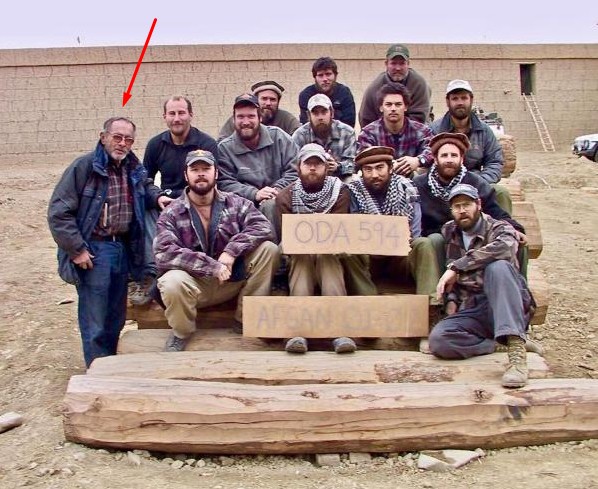
<p>The most compelling figure in the book—at least for me—is <a href="/2026/05/07/Billy-Waugh-Godfather-Green-Berets/">Billy Waugh</a>. I wrote about Waugh recently, and reading Jacobsen’s account of his career only deepened my appreciation for just how extraordinary this man was. Waugh spent fifty years in the shadows: Green Beret in Vietnam, pioneer of combat HALO jumps, CIA contractor tracking Carlos the Jackal and Osama bin Laden through the streets of Khartoum, and then—at age 71—deploying to Afghanistan with ODA 594 after 9/11, carrying 110 pounds of gear through freezing mountain terrain.</p>

<p>Jacobsen gives Waugh significant page count, and for good reason. He embodies everything the third option demands: total commitment, zero public recognition, and a willingness to operate in moral territory that most people never have to think about. His account of surveilling bin Laden in Sudan—”I was within 30 meters of him. I could have killed him with a rock”—lands differently when you’re reading it in the context of everything that came after. The CIA chose not to authorise the mission. Nearly 3,000 people died on September 11, 2001. Jacobsen doesn’t belabour the point. She doesn’t need to.</p>

<p>But Waugh isn’t the only operator who stays with you. There’s Houston, a CIA paramilitary officer described as “an expert in parachute insertion, scuba exfiltration, evasive driving, knife fighting, and a host of other close-quarters combat skills.” There’s Enrique “Ricky” Prado, who rose through the ranks of the Special Activities Division and became chief of operations for the CIA’s Counterterrorist Center. There are others Jacobsen can’t even name—still active, still classified, still out there.</p>

<p>What unites them is a particular psychology. These are men (and they are almost all men) who thrive in ambiguity, who are comfortable carrying out missions that their own government will deny, and who return to the shadows again and again because the conventional world has nothing left to offer them. Jacobsen captures this without romanticising it. Waugh himself said it best: “There was no rest at SOG. Only war, recon, rescue, sleep.”</p>

<h2 id="the-machinery">The Machinery</h2>

<p>Where the book really excels—where it transcends being just a collection of operator profiles—is in showing how the third option became institutionalised. This isn’t a story of rogue agents running wild. It’s a story of bureaucracy. Of presidential findings and congressional oversight committees and legal memos that twist the definition of “assassination” into pretzels so that everyone can pretend the United States doesn’t do that sort of thing.</p>

<p>Executive Order 12333, signed by Reagan in 1981, supposedly bans assassination. But as Jacobsen documents, the ban has been circumvented so many times and in so many ways that it functions more as a PR statement than a constraint. The CIA doesn’t “assassinate” people—it conducts “targeted killings” or “neutralisations.” The semantic gymnastics would be funny if the stakes weren’t so grotesque.</p>

<p>The drone programme gets its due. Jacobsen traces how the CIA moved from putting men on the ground to putting missiles in the air, and how the third option evolved from a scalpel into something closer to a hammer. The operators she profiles risked everything to get within thirty metres of a target. A drone operator in Nevada can do the same job from 7,000 miles away, with zero risk to himself—and significantly less certainty about who’s actually in the blast radius. It’s more efficient. It’s also, Jacobsen suggests, something qualitatively different. The third option used to require courage. Now it requires clearance.</p>

<h2 id="the-criticism">The Criticism</h2>

<p>I should be fair about the book’s shortcomings, because they’re real. Kai Bird, writing for The Washington Post, called it “sycophantic” toward CIA paramilitaries, and he has a point. Jacobsen clearly admires these operators—Waugh in particular—and that admiration sometimes blurs into advocacy. The moral questions are present, but they’re not pressed as hard as they could be. When you’re reading about a car bomb that incinerated a Hezbollah leader in Damascus, you’re invited to marvel at the tradecraft. You’re less invited to consider whether incinerating people in car bombs is something a democratic government should be doing.</p>

<p>Bird also cited factual errors—misidentifying JFK’s rank and branch of service, for instance. J.R. Seeger, a retired CIA case officer who led Team Alpha (the first Americans behind enemy lines after 9/11), praised Jacobsen’s writing but argued that the book’s scope was too broad, that neither covert action nor paramilitary operations receive “the detail required to understand the nuance.” He’s right that the book sometimes reads like a highlights reel—thrilling, but not always deep.</p>

<p>I think the criticism is fair but overstated. This isn’t an academic monograph. It’s a doorstop of a popular history aimed at readers who may know nothing about CIA paramilitary operations, and on those terms it succeeds brilliantly. If you want nuance, read the CIA’s own internal histories. If you want to understand why the third option exists, how it evolved, and who has carried it out, Jacobsen gives you more than enough to work with.</p>

<h2 id="tying-threads">Tying Threads</h2>

<p>Reading this book alongside the other material I’ve been working through recently, patterns emerge. Jacobsen’s account of the CIA’s covert action programmes overlaps directly with the world <a href="/2026/05/19/Cover-Up-Hersh-Review.html">Seymour Hersh</a> has spent his career exposing—the same shadow wars, the same deniable operations, the same tension between national security and democratic accountability. Hersh tries to drag these operations into the light. Jacobsen describes them from the inside. Both perspectives are necessary.</p>

<p>And then there’s the machinery itself—the institutional inertia, the lack of accountability, the way systems designed to protect the public instead protect themselves. I saw the same pattern in the <a href="/2026/05/21/Madoff-Monster-Wall-Street-Review.html">Madoff documentary</a>. Different domain, same underlying failure: oversight that doesn’t oversee, regulators that don’t regulate, and a comfortable assumption that someone else is paying attention. The CIA’s covert action apparatus and the SEC’s regulatory apparatus are both systems that work exactly as designed—until they catastrophically don’t.</p>

<h2 id="onward">Onward</h2>

<p>I’ve already moved on to Jacobsen’s <em>The Pentagon’s Brain: An Uncensored History of DARPA, America’s Top-Secret Military Research Agency</em>—her 2015 Pulitzer Prize finalist. If <em>Surprise, Kill, Vanish</em> is about the people who carry out covert action, <em>The Pentagon’s Brain</em> is about the technology that makes it possible. DARPA is the agency that brought us the internet, GPS, stealth technology, and autonomous drones—the tools that transformed the third option from a man with a suppressed MP-5 into a missile fired from a robot aircraft. I’m only a few chapters in, but it already feels like the natural companion piece. Same author, same methodology, same willingness to follow the thread wherever it leads.</p>

<h2 id="worth-your-time">Worth Your Time?</h2>

<p>If you have any interest in covert operations, intelligence history, or how democratic governments justify doing deeply undemocratic things in the name of national security—read this book. It’s not perfect. It’s too sympathetic to its subjects, occasionally sloppy with details, and sometimes frustratingly broad where you wish it were deep. But it’s also one of the most accessible, thoroughly researched accounts of CIA paramilitary operations ever written for a general audience. Jacobsen spent years conducting interviews with former operators, many of whom had never spoken publicly before. That access shows.</p>

<p>The book doesn’t offer catharsis. It doesn’t offer answers. What it offers is a map of territory most people don’t even know exists—and a reminder that the people who operate in that territory are, depending on your perspective, either the reason you sleep safely at night or the reason you shouldn’t.</p>

<p>End.</p>

<hr />

<p><em>Surprise, Kill, Vanish: The Secret History of CIA Paramilitary Armies, Operators, and Assassins</em> by Annie Jacobsen. Little, Brown and Company, 2019. 560 pages. ISBN: 978-0-316-44143-8.</p>

<hr />

<blockquote>
  <p>“When the first option, diplomacy, is inadequate and the second, war, is a terrible idea—the third option is covert action.”</p>

  <p>— Annie Jacobsen, <em>Surprise, Kill, Vanish</em></p>
</blockquote>

<blockquote>
  <p>“There was no rest at SOG. Only war, recon, rescue, sleep.”</p>

  <p>— Billy Waugh, <em>Surprise, Kill, Vanish</em></p>
</blockquote>

<blockquote>
  <p>“I was within 30 meters of him. I could have killed him with a rock.”</p>

  <p>— Billy Waugh, on Osama bin Laden in Khartoum</p>
</blockquote>]]></content><author><name>Connor Hall</name></author><category term="essay" /><category term="Annie Jacobsen" /><category term="CIA" /><category term="Special Activities Division" /><category term="Covert Action" /><category term="Paramilitary" /><category term="Billy Waugh" /><category term="Assassination" /><category term="Cold War" /><category term="War on Terror" /><summary type="html"><![CDATA[Annie Jacobsen’s Surprise, Kill, Vanish: The Secret History of CIA Paramilitary Armies, Operators, and Assassins (2019).]]></summary></entry><entry><title type="html">Madoff: The Monster of Wall Street — A System That Wanted to Be Fooled</title><link href="https://alalunw.github.io/2026/05/21/Madoff-Monster-Wall-Street-Review/" rel="alternate" type="text/html" title="Madoff: The Monster of Wall Street — A System That Wanted to Be Fooled" /><published>2026-05-21T12:00:00+00:00</published><updated>2026-05-21T12:00:00+00:00</updated><id>https://alalunw.github.io/2026/05/21/Madoff-Monster-Wall-Street-Review</id><content type="html" xml:base="https://alalunw.github.io/2026/05/21/Madoff-Monster-Wall-Street-Review/"><![CDATA[<p><img src="/assets/img/posts/madoff/madoff_1.png" alt="Bernie Madoff" /></p>

<p>I just finished Netflix’s <em>Madoff: The Monster of Wall Street</em>, and I’ve been sitting with it for a while. It’s a harrowing watch—not because of what Madoff did, which is well-documented, but because of how many people let him do it. There’s something deeply unsettling about a story where the villain practically turned himself in and the institutions designed to catch him looked the other way for decades.</p>

<h2 id="the-scheme-that-shouldnt-have-worked">The Scheme That Shouldn’t Have Worked</h2>

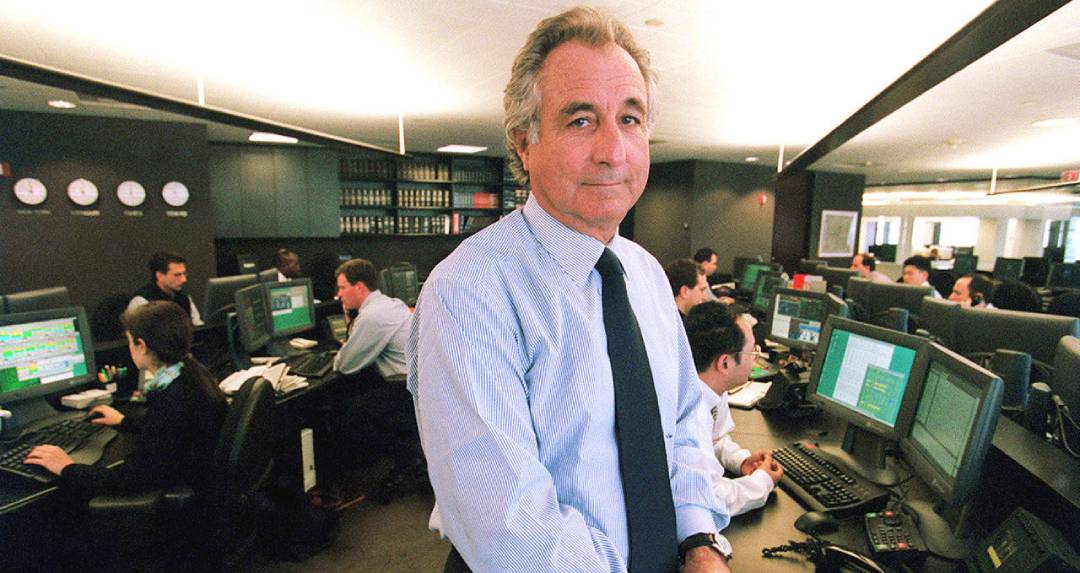
<p>If you don’t know the details, Bernie Madoff ran the largest Ponzi scheme in history—$65 billion in fabricated wealth, spanning at least two decades. The mechanics are almost insultingly simple: he took investors’ money, deposited it in a Chase Manhattan bank account, and paid out “returns” from the same pool. No actual trading. No investment strategy. Just a giant, self-sustaining lie on the 17th floor of the Lipstick Building.</p>

<p>What makes the documentary so effective is that it shows just how many people should have known. The numbers never added up. Madoff’s claimed returns were impossibly consistent—never a down month, year after year. Analyst Harry Markopolos told the SEC it was mathematically impossible within five minutes of looking at the numbers. He spent a decade trying to get someone—anyone—to listen. Nobody did.</p>

<p><img src="/assets/img/posts/madoff/madoff_2.jpg" alt="Madoff's Lipstick Building office" /></p>

<h2 id="the-willful-blindness">The Willful Blindness</h2>

<p>The documentary’s real subject isn’t Madoff. It’s the ecosystem that sustained him. The SEC investigated him six times and found nothing. JPMorgan Chase processed billions in suspicious transfers and raised internal concerns but never filed a formal report until after the collapse. Feeder fund managers collected outsized fees for steering money his way without asking basic questions. Charitable foundations handed over their endowments because the returns looked good and everyone else was doing it.</p>

<p>There’s a scene that sticks with me—Madoff himself telling the SEC’s inspector general that catching him would have been easy. “They never even looked at my stock records,” he said. “If you’re looking at a Ponzi scheme, it’s the first thing you do.” He compared the investigators to Lt. Columbo—bumbling, well-meaning, never asking the right question. It’s the kind of detail that makes you laugh and then feel sick.</p>

<h2 id="the-human-cost">The Human Cost</h2>

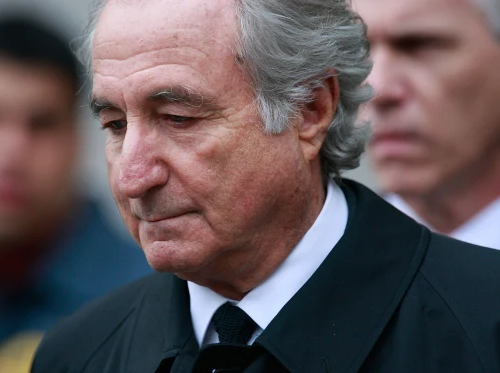
<p>The documentary doesn’t stint on what this cost. Families destroyed. Charities shuttered. People who lost everything. Elie Wiesel’s foundation—gone. Steven Spielberg’s—gone. The Lappin Foundation, which supported Jewish education in Massachusetts—closed. The human wreckage extends far beyond the financial. Mark Madoff, Bernie’s son, took his own life exactly two years after his father’s arrest. Ruth Madoff later revealed she and Bernie attempted suicide together on Christmas Eve 2008.</p>

<p><img src="/assets/img/posts/madoff/madoff_3.png" alt="Victims and aftermath" /></p>

<h2 id="a-pattern-of-institutional-failure">A Pattern of Institutional Failure</h2>

<p>Watching this, I kept thinking back to <a href="/2026/05/19/Cover-Up-Hersh-Review.html">Cover-Up</a>, the Seymour Hersh documentary I reviewed recently. Different subject, same underlying problem: institutions that are supposed to protect the public instead protect themselves. Hersh spent his career trying to expose truths that governments preferred buried. Markopolos spent his trying to expose a fraud that regulators preferred ignoring. In both cases, the system closed ranks—not through conspiracy, but through something arguably worse: indifference, complacency, and the comfortable assumption that someone else was paying attention.</p>

<p>The parallel isn’t perfect. Hersh’s challenge was political—governments actively suppressing information. Madoff’s enablers were mostly passive, motivated by greed or laziness rather than malice. But the result is strikingly similar: truth that was available to anyone who cared to look, buried under layers of institutional inertia.</p>

<h2 id="worth-your-time">Worth Your Time?</h2>

<p>If you have any interest in finance, institutional accountability, or how systems fail the people they’re supposed to protect, <em>Madoff: The Monster of Wall Street</em> is essential viewing. It’s not comfortable. It shouldn’t be. The documentary makes clear that Madoff was a criminal, but the system that allowed him to operate for decades was something more insidious—a network of people who chose not to see what was right in front of them.</p>

<p>The four-part series doesn’t offer catharsis. Madoff died in prison in 2021, his ashes unclaimed by his family. The money has been partly recovered, but the trust—in institutions, in markets, in the idea that someone is watching the watchers—hasn’t been. Maybe that’s the most harrowing part of all.</p>

<p>End.</p>

<hr />

<p><em>Madoff: The Monster of Wall Street</em> is available on Netflix. Four episodes, approximately 3.5 hours total.</p>]]></content><author><name>AlaluNW</name></author><category term="essay" /><summary type="html"><![CDATA[]]></summary><media:thumbnail xmlns:media="http://search.yahoo.com/mrss/" url="https://alalunw.github.io/assets/img/posts/madoff/madoff_cover.png" /><media:content medium="image" url="https://alalunw.github.io/assets/img/posts/madoff/madoff_cover.png" xmlns:media="http://search.yahoo.com/mrss/" /></entry><entry><title type="html">Cover-Up: Seymour Hersh and the Price of Truth</title><link href="https://alalunw.github.io/2026/05/19/Cover-Up-Hersh-Review/" rel="alternate" type="text/html" title="Cover-Up: Seymour Hersh and the Price of Truth" /><published>2026-05-19T12:00:00+00:00</published><updated>2026-05-19T12:00:00+00:00</updated><id>https://alalunw.github.io/2026/05/19/Cover-Up-Hersh-Review</id><content type="html" xml:base="https://alalunw.github.io/2026/05/19/Cover-Up-Hersh-Review/"><![CDATA[<p><img src="/assets/img/posts/seymour-hersh/hersh-4.jpg" alt="Seymour Hersh" /></p>

<p>I just finished watching Netflix’s <em>Cover-Up</em>, the documentary about legendary investigative journalist Seymour Hersh, and I’ve been sitting with it for a while. There’s something deeply unsettling about watching a film that asks you to reconsider everything you thought you knew about one of journalism’s most controversial figures.</p>

<h2 id="the-man-behind-the-byline">The Man Behind the Byline</h2>

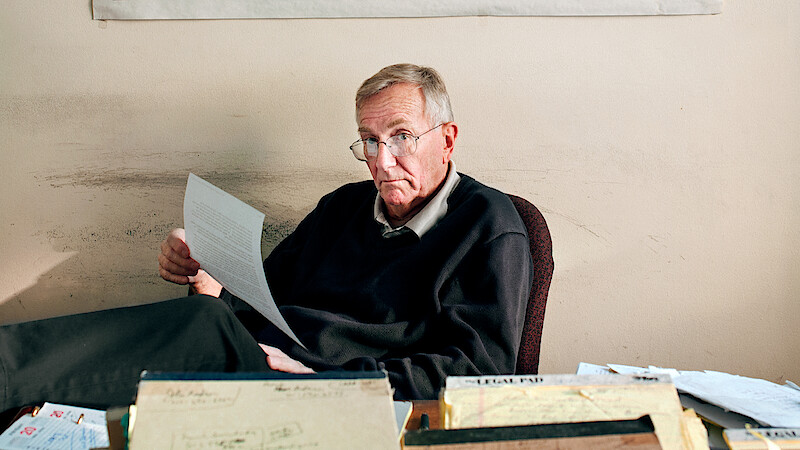
<p>If you’re not familiar with Hersh, he’s the kind of journalist who makes careers out of breaking stories that governments would prefer stayed buried. He exposed the My Lai massacre during Vietnam, brought us news of the CIA’s domestic spying, and most recently, blew the whistle on the Nord Stream pipeline sabotage. The documentary traces this arc—from a young reporter with sources in uncomfortable places to an octogenarian still chasing stories that make intelligence agencies sweat.</p>

<p>What strikes me most is Hersh’s relationship with anonymity. His sources prefer shadows, and he’s always been comfortable keeping them there. The film doesn’t shy away from the criticism this attracts. Journalists, politicians, and intelligence officials all weigh in, and the picture that emerges is complicated.</p>

<p><img src="/assets/img/posts/seymour-hersh/hersh-2.jpeg" alt="Seymour Hersh portrait" /></p>

<h2 id="the-cover-up-question">The Cover-Up Question</h2>

<p>The documentary’s title refers to Hersh’s central claim: that the mainstream media has become complicit in covering up uncomfortable truths about American power. He argues that access journalism—the kind that depends on being invited to the right parties—has replaced actual reporting. Whether you agree with him or not, it’s hard to watch this without feeling uneasy about where modern journalism has ended up.</p>

<p>There’s an obvious tension here. Hersh’s critics say he’s become unreliable, too eager to trust sources who may be feeding him disinformation. His supporters counter that he’s being punished for asking the wrong questions. The documentary presents both sides, though it’s clear the filmmakers lean toward giving Hersh the benefit of the doubt.</p>

<h2 id="connections-and-crossovers">Connections and Crossovers</h2>

<p>Watching this, I couldn’t help but think about the world of covert operations that Hersh has spent his career investigating. There’s real overlap here with figures like <a href="/2026/05/07/Billy-Waugh-Godfather-Green-Berets.html">Billy Waugh</a>—the Green Beret and CIA operative whose career spanned decades of exactly the kind of black ops that Hersh reports on. Waugh operated in the shadows that Hersh tries to illuminate. Understanding one helps you understand the other.</p>

<p>Both men represent different sides of the same coin: those who carry out covert action, and those who try to expose it. The documentary doesn’t dwell on this connection, but it’s there if you’re thinking about the broader ecosystem of secrecy and disclosure.</p>

<h2 id="does-it-hold-up">Does It Hold Up?</h2>

<p>I’ll admit I’m not sure where I land on some of Hersh’s recent claims. The Nord Stream story, in particular, has been met with skepticism from other journalists. But the documentary makes a persuasive case that dismissing Hersh outright might be its own kind of cover-up—not of facts, but of questions we should be asking.</p>

<p>The film is at its best when it lets Hersh talk. He’s 89 years old as of this writing, and there’s a weariness to him, but also a stubbornness that’s almost admirable. He’s not trying to be liked. He’s trying to be right. And he’s aware that history will be the judge.</p>

<p><img src="/assets/img/posts/seymour-hersh/hersh-3.jpg" alt="Seymour Hersh" /></p>

<h2 id="worth-your-time">Worth Your Time?</h2>

<p>If you care about journalism, power, and the stories governments tell themselves, <em>Cover-Up</em> is worth watching. It won’t give you easy answers, but it will make you think harder about who gets to decide what’s true.</p>

<p>The documentary doesn’t resolve the debate about Hersh’s legacy. Maybe that’s the point. In an era where truth feels increasingly contested, maybe the best we can ask for is someone willing to keep asking difficult questions—even when the answers make us uncomfortable.</p>

<p>End.</p>

<hr />

<p><em>Cover-Up</em> is available on Netflix. Runtime: approximately 90 minutes.</p>]]></content><author><name>AlaluNW</name></author><category term="essay" /><summary type="html"><![CDATA[]]></summary><media:thumbnail xmlns:media="http://search.yahoo.com/mrss/" url="https://alalunw.github.io/assets/img/posts/seymour-hersh/hersh-header.jpg" /><media:content medium="image" url="https://alalunw.github.io/assets/img/posts/seymour-hersh/hersh-header.jpg" xmlns:media="http://search.yahoo.com/mrss/" /></entry><entry><title type="html">The Heretic’s Horn: Miles Davis and the Electric Damnation</title><link href="https://alalunw.github.io/2026/05/18/Miles-Davis-Electric-Era/" rel="alternate" type="text/html" title="The Heretic’s Horn: Miles Davis and the Electric Damnation" /><published>2026-05-18T00:00:00+00:00</published><updated>2026-05-18T00:00:00+00:00</updated><id>https://alalunw.github.io/2026/05/18/Miles-Davis-Electric-Era</id><content type="html" xml:base="https://alalunw.github.io/2026/05/18/Miles-Davis-Electric-Era/"><![CDATA[<h1 id="the-heretics-horn">The Heretic’s Horn</h1>

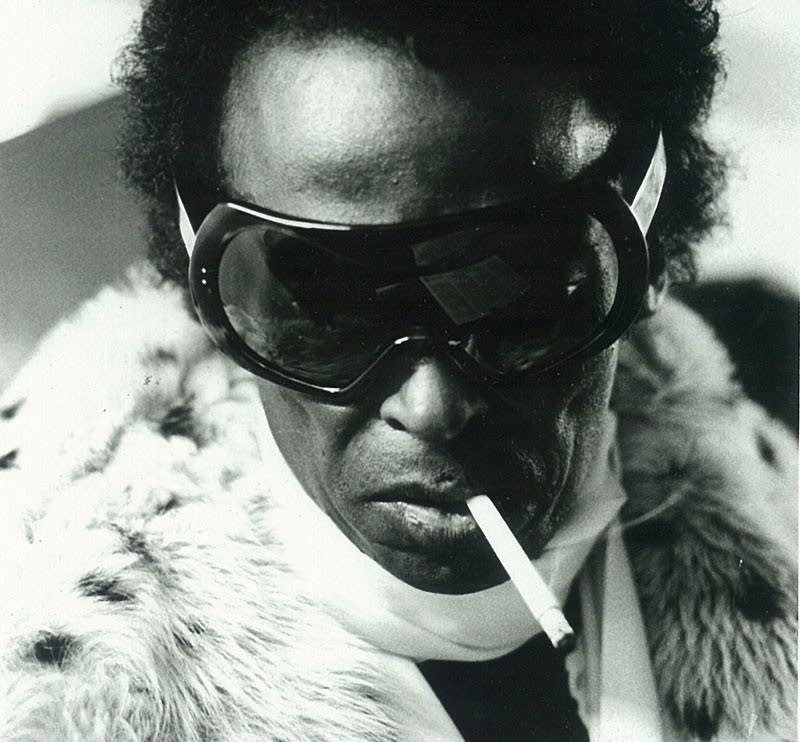
<p><img src="/assets/img/posts/miles-electric-era/miles_2.jpg" alt="Miles Davis" /></p>

<p>In 1964, a young trumpeter named Wynton Marsalis was born in New Orleans. He would grow up to become the most vocal defender of jazz orthodoxy the music has ever produced — the man who would declare, with the certainty of a papal edict, that Miles Davis’s electric period was not jazz, was not art, was not anything worth preserving. By the time Marsalis ascended to his position as jazz’s de facto cultural arbiter in the 1980s, the verdict among the traditionalist establishment had already been rendered: somewhere around 1969, Miles Davis had lost his mind, betrayed his gift, and sold his trumpet for a wah-wah pedal and a bag of rock-and-roll tricks.</p>

<p>The story the purists told was simple and satisfying. The greatest trumpeter in jazz history — the man who had been present at the birth of bebop, who had invented cool jazz, who had made <em>Kind of Blue</em>, the single most revered album in the entire idiom — had simply given up. Seduced by commercial ambition, intoxicated by the counterculture, corrupted by white rock audiences and their money, Davis had abandoned everything that made his music great. He replaced acoustic instruments with electric ones. He replaced swing with funk grooves. He replaced improvisation with studio manipulation. He replaced <em>jazz</em> with something else — something the purists could not name without spitting.</p>

<p>This is not that story.</p>

<p>This is the story of what actually happened between 1969 and 1975, when Miles Davis — already forty-three years old when the decade began, already a giant who had remade jazz four times over — chose to remake it a fifth time, at greater personal and professional cost than any of his previous reinventions. It is the story of a musician who heard the future in the sounds of Sly Stone, Karlheinz Stockhausen, and James Brown; who understood that jazz was dying of its own respectability; who dragged the music kicking and screaming into collision with the entire sonic world, and was exiled for his trouble. And it is the story of why that exile was, in the end, the proof that he was right.</p>

<hr />

<h2 id="i-the-end-of-the-second-great-quintet-1968">I. The End of the Second Great Quintet (1968)</h2>

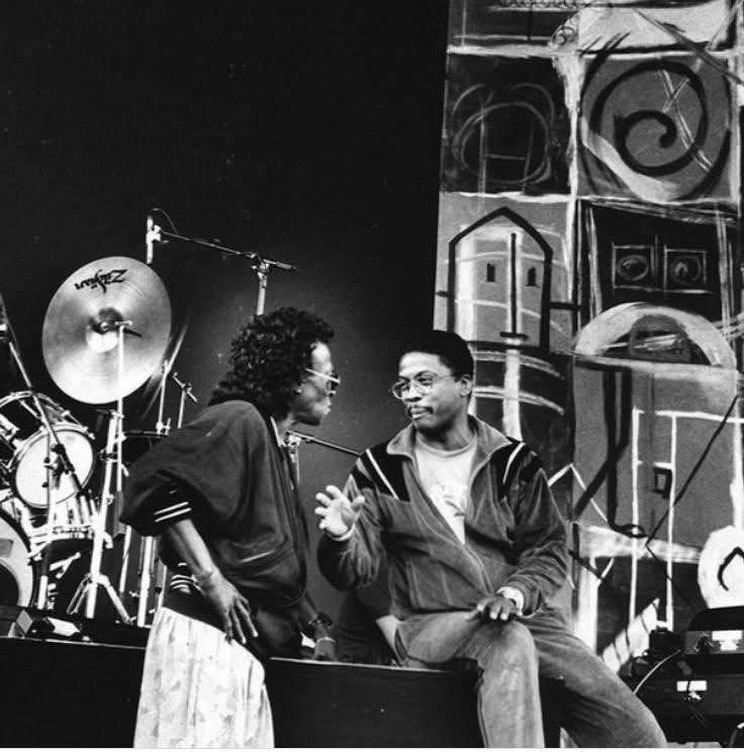
<p><img src="/assets/img/posts/miles-electric-era/miles-herbie.jpg" alt="Miles Davis and Herbie Hancock" /></p>

<p>By 1968, Miles Davis was leading the finest small group in jazz history. His second great quintet — Wayne Shorter on tenor and soprano saxophone, Herbie Hancock on piano, Ron Carter on bass, Tony Williams on drums — had spent four years dismantling the conventions of post-bop and rebuilding them into something wilder, more abstract, and more structurally radical than anything in American music. Albums like <em>E.S.P.</em> (1965), <em>Miles Smiles</em> (1966), and <em>Nefertiti</em> (1967) were not merely accomplished; they were revolutionary. The rhythm section played with a collective freedom that dissolved the traditional boundary between soloist and accompanist. Shorter’s compositions were labyrinthine. Williams, barely twenty years old, played drums as if time itself were a suggestion rather than a law.</p>

<p>And it was over.</p>

<p>The fractures had been visible for a while. Hancock, drawn to funk and electronic textures, had formed his own band and was exploring the sounds that would become <em>Mwandishi</em> and <em>Head Hunters</em>. Williams, restlessly ambitious, had formed the Tony Williams Lifetime with guitarist John McLaughlin, playing music so loud and so aggressive that it made most jazz musicians physically uncomfortable. Carter, the most traditional of the five, was the only member whose musical instincts still aligned naturally with the band’s original purpose. Shorter, increasingly drawn to the soprano saxophone and to composing, was poised to leave for what would become Weather Report. Davis could feel the group dissolving around him.</p>

<p>But the dissolution was not merely personal. Something more fundamental was shifting in the culture. Jazz, which had once been America’s popular music, was now a museum piece — respected, studied, canonised, and increasingly ignored by the young black audience that had once been its lifeblood. By 1968, the radio belonged to James Brown and Sly Stone and Jimi Hendrix. The clubs belonged to rock bands. The streets belonged to funk. Jazz was being preserved to death, embalmed in the formaldehyde of critical approval, its audience ageing and shrinking with every passing year.</p>

<p>Davis saw this with the clarity of a man who had survived every transition jazz had undergone since bebop. He had been nineteen when he played with Charlie Parker. He had been twenty-two when he led the <em>Birth of the Cool</em> sessions. He had been thirty-three when he made <em>Kind of Blue</em>. He had remade himself — and remade the music — every time the old forms stopped breathing. And now, at forty-two, he could feel the air thinning again. The question was not whether to change. The question was what to change <em>into</em>.</p>

<p>The answer was already in the room. <em>Miles in the Sky</em> (1968) had featured Hancock on electric piano for the first time. <em>Filles de Kilimanjaro</em> (1968), recorded in two sessions that June and September, went further: electric piano on every track, a rock-inflected rhythmic sensibility, and — crucially — the replacement of Ron Carter with Dave Holland, a young British bassist who could play both acoustic and electric. The album’s opener, “Frelon Brun,” was built on a driving rock pulse. Its closer, “Petits Machins,” rode a groove that owed more to Memphis than to Manhattan.</p>

<p>These were not acts of desperation. They were acts of attention — the same attention that had led Davis to Gil Evans in 1957, to modal jazz in 1958, to the post-bop abstraction of the second quintet in 1964. Davis was listening. And what he heard, everywhere around him, was electricity.</p>

<hr />

<h2 id="ii-in-a-silent-way-the-door-opens-february-1969">II. In a Silent Way: The Door Opens (February 1969)</h2>

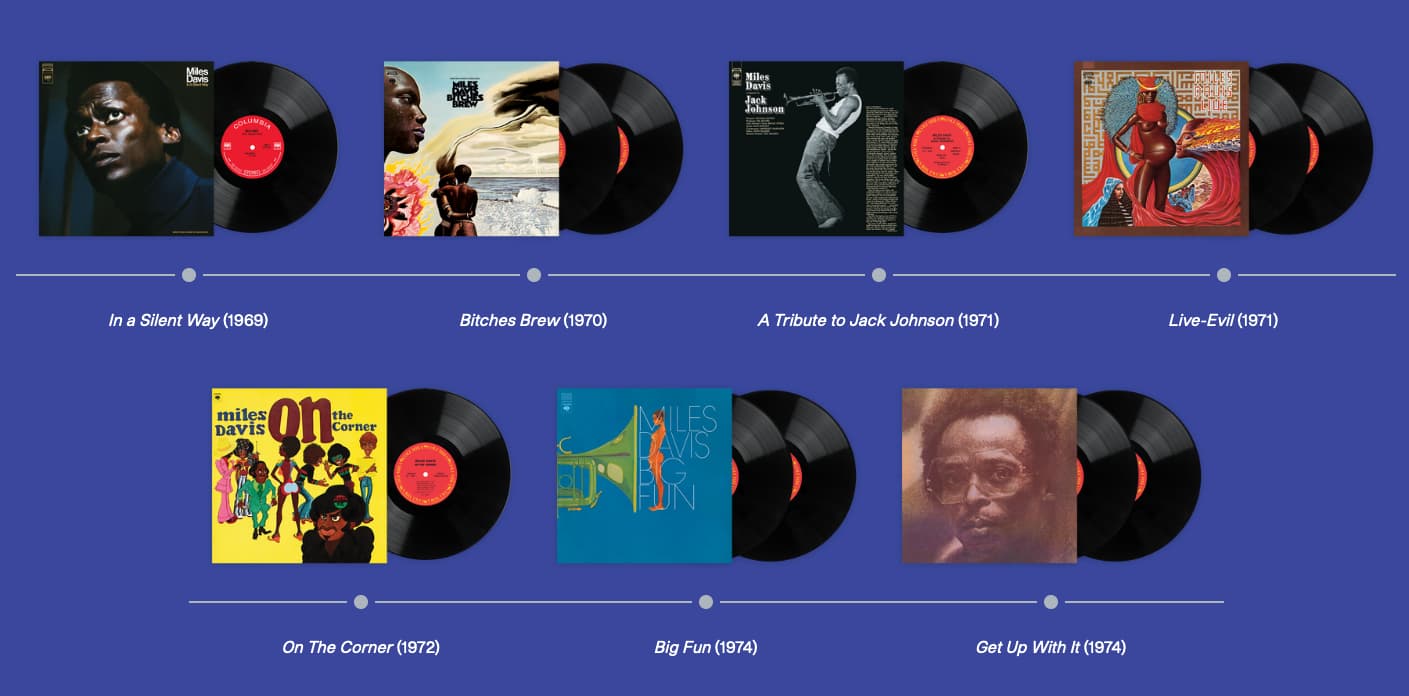
<p>On 18 February 1969, Miles Davis walked into CBS 30th Street Studio in Manhattan with a band that would have been unimaginable two years earlier. Three keyboard players — Chick Corea and Herbie Hancock on electric piano, Joe Zawinul on electric piano and organ — sat alongside Wayne Shorter on soprano saxophone, the newly arrived John McLaughlin on electric guitar, Dave Holland on double bass, and Tony Williams on drums. Eight musicians. Three electric keyboards. One electric guitar. A trumpet. A rhythm section that was half-acoustic, half-electric. It was the most improbable ensemble Davis had ever assembled, and he had no idea what they were going to play.</p>

<p>This was characteristic. Davis’s method during the electric period was not to compose in any conventional sense. He brought sketches — chord fragments, melodic hints, rhythmic suggestions — and directed the musicians in real time. He told them what to feel rather than what to play. McLaughlin, who had been in the United States for less than two weeks when Davis called him for the session, later recalled his terror at the prospect of recording with his idol. Davis’s advice was characteristically oblique: play the guitar as if you were a novice. Strip away everything you know. Start from zero.</p>

<p>What emerged from the three-hour session was raw material — hours of improvisation built around a few harmonic anchors and Davis’s live direction. Then came the edit. Producer Teo Macero, working with Davis, took the recorded takes and sculpted them into shape using techniques drawn from classical sonata form and the avant-garde tape experiments of composers like Edgard Varèse and Vladimir Ussachevsky, both of whom Macero had worked with in the 1950s. Sections were spliced, repeated, reordered. The opening and closing of each track used the same thematic material, creating an ABA structure — exposition, development, recapitulation — that was not performed in the studio but <em>constructed</em> afterward, from fragments.</p>

<p>The result was <em>In a Silent Way</em>, released on 30 July 1969: two extended compositions, each occupying one side of the LP, each built around a meditative electric groove that pulsed and shimmered without ever resolving into anything as crude as a hook. “Shhh/Peaceful” was Davis’s own composition — a single chordal area sustained for eighteen minutes, with soloists floating in and out of the texture like spirits through fog. “In a Silent Way/It’s About That Time” was built from Zawinul’s atmospheric title piece, which Davis stripped to its bare melodic bones, rearranging it around a pedal point and a rock-inflected pulse that Zawinul himself reportedly disliked. Davis later admitted that Zawinul was “never happy” with the adaptation, but felt the album would have been less successful had its original arrangement been kept.</p>

<p>The critical reaction was bifurcated along the precise fault line that would define the next six years of Davis’s career. Rock critics heard something they recognised — or thought they did. Lester Bangs, writing in <em>Rolling Stone</em>, called it “the kind of album that gives you faith in the future of music,” describing it as “part of a transcendental new music which flushes categories away.” Jazz critics heard betrayal. Phil Freeman, in his book <em>Running the Voodoo Down</em>, captured the divide precisely: “Rock critics thought <em>In a Silent Way</em> sounded like rock, or at least thought Miles was nodding in their direction, and practically wet themselves with joy. Jazz critics, especially ones who didn’t listen to much rock, thought it sounded like rock too, and they reacted less favourably.”</p>

<p>But both reactions were wrong. <em>In a Silent Way</em> was not rock. It was not jazz. It was not the genre that would come to be called fusion. It was something altogether different — a music that existed in the negative space between categories, that owed as much to the studio as to the musicians, that was as much Macero’s creation as Davis’s. Freeman, reflecting on this, wrote that it was “the sound of Miles Davis and Teo Macero feeling their way down an unlit hall at three in the morning. It was the soundtrack to all the whispered conversations every creative artist has, all the time, with that doubting, taunting voice that lives in the back of your head, the one asking all the unanswerable questions.”</p>

<p>The door was open. What lay beyond it was considerably darker.</p>

<hr />

<h2 id="iii-bitches-brew-the-explosion-august-1969">III. Bitches Brew: The Explosion (August 1969)</h2>

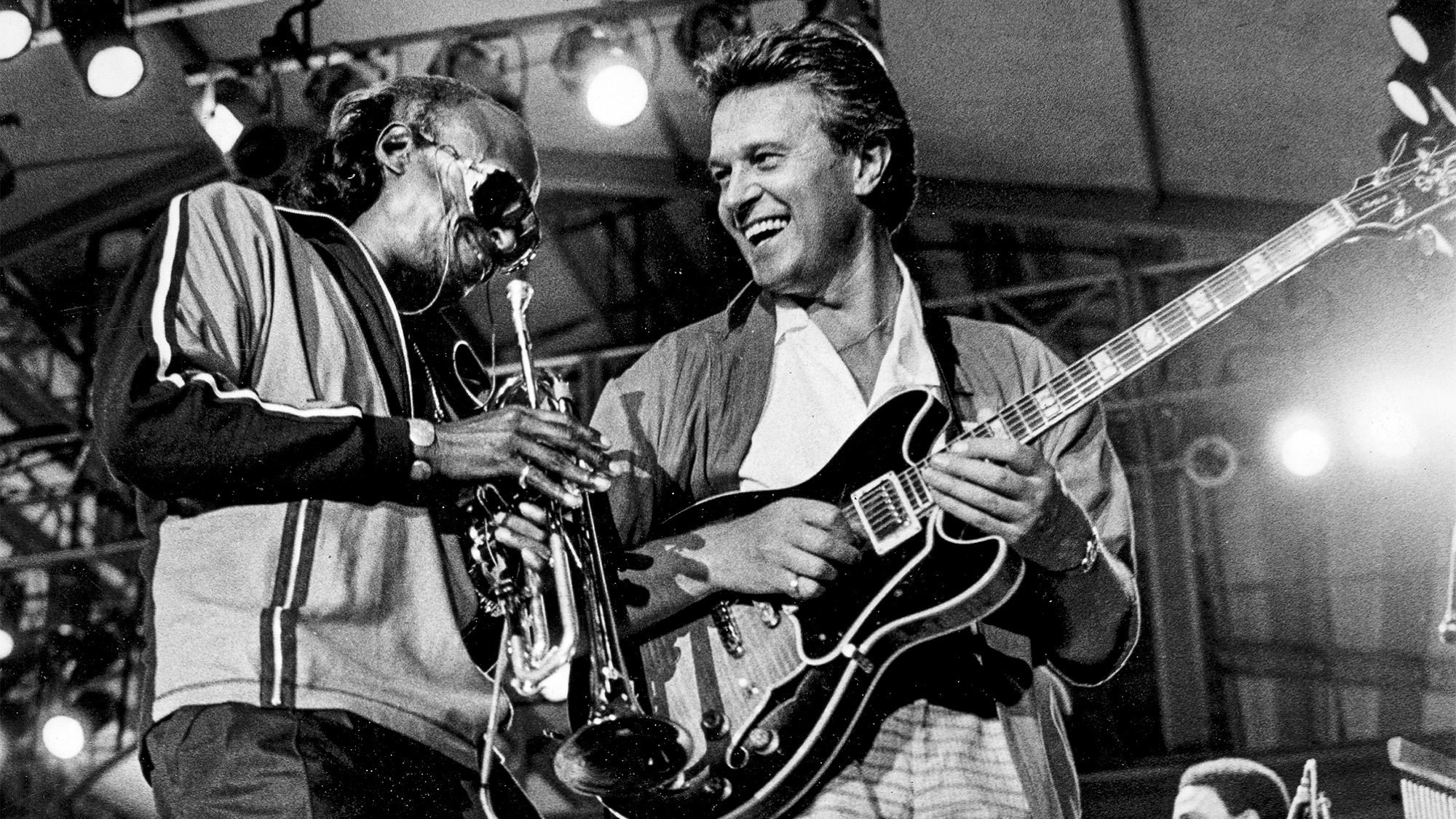
<p><img src="/assets/img/posts/miles-electric-era/miles-john-mclaughlin.jpg" alt="Miles Davis and John McLaughlin" /></p>

<p>Six months later, Davis returned to the studio — this time Columbia’s Studio B on 52nd Street — with an even larger ensemble. Where <em>In a Silent Way</em> had used eight musicians, <em>Bitches Brew</em> would employ as many as thirteen at once. The core working band of Shorter, Corea, Holland, and Jack DeJohnette was augmented by Zawinul, McLaughlin, Herbie Hancock, Larry Young on electric piano, Harvey Brooks on electric bass, Lenny White and Billy Cobham on drums, Don Alias and Juma Santos on percussion, and Bennie Maupin on bass clarinet. The logistics alone were radical. Three keyboardists. Two bassists. Two or three drummers playing simultaneously. A percussionist. A guitarist. A soprano saxophonist. A bass clarinettist. And Miles Davis, standing in the middle, conducting with his trumpet and his voice.</p>

<p>The sessions ran from 19 to 21 August 1969 — three days, ten a.m. to one p.m., all live recording, no overdubs. Lenny White later described the set-up: “It was like an orchestra, and Miles was our conductor. We wore headphones. We had to be able to hear each other. There were no guests at that session. No photos allowed.” Davis gave minimal instructions: a tempo count, a few chords, a hint of melody, suggestions as to mood or tone. On the quieter passages of the title track, his voice is audible on the recording — snapping his fingers to indicate tempo, telling the musicians to “keep it tight”, directing individuals when to solo. “John,” he says at one point, cueing McLaughlin. The music was being born in real time.</p>

<p>Then came the edit. If <em>In a Silent Way</em> had introduced Macero’s tape manipulation as a compositional tool, <em>Bitches Brew</em> weaponised it. “Pharaoh’s Dance” contains nineteen edits — its stop-start opening is entirely constructed in the studio, using repeat loops of certain sections. Later in the track, micro-edits are deployed: a one-second fragment that first appears at 8:39 is repeated five times between 8:54 and 8:59. The title track contains fifteen edits, again with short tape loops. As Paul Tingen documented, Davis and Macero “used the recording studio in radical new ways, especially in the title track and the opening track, ‘Pharaoh’s Dance’. There were many special effects, like tape loops, tape delays, reverb chambers and echo effects. Through intensive tape editing, Macero concocted many totally new musical structures that were later imitated by the band in live concerts.” Macero, classically trained, was most likely inspired by the <em>musique concrète</em> experiments of 1950s and 1960s French composers. He used tape editing not as repair but as <em>composition</em> — as a form of arranging that was itself a creative act, separate from and equal to the musicians’ improvisations.</p>

<p>The rhythmic innovation was even more fundamental. The rhythm section — two bassists, two or three drummers, two or three electric piano players, and a percussionist, all playing simultaneously — created a density of pulse that was unprecedented in jazz. As Paul Tanner, Maurice Gerow, and David Megill explained, “like rock groups, Davis gives the rhythm section a central role in the ensemble’s activities. His use of such a large rhythm section offers the soloists wide but active expanses for their solos.” The harmonies moved slowly, functioning modally rather than tonally. The result was a music that flowed from “basic rock patterns to hard bop textures, and at times, even passages that are more characteristic of free jazz.” It was not a groove. It was an <em>ecosystem</em> — a teeming, saturated environment in which soloists functioned less as heroes than as organisms, adapted to their surroundings, feeding off the rhythmic and harmonic nutrients that the ensemble provided.</p>

<p>Released on 30 March 1970, <em>Bitches Brew</em> peaked at number 35 on the <em>Billboard</em> 200 — Davis’s highest-charting album to date. It won the Grammy Award for Best Large Jazz Ensemble Album in 1971. It was certified gold by 1976 and platinum by 2003. It topped the <em>DownBeat</em> critics’ poll in 1970. And it was loathed.</p>

<p>The jazz establishment’s response was visceral. Bob Rusch, the jazz critic and producer, recalled: “This to me was not great Black music, but I cynically saw it as part and parcel of the commercial crap that was beginning to choke and bastardise the catalogues of such dependable companies as Blue Note and Prestige.” Donald Fagen, the rock and jazz musician, was even more blunt: “Essentially just a big trash-out for Miles… To me it was just silly, and out of tune, and bad. I couldn’t listen to it. It sounded like he was trying for a funk record, and just picked the wrong guys. They didn’t understand how to play funk. They weren’t steady enough.”</p>

<p>The word “steady” is doing important work in Fagen’s criticism. It reveals the misunderstanding at the heart of the purist objection. <em>Bitches Brew</em> was not <em>trying</em> to be steady. It was not trying to be funk in any sense that James Brown would recognise. It was trying to be something that did not yet have a name — a music of collective improvisation over electric grooves, shaped by studio technology, structured by post-production rather than pre-composition. The complaint that it “didn’t swing” was literally true and entirely irrelevant. The complaint that it was “commercial” was contradicted by the music’s actual sound: this was not music designed to please anyone. It was music designed to <em>expand</em> — to test the limits of what a recording could contain, what an ensemble could sustain, what a listener could tolerate.</p>

<p>The <em>Penguin Guide to Jazz</em> captured this paradox with precision, calling <em>Bitches Brew</em> “one of the most remarkable creative statements of the last half-century, in any artistic form. It is also profoundly flawed, a gigantic torso of burstingly noisy music that absolutely refuses to resolve itself under any recognised guise.”</p>

<p>That refusal to resolve was the point. Davis had identified the central problem of late-1960s jazz: it had become a music of resolution, of neat conclusions, of harmonic closure. Everything ended where it was supposed to. The drama was in how you got there, not in whether you arrived. <em>Bitches Brew</em> abandoned arrival. It was a music of perpetual becoming — a brew that never settled, that kept reacting with itself, that generated new compounds faster than the old ones could crystallise.</p>

<hr />

<h2 id="iv-the-front-line-jazz-at-war-with-itself">IV. The Front Line: Jazz at War with Itself</h2>

<p>The vilification of Miles Davis’s electric music was not merely aesthetic. It was cultural, generational, and — in ways that the critics themselves often did not articulate — racial.</p>

<p>Jazz in the late 1960s was caught in an identity crisis that went far deeper than questions of instrumentation. The music had been born in black communities, shaped by black experience, powered by black innovation. But by the late 1960s, its institutional infrastructure — the clubs, the labels, the magazines, the critics, the grants, the festival bookers — was overwhelmingly white. And the audience that still paid for jazz records was increasingly white, affluent, and middle-aged. The young black audience that had once sustained the music had migrated to funk, soul, and rock — music that reflected the rhythms and energies of their actual lives rather than the rarefied atmosphere of the jazz club.</p>

<p>Davis understood this with a clarity that his critics did not. When he told <em>Melody Maker</em> in 1972, “I don’t care who buys the record so long as they get to the black people so I will be remembered when I die. I’m not playing for any white people, man. I wanna hear a black guy say ‘Yeah, I dig Miles Davis,’” he was not posturing. He was describing a genuine artistic purpose — a desire to reconnect jazz with the black popular audience from which it had become estranged. The electric instruments, the funk grooves, the rock energy — these were not concessions to commercialism. They were attempts to <em>speak the language of the present</em> rather than the language of the museum.</p>

<p>The irony is that the jazz establishment — which presented itself as the guardian of authentic black musical tradition — was, in this instance, the force enforcing cultural isolation. The demand that Davis continue to play acoustic jazz for a predominantly white audience of connoisseurs was, itself, a form of commodification: the packaging of black artistic innovation as heritage product for a market that valued the music precisely because it was no longer popular with the community that created it.</p>

<p>Gil Evans, the arranger who had collaborated with Davis on <em>Miles Ahead</em>, <em>Porgy and Bess</em>, and <em>Sketches of Spain</em>, stated the case with devastating simplicity: “Jazz has always used the rhythm of the time, whatever people danced to.” This was not a radical proposition. It was a description of what jazz had always been — from the ragtime that underpinned New Orleans playing, through the swing that defined the big band era, to the bebop revolution that absorbed the rhythmic innovations of African-American popular music in the 1940s. Davis was doing what jazz musicians had always done: incorporating the sounds of the street into the language of art. That the street now sounded like amplifiers and drum kits rather than brass bands and stride piano was not Davis’s crisis. It was the critics’.</p>

<hr />

<h2 id="v-jack-johnson-and-the-funk-pivot-1971">V. Jack Johnson and the Funk Pivot (1971)</h2>

<p><img src="/assets/img/posts/miles-electric-era/miles_3.jpg" alt="Miles Davis" /></p>

<p>If <em>Bitches Brew</em> was the explosion, <em>A Tribute to Jack Johnson</em> (1971) was the afterburn. Recorded in a single day — 7 April 1970 — the album was conceived as the soundtrack to a documentary about the black heavyweight champion who had defied white America’s racial codes in the early twentieth century. The subject matter was pointed: Jack Johnson was a black man who refused to be contained by the expectations of a hostile culture. The analogy to Davis’s own position was not subtle, and it was not meant to be.</p>

<p>Musically, <em>Jack Johnson</em> was Davis’s most explicit engagement with rock. Where <em>Bitches Brew</em> had layered multiple rhythm sections into a dense thicket, <em>Jack Johnson</em> stripped the ensemble down to a lean, driving quintet: Davis on trumpet, McLaughlin on electric guitar, Steve Grossman on soprano saxophone, Holland on electric bass, and DeJohnette on drums. The music was built on relentless, rocking vamps. McLaughlin’s guitar work — distorted, rhythmic, overtly blues-influenced — was the loudest and most rock-oriented element Davis had yet incorporated. The album opener, “Right Off,” rides a single groove for nearly twenty-six minutes, building intensity through repetition rather than development.</p>

<p>The editing was again radical. Macero spliced together sections from different takes, creating seamless transitions that the musicians had never played in sequence. The famous groove that opens “Right Off” — one of the most propulsive bass lines in Davis’s entire catalogue — was assembled from fragments. The music felt live and spontaneous, but much of its structure was post hoc, a collaboration between the musicians who played the material and the producer who shaped it.</p>

<p>The critical response was, by now, predictable. Jazz writers heard a capitulation to rock; rock writers heard a jazz musician playing at their genre. Neither camp grasped what was actually happening: Davis was not merging jazz and rock. He was using the energy and volume of rock as a structural element within a fundamentally jazz conception — improvisation over extended vamps, with the soloist as the central dramatic voice. The rhythm section was louder, but the logic was the same: create a dynamic environment, then let the soloist navigate it.</p>

<p><em>Jack Johnson</em> sold poorly. It was the first sign that Davis’s electric experiments, whatever their artistic merit, were not reaching the audience he wanted. The young black listeners were not buying it. The jazz audience was not buying it. The rock audience was not buying it. Davis was making some of the most adventurous music of his career, and he was playing to a shrinking, divided constituency.</p>

<hr />

<h2 id="vi-on-the-corner-the-most-vilified-album-in-jazz-history-1972">VI. On the Corner: The Most Vilified Album in Jazz History (1972)</h2>

<p>By early 1972, Davis was ready to go further. <em>On the Corner</em> was conceived as a deliberate attempt to reach the young African-American audience that had abandoned jazz — an audience that danced to Sly Stone and James Brown, that lived in the funk, that had no use for a forty-six-year-old trumpeter playing abstract improvisations for seated white intellectuals. Davis told his producer, Teo Macero, that he wanted to make a record that sounded like the street.</p>

<p>What he made instead was the most controversial album in the history of jazz.</p>

<p>The recording sessions for <em>On the Corner</em> took place on 1 June, 6 June, and 7 July 1972, at Columbia’s 52nd Street studio. The personnel shifted constantly. The anchor was Michael Henderson, a young electric bassist who had been playing with Stevie Wonder — a musician with virtually no jazz background, recruited specifically for his funk feel. Around Henderson, Davis assembled and disassembled configurations of musicians: John McLaughlin on guitar, Chick Corea and Herbie Hancock on electric keyboards, Jack DeJohnette and Billy Hart on drums, Al Foster on drums, James Mtume on percussion, Dave Liebman and Carlos Garnett on saxophones, Bennie Maupin on bass clarinet, Khalil Balakrishna on electric sitar, Badal Roy on tabla, Collin Walcott on electric sitar, Paul Buckmaster on electric cello. Davis himself played trumpet through a wah-wah pedal — an effect that transformed his instrument from a voice of lyrical clarity into something electronically mangled, blurred, human-but-not-quite-human.</p>

<p>The conceptual framework was new. Davis had been introduced to the music of Karlheinz Stockhausen by Buckmaster earlier in 1972, and the German composer’s ideas about electronic sound processing and the construction of musical structures through processes of addition and subtraction resonated deeply. Davis reportedly kept a cassette recording of Stockhausen’s electroacoustic composition <em>Hymnen</em> in his Lamborghini Miura. He later wrote in his autobiography: “I had always written in a circular way and through Stockhausen I could see that I didn’t want to ever play again from eight bars to eight bars, because I never end songs: they just keep going on. Through Stockhausen I understood music as a process of elimination and addition.”</p>

<p>Davis applied these ideas to <em>On the Corner</em> by literally adding and subtracting instrumentalists throughout the recordings, creating a progressively changing soundscape. The result was what he described as “Stockhausen plus funk plus Ornette Coleman” — a reconciliation of contemporary classical music, the harmolodic theory of the avant-garde saxophonist he had once disparaged, and the relentless rhythmic pulse of black dance music. The album functioned, as jazz historian Robert Gluck later described it, on two layers: “a relatively static, dense thicket of rhythmic pulse provided by McLaughlin’s percussive guitar attack, the multiple percussionists, and Henderson’s funky bass lines, plus keyboard swirls on which the horn players solo. Segments of tabla and sitar provide a change of mood and pace. Aside from ‘Black Satin,’ most of the material consists of intense vamps and rhythmic layering.”</p>

<p>Davis played trumpet scarcely. The wah-wah pedal reduced his instrument to a textural element — a sound that bubbled up through the mix rather than soaring above it. The bass was the lead voice. The drums were the architecture. The solos were fragments, buried in the groove. The album’s packaging deliberately omitted musician credits, in an attempt to make the instruments less discernible to critics. “I didn’t put those names on <em>On the Corner</em> specially for that reason,” Davis later admitted, “so now the critics have to say, ‘What’s this instrument, and what’s this?’ … I’m not even gonna put my picture on albums anymore. Pictures are dead, man. You close your eyes and you’re there.”</p>

<p>The reaction was annihilating. Paul Tingen called it “the most vilified and controversial album in the history of jazz” — and the evidence supports the claim. Stan Getz proclaimed: “That music is worthless. It means nothing; there is no form, no content, and it barely swings.” The <em>Jazz Journal</em>’s Jon Brown wrote that “it sounds merely as if the band had selected a chord and decided to worry hell out of it for three-quarters of an hour,” concluding that “I’d like to think that nobody could be so easily pleased as to dig this record to any extent.” Eugene Chadbourne, writing in <em>Coda</em>, described it as “pure arrogance.” Critic Bill Coleman called it “an insult to the intellect of the people.” Ian MacDonald of the <em>NME</em> declared it “monumentally boring.” <em>DownBeat</em> gave it two stars out of five.</p>

<p>Commercially, it was Davis’s worst-selling album to date, peaking at number 156 on the <em>Billboard</em> 200. Columbia, which had no idea how to market a record that was simultaneously too avant-garde for funk audiences and too funky for jazz audiences, effectively abandoned it. As Tingen wrote, “predictably, this impenetrable and almost tuneless concoction of avant-garde classical, free jazz, African, Indian and acid funk bombed spectacularly, leading to decades in the wilderness. As far as the jazzers were concerned, it completed Davis’s journey from icon to fallen idol.”</p>

<p>But here is the thing about <em>On the Corner</em>: it was right. Not in the sense that the critics who hated it were factually incorrect about what they were hearing — they heard exactly what they described: repetitive, groove-based music with barely any trumpet, barely any melody, barely any of the elements that conventionally defined jazz. They were correct about the surface. They were wrong about the significance. What they were hearing — without knowing it — was the future.</p>

<hr />

<h2 id="vii-the-long-reckoning-on-the-corners-legacy">VII. The Long Reckoning: On the Corner’s Legacy</h2>

<p>The reappraisal of <em>On the Corner</em> has been one of the most dramatic reversals in music criticism. Where once it was the album that proved Davis had lost his mind, it is now recognised as perhaps the most prophetic recording of his career — a work that anticipated, by decades, developments in styles that did not yet exist when it was made.</p>

<p><em>Stereogum</em> called it “one of the greatest records of the 20th Century, and easily one of Miles Davis’ most astonishing achievements,” noting its mix of “funk guitars, Indian percussion, dub production techniques, loops that predict hip hop.” <em>Alternative Press</em> named it an “essential masterpiece” that “represents the high water mark of his experiments in the fusion of rock, funk, electronica and jazz.” <em>Fact</em> characterised it as “a frenetic and punky record, radical in its use of studio technology,” adding that “the debt that the modern dance floor owes the pounding abstractions of <em>On the Corner</em> has yet to be fully understood.” <em>The Vinyl Factory</em> described it as “the great great grandfather of hip-hop, IDM, jungle, post-rock and other styles drawing meaning from repetition.”</p>

<p>John F. Szwed, writing in <em>The Wire</em>, captured the album’s paradoxical fate with precision: “Jazz musicians hated it, critics bemoaned Miles’s fall from grace, and since Columbia failed to market it as a pop record, it died in the racks. Even now, when Davis’s jazz rock recordings are being reissued to great acclaim, <em>On the Corner</em> remains lost in time. Still, this record might well be the most radical break with the past of all of Davis’s many breaks. Dense with rhythm and conceptually enriched with noises, his trumpet’s role mixed down to that of a journeyman, the melody reduced to recycled Minimalist patterns, Davis broke every rule enforced by the jazz police. Yet today… we hear that Davis was laying the foundations for drum ‘n’ bass, trip hop, Jungle, and all the other musics of repetition to come.”</p>

<p>The mark Fisher review of the 2007 <em>Complete On the Corner Sessions</em> box set in <em>The Wire</em> made the crucial observation: “The passing of time often neutralises and naturalises sounds that were once experimental, but retrospection has not made <em>On the Corner</em>’s febrile, bilious stew any easier to digest.” This is what distinguishes <em>On the Corner</em> from mere provocation. Provocations lose their power once the shock fades. <em>On the Corner</em> has not been absorbed. It has not been naturalised. It remains, half a century later, a difficult, strange, uncomfortable record — one that resists easy listening and refuses to sit comfortably within any genre. Its difficulty is not a flaw. It is a feature. It is the sound of a musician pushing past the point where the culture could follow, and waiting — for decades, as it turned out — for the culture to catch up.</p>

<p>AllMusic’s Thom Jurek went furthest, arguing that “the music on the album itself influenced — either positively or negatively — every single thing that came after it in jazz, rock, soul, funk, hip-hop, electronic and dance music, ambient music, and even popular world music, directly or indirectly.” This is a large claim. But the lineage is traceable: from <em>On the Corner</em>’s repetitive bass grooves and studio-assembled structures to the loop-based architectures of hip-hop; from its dense rhythmic layering and electronic textures to the collaged soundscapes of electronica and IDM; from its refusal of the soloist-as-hero model to the collective, groove-oriented aesthetics of post-punk and dance music; from its wah-wah trumpet and Indian percussion to the global fusion experiments of subsequent decades. The album did not cause these developments. But it <em>prefigured</em> them, with an accuracy that is, in retrospect, startling.</p>

<p>The mainstream jazz community, Tingen observed, “still won’t touch <em>On the Corner</em> with a barge pole” — and this, too, is part of the story. The album’s failure to find acceptance within jazz is not merely a matter of conservative taste. It reflects a fundamental disagreement about what jazz <em>is</em> — whether it is a tradition defined by its formal characteristics (swing, acoustic instrumentation, harmonic resolution, the primacy of the soloist) or a tradition defined by its <em>method</em> (improvisation, the incorporation of contemporary sounds, the rejection of stasis). Davis believed the latter. The establishment believed the former. <em>On the Corner</em> was the record on which that disagreement became irreconcilable.</p>

<hr />

<h2 id="viii-the-final-bands-cellar-door-to-agharta-19721975">VIII. The Final Bands: Cellar Door to Agharta (1972–1975)</h2>

<p><img src="/assets/img/posts/miles-electric-era/miles_4.jpg" alt="Miles Davis" /></p>

<p>After <em>On the Corner</em>, Davis made no more studio albums conceived as complete works. The rest of the decade’s studio output — <em>Big Fun</em> (1974), <em>Get Up with It</em> (1974) — consisted of session recordings assembled and released as compilations, often with tracks recorded years apart. The centre of gravity shifted decisively to live performance, where Davis’s bands became louder, denser, and more rhythmically extreme.</p>

<p>The live bands of this period were built around a core: Michael Henderson on electric bass, providing the funk anchor that Davis had identified as the essential foundation; Al Foster on drums, a musician whose feel for groove Davis described as the best he’d ever heard; Mtume on percussion, adding layers of rhythmic complexity; and a rotating cast of guitarists, keyboardists, and saxophonists who would enter and exit the music at Davis’s direction. The trumpet, increasingly processed through wah-wah and other effects, functioned as one colour among many rather than as the lead voice. Davis conducted more than he played — cueing entries, cutting off solos, directing the flow of the music with gestures and glances, occasionally stepping forward to deliver a burst of electronically distorted trumpet before retreating back into the ensemble.</p>

<p>The Cellar Door sessions in December 1970 — released decades later as <em>The Cellar Door Sessions 1970</em> — captured a transitional moment, with Keith Jarrett on electric piano and John McLaughlin on guitar joining the core band. Jarrett, who would later become one of the most celebrated acoustic pianists in jazz, was audibly uncomfortable with the electric instrument, but his discomfort produced something interesting: a keyboard style that was sparser, more angular, more resistant to the groove than the playing of Corea or Hancock, creating a tension between the rhythm section’s momentum and the soloist’s reluctance that gave the music its distinctive edge.</p>

<p>By 1975, the live band had reached an extreme of density and volume that can be heard on <em>Agharta</em> and <em>Pangaea</em>, both recorded on 1 February 1975 at the Osaka Festival Hall in Japan. These are the final documents of Davis’s electric period — twin live albums, one performed in the afternoon (<em>Agharta</em>) and one in the evening (<em>Pangaea</em>), capturing a band that had evolved into something closer to a ritual than a concert. The music is overwhelming: waves of rhythm and noise, Henderson’s bass locking into a relentless pulse, the percussionists building polyrhythmic structures around it, the guitarists and keyboardists adding layers of texture and distortion, Davis’s wah-wah trumpet rising and submerging like a voice in a storm. There are no themes. There are no solos in any conventional sense. There is only process — the continuous, unresolving, additive and subtractive process that Davis had learned from Stockhausen and applied to funk.</p>

<p><em>Dark Magus</em>, recorded at Carnegie Hall in March 1974, is even more extreme — a single continuous performance divided into tracks for release, building from a whisper to a roar over the course of an hour. The band sounds like it is tearing itself apart and reconstituting itself simultaneously, the rhythm section holding the centre while the soloists push against the groove and each other with increasing ferocity.</p>

<p>These are not easy records. They are not meant to be. They are the sound of a music that has pushed past the point of audience accommodation and into a territory where the only logic is internal — where the groove continues because it has not yet been stopped, where layers are added because there is still space for them, where the music ends not because it has resolved but because the musicians have nothing left to give.</p>

<hr />

<h2 id="ix-the-collapse-1975">IX. The Collapse (1975)</h2>

<p>In the autumn of 1975, Miles Davis stopped playing. A hip replacement surgery, performed after years of worsening pain, went badly. He developed a blood infection. He was hospitalised. He was prescribed painkillers. The prescription fed a drug habit that had been present, in various forms, throughout his adult life. He retreated to his brownstone on West 77th Street in Manhattan. He did not play trumpet. He did not go to the studio. He did not perform. For five years, the most important musician in jazz was silent.</p>

<p>The silence was not merely medical. It was the exhaustion of a project that had consumed six years and produced some of the most radical music of the twentieth century — music that had been rejected by the establishment, ignored by the audience it was intended for, and vindicated only by the passage of time. Davis had pushed jazz through the wall of its own traditions and into a space where the old rules no longer applied. But the space he had found was lonely, and the cost of occupying it — in credibility, in relationships, in health — had been enormous.</p>

<p>The years of silence were, by all accounts, grim. Davis later described them as the worst period of his life. He was isolated, in pain, and increasingly dependent on drugs. His marriage to Cicely Tyson, which would take place in 1981, was still years away. His band had dispersed. His label, Columbia, continued to release archive material and compilations, but there was nothing new. The man who had remade jazz five times could not, for the moment, remake himself.</p>

<hr />

<h2 id="x-the-verdict-of-time">X. The Verdict of Time</h2>

<p>The story of Miles Davis’s electric era is, ultimately, a story about the lag between innovation and recognition. The purists who declared that Davis had betrayed jazz were not wrong about what they were hearing. They were wrong about what it meant. They heard chaos and called it decadence. They heard repetition and called it laziness. They heard electricity and called it betrayal. What they could not hear — what it would take decades for anyone to hear — was that Davis had not abandoned jazz. He had expanded it beyond the point where it could still be called by a single name.</p>

<p>Every one of Davis’s previous reinventions had been absorbed into the canon, eventually. <em>Birth of the Cool</em> was rejected by bebop hardliners and then canonised. <em>Kind of Blue</em> was dismissed as background music by some critics before becoming the best-selling jazz album in history. The second great quintet was considered too abstract, too difficult — until it became the template for every ambitious small group that followed. The electric period followed the same pattern, but the lag was longer, and the resistance was fiercer, because the break was more radical. Davis was not merely changing the style. He was changing the <em>medium</em> — replacing the acoustic with the electric, the live with the edited, the composed with the constructed, the soloist with the ensemble.</p>

<p><em>In a Silent Way</em> has been called a proto-ambient masterpiece. <em>Bitches Brew</em> is ranked among the greatest albums of all time by <em>Rolling Stone</em>, <em>Paste</em>, and virtually every serious publication that covers music. <em>On the Corner</em> is recognised as having prefigured hip-hop, electronica, drum and bass, post-punk, and virtually every form of loop-based music that followed. In 2025, <em>Bitches Brew</em> was selected for preservation in the National Recording Registry by the Library of Congress — deemed “culturally, historically, or aesthetically significant.” The music that was once called worthless is now, by institutional decree, priceless.</p>

<p>But the vindication is incomplete. The mainstream jazz community still treats the electric period as an aberration — a fascinating, perhaps forgivable detour from the “real” work of the 1950s and early 1960s. The Wynton Marsalis faction, which has dominated jazz institutional culture since the 1980s, has never fully rescinded its verdict. The music is tolerated, studied, perhaps even admired in certain contexts — but it is not <em>centred</em>. It remains, in the narrative of jazz history, a parenthesis rather than a paragraph.</p>

<p>This is wrong. The electric period was not a parenthesis. It was the most sustained act of creative courage in Davis’s career — and in a career that included <em>Kind of Blue</em>, <em>Sketches of Spain</em>, and the second great quintet, that is a considerable statement. It required more from Davis than any of his previous reinventions: more risk, more vilification, more isolation, more faith in his own ear against the consensus of everyone around him. He was told he was destroying jazz. He was told he was selling out. He was told he was wasting his talent. He was told these things by people he respected, by musicians he had mentored, by critics who had championed his earlier work. And he ignored all of them, and made the music anyway, and was proven right — not immediately, not comfortably, but conclusively.</p>

<p>The electric period did not kill jazz. It showed jazz a way to survive — by refusing to be what it had been, by embracing the sounds of the present, by treating tradition as a foundation rather than a cage. Every jazz musician who has incorporated hip-hop, electronic music, funk, rock, or global sounds into their work since the 1980s is walking through a door that Miles Davis opened. The fact that many of them do not acknowledge this — that some of them actively repudiate it — does not change the architecture.</p>

<p>Miles Davis understood something that his critics did not: that the most dangerous thing an artist can do is not offend the audience, but outgrow it. He outgrew jazz, and jazz never fully forgave him. But the music outgrew jazz too. And that, in the end, is the measure of the man — that the sounds he made in a studio on 52nd Street, in the summer and autumn of a single year, are still expanding, still refusing to resolve, still keeping time with a future that has not yet arrived.</p>

<p>End.</p>

<hr />

<blockquote>
  <p><em>“Through Stockhausen I understood music as a process of elimination and addition.”</em></p>

  <p>— Miles Davis</p>
</blockquote>

<blockquote>
  <p><em>“Jazz has always used the rhythm of the time, whatever people danced to.”</em></p>

  <p>— Gil Evans</p>
</blockquote>

<blockquote>
  <p><em>“This record might well be the most radical break with the past of all of Davis’s many breaks.”</em></p>

  <p>— John F. Szwed</p>
</blockquote>

<hr />]]></content><author><name>Connor Hall</name></author><category term="essay" /><category term="Miles Davis" /><category term="Jazz Fusion" /><category term="Bitches Brew" /><category term="In a Silent Way" /><category term="On the Corner" /><category term="Jazz History" /><category term="1970s" /><summary type="html"><![CDATA[The Heretic’s Horn]]></summary></entry><entry><title type="html">The Founding Fathers: How Atlanta’s Trap Architects Built a Genre</title><link href="https://alalunw.github.io/2026/05/10/trap-founding-fathers/" rel="alternate" type="text/html" title="The Founding Fathers: How Atlanta’s Trap Architects Built a Genre" /><published>2026-05-10T00:00:00+00:00</published><updated>2026-05-10T00:00:00+00:00</updated><id>https://alalunw.github.io/2026/05/10/trap-founding-fathers</id><content type="html" xml:base="https://alalunw.github.io/2026/05/10/trap-founding-fathers/"><![CDATA[<h2 id="the-sound-that-formed-me">The Sound That Formed Me</h2>

<p>I started producing beats in 2011, but I’d been hooked on trap since 2009. That was the era of Brick Squad—Waka Flocka’s “Hard in Da Paint” rattling car speakers, Rick Ross’s <em>Teflon Don</em> with its Lex Luger beats, and Gucci’s endless stream of mixtapes. By the time I opened FL Studio, inspired by the same software that built an empire, the founding fathers’ blueprint had already been built upon by a new generation.</p>

<p>To me, and to many producers of my generation, trap was simply <em>the sound</em>. It was 808s that rattled your chest, hi-hats that moved at double-time, and synths that felt like they were recorded in a haunted cathedral. But behind that sound were architects whose names I didn’t yet know.</p>

<p>This is their story.</p>

<h2 id="what-is-the-trap">What Is “The Trap”?</h2>

<p>Before it was a genre, “trap” was a place. In Atlanta slang, a trap house was where drugs were sold—a space of both opportunity and entrapment. The term had been floating through Dungeon Family and OutKast lyrics since the mid-90s, but it wasn’t until the early 2000s that the music itself began to take shape.</p>

<p>Trap wasn’t born in a vacuum. It inherited the Roland TR-808 from Miami bass, the triplet flows from Memphis’s Three 6 Mafia, and the Southern drawl from Atlanta’s own crunk movement. But what made trap <em>trap</em> was a specific sonic vocabulary—one crafted by a handful of producers who, between 2000 and 2008, built the blueprint.</p>

<h2 id="the-architects">The Architects</h2>

<h3 id="shawty-redd-the-hi-hat-inventor">Shawty Redd: The Hi-Hat Inventor</h3>

<p>Demetrius “Shawty Redd” Stewart was still a teenager when he created something revolutionary. Working with Alabama rapper Drama on his 2000 album <em>Causin’ Drama</em>, Redd had an idea: “I just wanted something that would make me bounce,” he later told <em>Complex</em>. So he added what he called “booty-shake” hi-hats—rapid, rolling patterns that moved at double or triple the speed of the kick drum.</p>

<p>That simple innovation became trap’s heartbeat.</p>

<p><strong>Essential listening:</strong></p>
<ul>
  <li><strong>Young Jeezy - “Trap Star” (2005)</strong> - The minimalist horror-movie synths and skittering hi-hats defined the Young Jeezy sound</li>
  <li><strong>Gucci Mane - “Icy” ft. Young Jeezy (2005)</strong> - Zaytoven’s piano meets Redd’s drum programming; the birth of trap’s first supergroup</li>
</ul>

<p>Redd’s production on Jeezy’s <em>Let’s Get It: Thug Motivation 101</em> and Gucci’s <em>Trap House</em> established the sonic template: sparse, menacing, and built for the strip club. His synths often used minor-key melodies that felt more horror soundtrack than hip-hop—a far cry from the celebratory crunk anthems dominating Atlanta at the time.</p>

<h3 id="dj-toomp-the-orchestral-architect">DJ Toomp: The Orchestral Architect</h3>

<p>If Shawty Redd was trap’s minimalist, Aldrin “DJ Toomp” Davis was its maximalist. A veteran of Miami’s 2 Live Crew scene, Toomp brought a different sensibility to Atlanta. He studied classical music, listened to Earth, Wind &amp; Fire, and believed trap could be cinematic.</p>

<p>Toomp’s breakthrough came through T.I., the rapper whose 2003 album <em>Trap Muzik</em> gave the genre its name. “The trap is basically where you will go in certain areas, finding what you’re looking for,” Toomp explained in a Red Bull Music Academy lecture. His production on <em>Trap Muzik</em> introduced strings, brass, and layered arrangements that elevated street narratives into something grander.</p>

<p><strong>Essential listening:</strong></p>
<ul>
  <li><strong>T.I. - “24’s” (2003)</strong> - The organ-driven intro and swelling strings made street life sound operatic</li>
  <li><strong>T.I. - “What You Know” (2006)</strong> - Grammy-winning production that proved trap could be both commercial and complex</li>
</ul>

<p>Toomp’s work with Kanye West on <em>Graduation</em> (“Good Life,” “Can’t Tell Me Nothing”) brought trap’s sonic palette to the pop mainstream. He showed that 808s could coexist with Michael Jackson samples, and that Atlanta’s sound could conquer the world.</p>

<h3 id="zaytoven-the-piano-prophet">Zaytoven: The Piano Prophet</h3>

<p>Xavier “Zaytoven” Dotson brought church to the trap. A classically trained pianist, Zaytoven’s signature was melodic—gospel-influenced chord progressions layered over 808s. His work with Gucci Mane, particularly on tracks like “Freaky Gurl” (2007), created a tension between beauty and menace that became a trap staple.</p>

<p><strong>Essential listening:</strong></p>
<ul>
  <li><strong>Gucci Mane - “Freaky Gurl” (2007)</strong> - Piano-driven trap that proved melody could coexist with street narratives</li>
  <li><strong>Usher - “Love in This Club” (2008)</strong> - Zaytoven’s trap-soul crossover showed the genre’s pop potential</li>
</ul>

<h3 id="drumma-boy-the-anthem-builder">Drumma Boy: The Anthem Builder</h3>

<p>Christopher “Drumma Boy” Gholson described trap as “Southern trance music”—a comparison that makes sense when you hear his work. His productions for T.I., Young Jeezy, and Rick Ross were built for arenas, with layered synths and call-and-response hooks.</p>

<p><strong>Essential listening:</strong></p>
<ul>
  <li><strong>Young Jeezy - “Put On” ft. Kanye West (2008)</strong> - Anthemic trap at its most uplifting</li>
  <li><strong>T.I. - “Live Your Life” ft. Rihanna (2008)</strong> - The moment trap fully crossed into pop territory</li>
</ul>

<h3 id="mannie-fresh-the-blueprint-provider">Mannie Fresh: The Blueprint Provider</h3>

<p>Before trap was trap, Mannie Fresh was laying the groundwork at Cash Money Records. His work with Juvenile and Lil Wayne in the late ’90s—particularly on <em>400 Degreez</em> (1998)—introduced the heavy 808s and rapid hi-hats that would become trap DNA.</p>

<p><strong>Essential listening:</strong></p>
<ul>
  <li><strong>Juvenile - “Back That Thang Up” (1999)</strong> - The bounce music that prefigured trap’s rhythmic innovations</li>
  <li><strong>Lil Wayne - “Tha Block Is Hot” (1999)</strong> - Southern production that prioritized low-end and attitude</li>
</ul>

<h3 id="dj-paul-the-memphis-influence">DJ Paul: The Memphis Influence</h3>

<p>While Atlanta gets most of the credit, Memphis’s DJ Paul and Three 6 Mafia were essential to trap’s sonic development. Their dark, horror-core production style—characterized by minor-key synths and slow, menacing tempos—directly influenced Shawty Redd and the entire Atlanta scene.</p>

<p><strong>Essential listening:</strong></p>
<ul>
  <li><strong>Three 6 Mafia - “Stay Fly” (2005)</strong> - The bridge between Memphis horror-core and Atlanta trap</li>
  <li><strong>Three 6 Mafia - “Tear da Club Up” (1997)</strong> - Early blueprint for trap’s dark aesthetic</li>
</ul>

<h2 id="the-next-generation-lex-luger-and-southside">The Next Generation: Lex Luger and Southside</h2>

<p>By 2010, the torch was passing. Lexus “Lex Luger” Lewis, a teenager from Virginia, exploded onto the scene with Waka Flocka Flame’s “Hard in Da Paint.” Luger’s sound was maximalist—Hans Zimmer-inspired orchestral hits layered over punishing 808s. He cited Shawty Redd and Toomp as direct influences, and his production on Rick Ross’s “B.M.F.” and Kanye/Jay-Z’s <em>Watch the Throne</em> brought trap to stadiums.</p>

<p>Then came Southside, who co-founded 808 Mafia with Luger in 2010 before branching into a darker, minimalist direction. By 2011, when I started making beats, 808 Mafia was just forming—their work with Future on <em>Monster</em> and <em>56 Nights</em> was still years away, but the foundation was being laid. This was the sound I was trying to recreate in my bedroom studio.</p>

<p><strong>Essential listening:</strong></p>
<ul>
  <li><strong>Waka Flocka Flame - “Hard in Da Paint” (2010)</strong> - Lex Luger’s orchestral trap anthem</li>
  <li><strong>Future - “Fuck Up Some Commas” (2015)</strong> - Southside’s minimalist darkness</li>
</ul>

<h2 id="why-this-history-matters">Why This History Matters</h2>

<p>When I started producing in 2011, I didn’t know who Shawty Redd was. I didn’t realize the hi-hats I was programming were invented by a teenager in Bankhead. I didn’t understand that the 808s I was layering came from Miami bass, filtered through Memphis horror, and refined in Atlanta trap houses.</p>

<p>But knowing this history changes how you produce. It reminds you that every sound has a lineage—that the 808 pattern you’re tweaking was invented by someone who wanted to “make me bounce.” That the synth patch you’re using was chosen because it sounded like a horror movie.</p>

<p>Trap isn’t just a genre. It’s a conversation between generations of producers, each building on the innovations of the last. Shawty Redd’s hi-hats became Lex Luger’s horns, which became Southside’s darkness, which became… whatever comes next.</p>

<p>As producers, we stand on shoulders. The question is: do we know whose?</p>

<p>End.</p>]]></content><author><name>Connor Hall</name></author><category term="essay" /><category term="Trap" /><category term="Production" /><category term="Atlanta" /><category term="Music History" /><summary type="html"><![CDATA[The Sound That Formed Me]]></summary></entry><entry><title type="html">Billy Waugh: The Godfather of the Green Berets</title><link href="https://alalunw.github.io/2026/05/07/Billy-Waugh-Godfather-Green-Berets/" rel="alternate" type="text/html" title="Billy Waugh: The Godfather of the Green Berets" /><published>2026-05-07T00:00:00+00:00</published><updated>2026-05-07T00:00:00+00:00</updated><id>https://alalunw.github.io/2026/05/07/Billy-Waugh-Godfather-Green-Berets</id><content type="html" xml:base="https://alalunw.github.io/2026/05/07/Billy-Waugh-Godfather-Green-Berets/"><![CDATA[<h2 id="introduction-the-man-who-never-left-the-war">Introduction: The Man Who Never Left the War</h2>

<p>In November 2001, as the United States Air Force C-17 Globemaster III headed for Afghanistan, a 71-year-old man sat aboard carrying 110 pounds of equipment, weapons, grenades, and communications gear. He was heading into one of the most dangerous environments on earth—mountainous terrain where temperatures plunged to -5 degrees, hunting the most wanted man in the world.</p>

<p>Most men his age were retired, enjoying grandchildren and quiet evenings. Billy Waugh was just getting started.</p>

<p>Waugh’s career spanned more than fifty years—through Korea, Vietnam, and Afghanistan, across sixty-four countries, in operations both declared and denied. He conducted the first combat HALO (High Altitude, Low Opening) parachute jump in military history. He tracked Osama bin Laden through the streets of Khartoum. He was shot in the head and left for dead in a Vietnamese rice paddy. He helped capture Carlos the Jackal. And at Tora Bora, he came within thirty meters of bin Laden—close enough, as he later said, “to have killed him with a rock.”</p>

<p><img src="/assets/img/posts/billy_waugh_the_godfather/billy-3.jpg" class="lightboxable" alt="ODA 594 team photo Afghanistan 2001" />
<em>ODA 594 team in Afghanistan, 2001. Billy Waugh (left, indicated by arrow in original) with the team. At 71, Waugh was the oldest operator on the ground during Operation Enduring Freedom.</em></p>
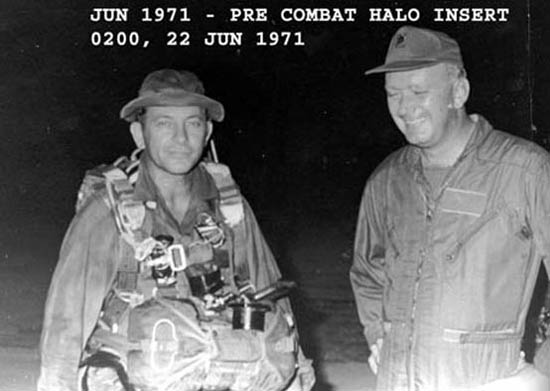
<p>His story is not just one man’s biography. It is the story of American special operations itself—from the birth of the Green Berets in the 1950s through the Global War on Terror. It is a story of patriotism, sacrifice, and the moral ambiguities that come with fighting in the shadows. And it raises uncomfortable questions about the methods used in America’s secret wars, and the toll they take on those who wage them.</p>

<p>Billy Waugh died on April 4, 2023, at the age of 93. He was, by any measure, a legend. But legends are complicated. And Waugh’s legacy is no exception.</p>

<hr />

<h2 id="i-the-making-of-a-warrior-early-years-and-korea">I. The Making of a Warrior: Early Years and Korea</h2>

<p>William Dawson Waugh was born on December 1, 1929, in Bastrop, Texas. His childhood was modest—his mother was a college-educated woman who worked constantly to support the family; his father, by Waugh’s own account, was “not-so-focused.” Billy worked from the age of eight, pumping gas, stacking groceries, popping popcorn at the local theater, lifeguarding at the state park.</p>

<p>Military men were his heroes. The story goes that in 1945, at age 15, Waugh met two local Marines who had just returned from fighting in the South Pacific during World War II. Something about them—their bearing, their stories, their sense of purpose—ignited a fire in the young Texan. He decided then and there to enlist.</p>

<p>Somehow, Waugh got the idea that the enlistment age in California was 16. So he hitchhiked from Texas to Los Angeles, hoping to slip past the recruiters. He made it as far as Las Cruces, New Mexico, where a police officer stopped him for having no identification and refusing to give his name. He was jailed, then sent home to his mother.</p>

<p>The attempt failed, but the ambition did not fade. Waugh threw himself into high school, graduating with a 4.0 GPA, waiting for his chance. In 1948, six months after his 18th birthday, he enlisted in the U.S. Army.</p>

<p>He attended Airborne School in December 1948, becoming a paratrooper with the 82nd Airborne at Fort Bragg, North Carolina. But Waugh wanted combat. In 1951, he re-enlisted specifically to get an assignment with the 187th Airborne Regimental Combat Team (the “Rakkasans”), which was then fighting in Korea.</p>

<p><img src="/assets/img/posts/billy_waugh_the_godfather/Billy_2.jpg" class="lightboxable" alt="Billy Waugh 1971" />
<em>Billy Waugh in 1971, during his MACV-SOG era. This was around the time he conducted the first combat HALO jumps in military history.</em></p>
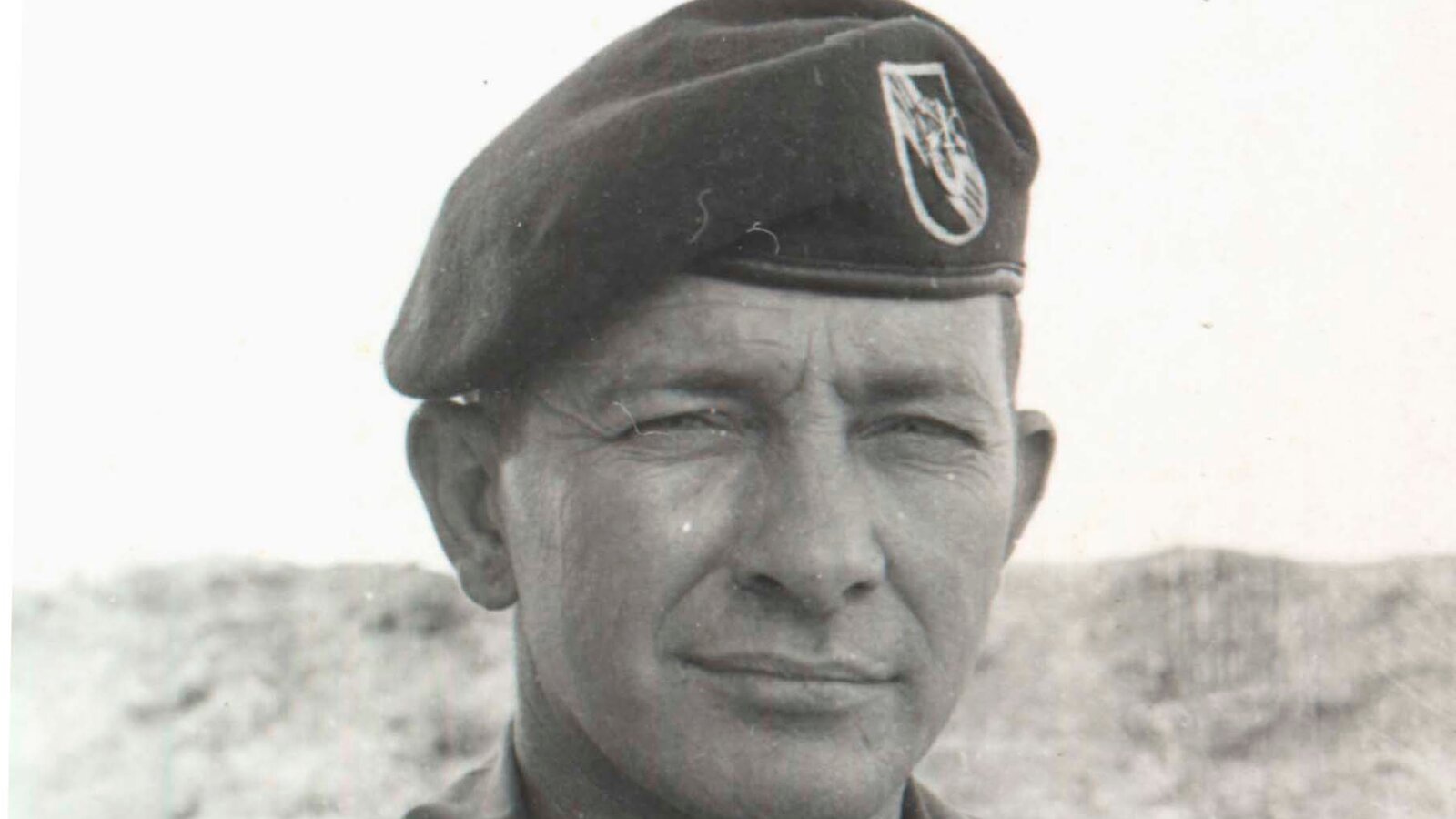
<p>The Korean War taught Waugh what combat was about. “I learned what made men tick,” he later wrote. “I learned what combat was all about.” But it was after Korea, while stationed in Germany, that Waugh’s career took its decisive turn.</p>

<p>Riding a train in 1954, Waugh met a couple of NCOs from the 10th Special Forces Group. They explained the opportunities that existed for NCOs in the unit—what Special Forces was all about. Waugh volunteered immediately. He entered the training pipeline and earned his Green Beret in 1954, joining the 10th Special Forces Group in Bad Tölz, West Germany.</p>

<p>He had found his home.</p>

<hr />

<h2 id="ii-vietnam-the-first-halo-jump-and-the-battle-of-bong-son">II. Vietnam: The First HALO Jump and the Battle of Bong Son</h2>

<p>Waugh’s first deployment to Vietnam came in 1961, part of the early U.S. advisory mission codenamed White Star. He worked alongside Civilian Irregular Defense Groups (CIDGs)—tribesmen and local fighters trained by Special Forces to combat Viet Cong insurgents. He would return to Vietnam multiple times over the next decade, but nothing prepared him for what happened in June 1965.</p>

<h3 id="the-battle-of-bong-son">The Battle of Bong Son</h3>

<p>On June 18, 1965, Waugh was the team sergeant for A Team, 5th Special Forces Group. Intelligence had reported a few hundred North Vietnamese Army (NVA) troops in the target area near Bong Son, Binh Dinh Province. The estimate was catastrophically wrong.</p>

<p>When Waugh and his team of 86 Vietnamese “mercenaries,” as he called them, raided the encampment after midnight, they discovered not hundreds but more than 4,000 NVA troops, including Chinese regulars. The engagement that followed was a slaughter.</p>

<p>Waugh’s ammunition ran low. He was struck in the knee by a Soviet-made RPK bullet. As he tried to crawl to cover, he was hit again—in the ankle and foot. Then came the worst wound: a bullet that sliced across the right side of his forehead.</p>

<p>“I don’t know for sure, but I believe the bullet ricocheted off the bamboo before striking me,” Waugh later recalled. “It sliced in and out of a two-inch section of my forehead, and it immediately started to bleed like an open faucet. It sounds like the punch line to a bad joke, but you know it’s a bad day when the best thing about it is getting shot in the head.”</p>

<p>Waugh went unconscious. The NVA stripped him of his clothing, gear, and Rolex watch, then left him for dead with the other casualties. He was rescued by his team leader, Captain Paris Davis, who dragged him to safety under fire. Davis would be awarded the Medal of Honor for his actions in 2023—58 years after the fact.</p>

<p>Waugh spent much of 1965 and 1966 recuperating at Walter Reed Army Hospital in Washington, D.C. He received a Silver Star and his sixth Purple Heart for the battle. But the wounds were severe—head, legs, ankle, foot—and most men would have retired.</p>

<p>Waugh returned to Vietnam in 1966.</p>

<h3 id="macv-sog-and-the-halo-innovation">MACV-SOG and the HALO Innovation</h3>

<p>After his recovery, Waugh joined the Military Assistance Command, Vietnam—Studies and Observations Group (MACV-SOG), the most classified special operations unit of the Vietnam War. SOG conducted cross-border reconnaissance, prisoner snatches, and unconventional warfare against the NVA along the Ho Chi Minh Trail.</p>

<p>“There was no rest at SOG,” Waugh wrote in his 2019 book <em>Surprise, Kill, Vanish</em>. “Only war, recon, rescue, sleep.”</p>

<p>It was with SOG that Waugh pioneered one of special operations’ most enduring techniques: the combat HALO jump. HALO—High Altitude, Low Opening—is a parachuting method designed for rapid, undetected insertion into hostile territory. Jumpers exit aircraft at altitudes up to 30,000 feet, freefall to just above the ground, then open their parachutes and land silently.</p>

<p>In October 1970, Waugh’s team made a practice combat infiltration into NVA-owned War Zone D in South Vietnam—the first HALO jump in a combat zone. Waugh broke his right ankle on that jump (the eighth or ninth time he’d broken it) but completed the mission anyway.</p>

<p>The first actual combat HALO operation against the Ho Chi Minh Trail was led by SFC Melvin Hill in November 1970. Waugh led the third combat HALO insertion on June 22, 1971—the last combat special reconnaissance parachute insertion by American Special Forces HALO parachutists into NVA-occupied territory.</p>

<p>“We HALO’d in from 19,000 feet, into the jungle, at 0300 in the rain,” Waugh recalled. “All perfect for the HALO infiltration.”</p>

<p>The mission was not without cost. One of Waugh’s four-man team, Sergeant Madison Strohlein, was killed in action. The other three continued the mission, having completely surprised the NVA in the area.</p>

<p>Waugh retired from active military duty on February 1, 1972, at the rank of Sergeant Major (E-9). His awards included the Silver Star, four Bronze Stars, four Army Commendation Medals, 14 Army Air Medals, and eight Purple Hearts. He had served 24 years in the Army, much of it in combat.</p>

<p>Most men would have walked away. Waugh spent the next five years as a letter carrier for the U.S. Postal Service.</p>

<p>“After nearly twenty years in SF, much of it in combat, sorting mail doesn’t scratch the same itch,” he wrote. “Not even close.”</p>

<hr />

<h2 id="iii-the-cia-years-libya-sudan-and-the-hunt-for-terrorists">III. The CIA Years: Libya, Sudan, and the Hunt for Terrorists</h2>

<p>In 1977, Waugh accepted an offer from Edwin Wilson, a former CIA officer, to work in Libya training that country’s special forces. The assignment was complicated: Wilson was not acting with official CIA authorization, and Waugh might have faced prosecution had he not simultaneously been approached by the actual CIA to work as an asset while in Libya.</p>

<p>Waugh chose the latter. While ostensibly training Libyan forces, he photographed military installations, surface-to-air missile sites, and personnel, providing the CIA with intelligence on Soviet military assistance to Libya. The arrangement likely protected him from prosecution when Wilson was later indicted and convicted in 1979 for illegally selling weapons to Libya.</p>

<p>Waugh’s CIA career spanned nearly three decades. He worked in the Marshall Islands tracking Soviet small boat teams attempting to steal U.S. missile technology. He conducted surveillance operations across Africa, the Middle East, and Southeast Asia. And in the 1990s, he became one of the central figures in the hunt for two of the world’s most wanted terrorists: Carlos the Jackal and Osama bin Laden.</p>

<h3 id="khartoum-the-jackal-and-the-saudi">Khartoum: The Jackal and the Saudi</h3>

<p>In the early 1990s, Waugh was stationed in Khartoum, Sudan, working alongside Cofer Black (later the CIA’s Counterterrorist Center chief) on surveillance operations. His targets: Ilich Ramírez Sánchez, known as Carlos the Jackal, and Osama bin Laden.</p>

<p>Waugh’s cover was that of a madman—a white American jogger running through the streets of Khartoum at midnight in desert heat and pollution. “I used jogging as a cover,” Waugh explained. “If you imagine the majority of the population of Khartoum are African, then I stood out! I used to go jogging between midnight and 4:00 AM every night to keep an eye on him.”</p>

<p>He established observation posts, photographed targets, and gathered intelligence. In January 1994, Waugh spotted a bodyguard of Carlos the Jackal. He followed the bodyguard, identified the vehicle, and on February 8, 1994, photographed Carlos on the streets of Khartoum—the first confirmed photos of the terrorist in years.</p>

<p>Waugh and his team found the apartment where Carlos lived and established a four-month observation post 100 meters away. They took over 2,000 photos of Carlos, his wife, his bodyguards, and visitors. The information was passed to the French DST (Direction de la Surveillance du Territoire).</p>

<p>On August 13, 1994, Carlos was drugged during minor surgery, bundled up, and handed to the French DST. He was sentenced to life in prison, where he remains today.</p>

<p>“He is in a high-security prison in France for life thanks to Billy,” said Enrique Prado, retired CIA chief of operations for the Counterterrorist Center.</p>

<h3 id="bin-laden-the-one-that-got-away">Bin Laden: The One That Got Away</h3>

<p>But there was another target in Khartoum. In early 1992, Waugh was tasked with surveilling Osama bin Laden, who was then living in Sudan after being expelled from Saudi Arabia.</p>

<p>Waugh placed bin Laden under surveillance for nearly a year. He saw him every day as bin Laden drove to support sites across the street from Waugh’s clandestine position.</p>

<p>“I could have waxed UBL with not one problem,” Waugh said later, using the acronym for Usama bin Laden. But authorization for a kill mission never came.</p>

<p>“I was within 30 meters of him,” Waugh recalled. “I could have killed him with a rock.”</p>

<p>The proposal Waugh favored was straightforward: a two-car team would smash into bin Laden’s vehicle, and CIA operators in the second car would shoot bin Laden and his driver with suppressed MP-5 submachine guns. But the CIA would not authorize the mission. Bin Laden would later mastermind the 1998 embassy bombings in East Africa, the 2000 attack on the USS Cole, and the September 11, 2001 attacks that killed nearly 3,000 people.</p>

<p>Waugh would get another chance. But it would take the horror of 9/11 to make that possible.</p>

<hr />

<h2 id="iv-afghanistan-the-last-war-at-age-71">IV. Afghanistan: The Last War at Age 71</h2>

<p>On September 11, 2001, Waugh was 71 years old. Most men would have retired decades earlier. Waugh contacted his former CIA colleagues and volunteered for deployment to Afghanistan.</p>

<p>He was assigned to ODA 594—Operational Detachment Alpha 594—a combined CIA and Special Forces unit tasked with hunting Taliban and al-Qaeda fighters. In November 2001, Waugh deployed to Afghanistan as part of the Northern Alliance Liaison Team led by Gary Schroen.</p>

<p><img src="/assets/img/posts/billy_waugh_the_godfather/billy-1.jpg" class="lightboxable" alt="Billy Waugh portrait" />
<em>Billy Waugh in his Green Beret. Waugh served for over 50 years in Special Forces and the CIA, from Korea to Afghanistan.</em></p>
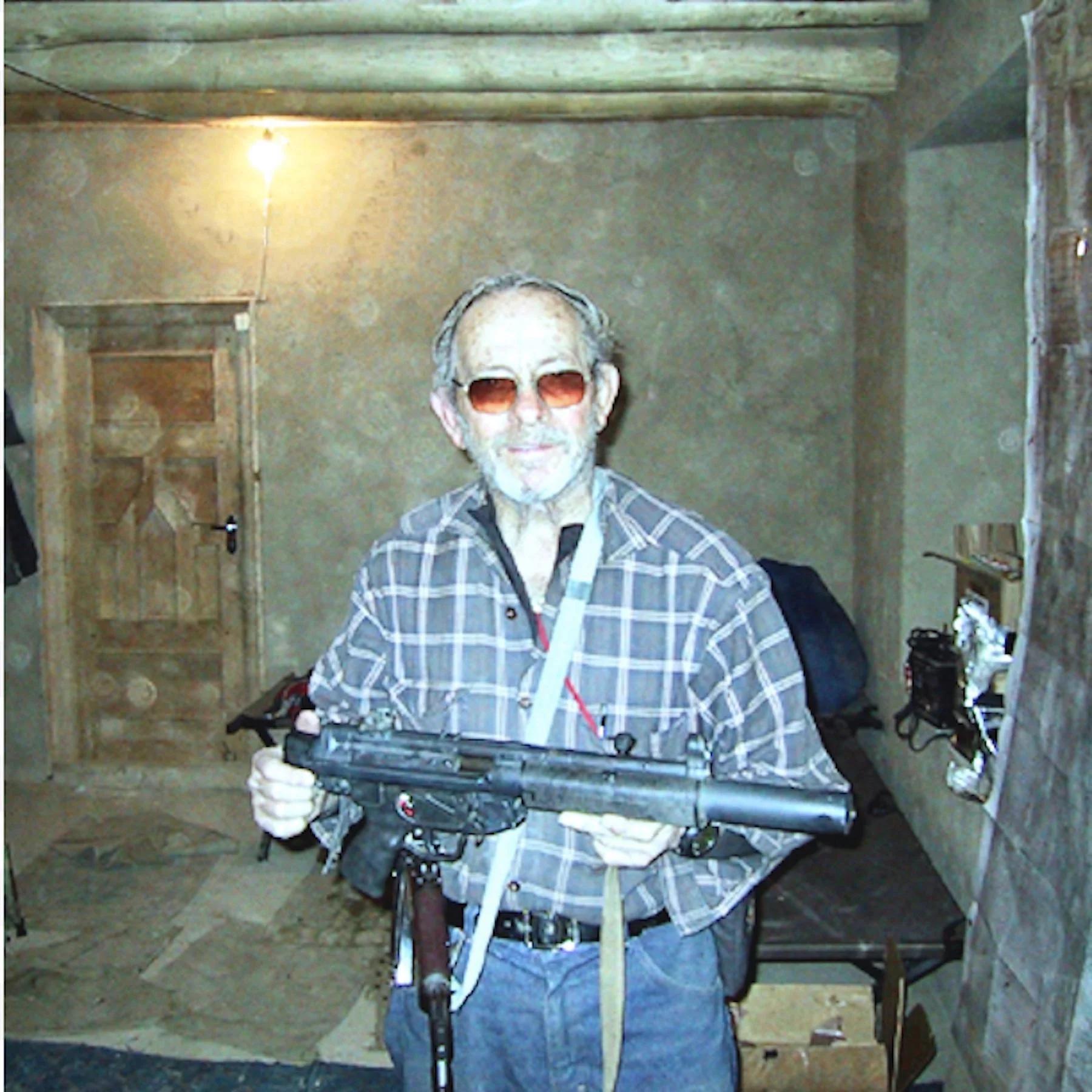
<p>The deployment was brutal. Each operator carried 110 pounds of equipment through mountainous terrain in freezing temperatures. They kicked in doors, conducted raids, and gathered intelligence. Waugh was at the Battle of Tora Bora, where bin Laden narrowly escaped capture.</p>

<p>“Two weeks earlier, when the United States Air Force C-17 Globemaster III headed for Afghanistan lifted off with me aboard, our country was officially embarking on its War on Terror,” Waugh wrote. “I, however, had been at war against terror for quite some time. To me, Operation Enduring Freedom was a natural extension of the work I’d been conducting for close to fifty years.”</p>

<p>Waugh spent two months in Afghanistan before rotating out. He would continue working as a contractor and mentor to special operations personnel for years afterward. But Afghanistan marked his final operational deployment.</p>

<hr />

<h2 id="v-controversies-the-shadow-side-of-shadow-wars">V. Controversies: The Shadow Side of Shadow Wars</h2>

<p>Billy Waugh’s career was not without controversy. The methods he used—and the broader programs he served—are subjects of intense ethical and legal debate.</p>

<h3 id="the-edwin-wilson-connection">The Edwin Wilson Connection</h3>

<p>Waugh’s initial CIA work in Libya came through Edwin Wilson, a former CIA officer who was later convicted in 1979 for illegally selling weapons to Libya. Wilson’s convictions were overturned in 2003 after it was revealed that the Department of Justice had relied on a false affidavit during prosecution. Wilson was freed the following year.</p>

<p>Waugh’s involvement with Wilson raised questions about the extent to which the CIA was aware of his activities—and whether Waugh was acting as an official asset or a rogue operator. The official line is that Waugh was simultaneously approached by the CIA to work as an asset while in Libya, which likely protected him from prosecution. But the details remain murky.</p>

<h3 id="enhanced-interrogation-and-torture-allegations">Enhanced Interrogation and Torture Allegations</h3>

<p>More seriously, Waugh’s career intersected with the CIA’s post-9/11 “enhanced interrogation” program. While there is no direct evidence that Waugh personally conducted torture, his work as a CIA contractor placed him in the same ecosystem as the program’s architects and operators.</p>

<p>The CIA’s use of waterboarding and other coercive techniques on detainees like Khalid Sheikh Mohammed and Abu Zubaydah has been widely condemned as torture. According to declassified documents, Abu Zubaydah was waterboarded 83 times. Khalid Sheikh Mohammed and Abu Zubaydah were waterboarded a combined 266 times.</p>

<p>Waugh never publicly commented on these techniques. But his long association with the CIA’s Special Activities Division—and his work in the same counterterrorism circles as Cofer Black, who later became the CIA’s Counterterrorist Center director—raises questions about what he knew, and what he may have participated in.</p>

<p>In 2008, CIA Director Michael Hayden confirmed that the CIA had used waterboarding “on only three detainees” since September 11, 2001: Khalid Sheikh Mohammed, Abu Zubaydah, and Abd al-Rahim al-Nashiri. All three were in CIA custody during the period when Waugh was working as a contractor in the War on Terror.</p>

<p>The broader question is whether Waugh’s legendary status—as a patriot, a warrior, a man who served his country for fifty years—overshadows the moral complexities of that service. Waugh himself seemed to embrace this ambiguity. “My craving is, and always has been, to be involved in actions conducted to ensure America remains strong, safe, and free of those who have its destruction as their goal,” he said.</p>

<p>But at what cost? And who decides which actions are justified in the name of national security?</p>

<hr />

<h2 id="vi-legacy-the-godfathers-shadow">VI. Legacy: The Godfather’s Shadow</h2>

<p>Billy Waugh’s legacy is secure as one of the most decorated and accomplished special operators in American history. He served in Korea, Vietnam, and Afghanistan. He conducted the first combat HALO jump. He helped capture Carlos the Jackal. He hunted Osama bin Laden across three continents. He inspired generations of special operations personnel.</p>

<p>But his story also raises uncomfortable questions about the nature of American power in the post-World War II era. About the men who carry out the nation’s shadow wars, often without public accountability. About the moral compromises made in the name of security. And about the personal toll of a life spent in the shadows.</p>

<p>Waugh never fully retired. He worked as a mentor, lecturer, and contractor, passing on his knowledge to younger operators. He published two books: <em>Hunting the Jackal</em> (2005), his autobiography, and contributions to <em>Surprise, Kill, Vanish</em> (2019), Annie Jacobsen’s history of CIA paramilitary operations.</p>

<p><img src="/assets/img/posts/billy_waugh_the_godfather/billy_4.jpg" class="lightboxable" alt="Billy Waugh in later years" />
<em>Billy Waugh in his later years. The legendary operator died on April 4, 2023, at the age of 93. “You’ve been in my life for so long I’ll work at that job until I join you.”</em></p>
<p>He died on April 4, 2023, at the age of 93. His passing was confirmed by 1st Special Forces Command, which called him a “true warrior” who had “inspired a generation of special operations.”</p>

<p>In his autobiography, Waugh dedicated his life’s work to fallen comrades: “You’ve been in my life for so long I’ll work at that job until I join you.”</p>

<p>He kept that promise. For fifty years, Billy Waugh was at war. And when the wars ended, he found new ones.</p>

<hr />

<h2 id="sources-and-further-reading">Sources and Further Reading</h2>

<p><strong>Primary Sources:</strong></p>
<ul>
  <li>Waugh, Billy, with Marvin J. Wolf. <em>Hunting the Jackal: A Special Forces and CIA Soldier’s Fifty Years on the Frontlines of the War Against Terror</em>. Wiley, 2005.</li>
  <li>Waugh, Billy. Contributions to <em>Surprise, Kill, Vanish: The Secret History of CIA Paramilitary Armies, Operators, and Assassins</em> by Annie Jacobsen. Little, Brown and Company, 2019.</li>
  <li>U.S. Army Special Operations Command. “Billy Waugh Biography.” Special Warfare Center and School, 2011.</li>
</ul>

<p><strong>Secondary Sources:</strong></p>
<ul>
  <li>HistoryNet. “Billy Waugh, Famed Special Forces Warrior and CIA Legend, Dies At 93.” April 10, 2023.</li>
  <li>Military.com. “From Korea to Afghanistan: Special Forces Legend Billy Waugh’s Amazing Career Spanned Five Decades.” April 6, 2023.</li>
  <li>Military Times. “The Legend of Billy Waugh: Special Forces Soldier, CIA Contractor.” June 30, 2023.</li>
  <li>Task &amp; Purpose. “Billy Waugh, Special Forces Legend, Passes Away at 93.” April 4, 2023.</li>
  <li>SOFREP. “Billy Waugh: The Legendary 71-Year-Old Osama bin Laden Hunter.” August 30, 2021.</li>
  <li>War History Online. “Billy Waugh Couldn’t Walk Away From the US Military, Not Even After Being Shot In the Head.” October 19, 2022.</li>
  <li>Dangerous Magazine. “Soldier in the Shadows: Billy Waugh Turns 83.” December 1, 2012.</li>
</ul>

<p><strong>On Controversies:</strong></p>
<ul>
  <li>Mayer, Jane. <em>The Dark Side: The Inside Story of How the War on Terror Turned into a War on American Ideals</em>. Doubleday, 2008.</li>
  <li>U.S. Senate Select Committee on Intelligence. “Committee Study of the Central Intelligence Agency’s Detention and Interrogation Program.” 2014.</li>
  <li>JURIST. “CIA Chief Confirms Use of Waterboarding on 3 Terror Detainees.” February 6, 2008.</li>
</ul>

<p><strong>Documentary Films:</strong></p>
<ul>
  <li><em>The Secret History of the CIA</em> (various documentaries featuring Waugh’s operations)</li>
  <li><em>Tora Bora: The True Story</em> (History Channel)</li>
</ul>

<p>End.</p>

<hr />

<blockquote>
  <p>“There was no rest at SOG, only war, recon, rescue, sleep.”</p>

  <p>— Billy Waugh, <em>Surprise, Kill, Vanish</em></p>
</blockquote>

<blockquote>
  <p>“I had been at war against terror for quite some time. To me, Operation Enduring Freedom was a natural extension of the work I’d been conducting for close to fifty years.”</p>

  <p>— Billy Waugh, on deploying to Afghanistan at age 71</p>
</blockquote>

<blockquote>
  <p>“I was within 30 meters of him. I could have killed him with a rock.”</p>

  <p>— Billy Waugh, on coming close to killing Osama bin Laden in Sudan</p>
</blockquote>

<blockquote>
  <p>“You’ve been in my life for so long I’ll work at that job until I join you.”</p>

  <p>— Billy Waugh’s dedication to fallen Special Forces comrades</p>
</blockquote>]]></content><author><name>Connor Hall</name></author><category term="essay" /><category term="Billy Waugh" /><category term="Special Forces" /><category term="CIA" /><category term="MACV-SOG" /><category term="Vietnam" /><category term="Afghanistan" /><category term="ODA 594" /><category term="HALO" /><category term="War on Terror" /><summary type="html"><![CDATA[Introduction: The Man Who Never Left the War]]></summary></entry><entry><title type="html">The Forgotten Atrocity: Unit 731 and the Price of Silence</title><link href="https://alalunw.github.io/2026/05/04/Unit-731/" rel="alternate" type="text/html" title="The Forgotten Atrocity: Unit 731 and the Price of Silence" /><published>2026-05-04T00:00:00+00:00</published><updated>2026-05-04T00:00:00+00:00</updated><id>https://alalunw.github.io/2026/05/04/Unit-731</id><content type="html" xml:base="https://alalunw.github.io/2026/05/04/Unit-731/"><![CDATA[<h2 id="content-warning">Content Warning</h2>

<p><em>This essay contains descriptions of human experimentation, biological warfare, and wartime atrocities. The historical facts are presented without gratuitous detail, but the subject matter is inherently disturbing.</em></p>

<hr />

<h2 id="introduction-the-silence-after-the-storm">Introduction: The Silence After the Storm</h2>

<p>In December 1945, three months after Japan’s surrender, Lieutenant Colonel Murray Sanders of the U.S. Army Medical Corps sat across a table from a man who had overseen some of the most horrific experiments in human history. His name was Shirō Ishii.</p>

<p><img src="/assets/img/posts/unit-731/ishii.jpg" class="lightboxable" alt="Shirō Ishii portrait" /></p>

<p><img src="/assets/img/posts/unit-731/ishii_ltc.jpg" class="lightboxable" alt="Shirō Ishii (LTC)" /></p>

<p>He was the commander of Unit 731, a secret biological warfare research facility hidden in the frozen plains of Manchuria.</p>

<p>Sanders had a choice. He could prosecute Ishii for crimes against humanity. Or he could offer him immunity in exchange for the data—the results of nearly a decade of human experimentation on prisoners who never had names, only numbers.</p>

<p>The choice was made. The data was handed over. And one of the largest atrocities of World War II began its long, quiet slide into historical obscurity.</p>

<p>This is not just a story about what happened inside Unit 731’s walls. It is a story about why so few people know about it. About how atrocities committed in the name of science and empire were erased from collective memory through deliberate political calculation. And about how the Cold War’s opening moves determined which war crimes would be prosecuted, and which would be purchased, catalogued, and concealed.</p>

<p>Unit 731 was not a minor footnote. It was a sprawling network of facilities employing over 3,000 personnel across Manchuria and China. It killed an estimated 200,000 to 500,000 people through biological warfare attacks alone. It conducted systematic human experimentation on at least 3,000 prisoners within its facilities—men, women, and children subjected to vivisection without anesthesia, deliberate infection with plague and syphilis, frostbite testing, and weapons trials using human subjects as living test objects.</p>

<p>And yet, when most people think of World War II atrocities, they think of the Holocaust. They think of Auschwitz, of Dachau, of the Tokyo Trials’ condemned generals. They do not think of a facility in Harbin, Manchuria, where prisoners were called “logs” (丸太，<em>maruta</em>) because the official cover story was that the compound was a lumber mill.</p>

<p>Why? How does an atrocity of this magnitude become—seventy years later—a historical footnote, mentioned in passing if at all?</p>

<p>The answer lies not in the absence of evidence, but in its deliberate suppression. Not in ignorance, but in calculation. This is the story of Unit 731, and the silence that followed.</p>

<hr />

<h2 id="i-the-architecture-of-atrocity-what-unit-731-was">I. The Architecture of Atrocity: What Unit 731 Was</h2>

<p>Unit 731 was not a single facility. It was a network—a system of research centers, production facilities, and field test sites stretching across Japanese-occupied Asia. At its heart was the main compound in Pingfang, 24 kilometers south of Harbin in what was then Manchukuo, Japan’s puppet state in Manchuria.</p>

<p><img src="/assets/img/posts/unit-731/unit731_harbin.jpg" class="lightboxable" alt="Unit 731 Harbin Facility" />
<em>The Unit 731 facility in Harbin, Manchuria. The complex covered over 6 square kilometers and employed more than 3,000 personnel.</em></p>
<h3 id="the-physical-plant">The Physical Plant</h3>

<p>The Harbin complex was enormous. It covered approximately 6 square kilometers and included over 150 buildings. There were barracks for staff, administrative offices, research laboratories, production facilities for biological agents, animal breeding facilities for plague-infected fleas and mice, crematoria, and prison blocks where victims were held before experimentation.</p>

<p>The facility was designed with chilling efficiency. The research laboratories were arranged around the detention area, allowing researchers to observe prisoners while conducting their work. The prison blocks could hold up to 600 detainees at a time. There were specialized rooms for vivisection, for frostbite experiments, for hypobaric chamber testing that simulated high-altitude conditions. There were production lines for biological agents—plague, anthrax, cholera, typhoid, paratyphoid, dysentery, glanders.</p>

<p>The scale was industrial. Unit 731 could produce, at its peak, hundreds of kilograms of plague bacteria per month. It bred millions of fleas in specialized incubators. It maintained colonies of infected animals—mice, rats, rabbits—used both for research and as delivery mechanisms for biological weapons.</p>

<h3 id="the-network">The Network</h3>

<p>Unit 731 was the headquarters, but it was not alone. It was part of what became known as the “Ishii Network,” named after its founder and commander, Lieutenant General Shirō Ishii. The network included:</p>

<ul>
  <li><strong>Unit 100</strong> in Changchun, focused on animal diseases and some human experimentation</li>
</ul>

<p><img src="/assets/img/posts/unit-731/unit731_map.png" class="lightboxable" alt="Unit 731 network map" /></p>

<ul>
  <li><strong>Unit 516</strong> in Qiqihar, dedicated to chemical warfare research</li>
  <li><strong>Unit 1855</strong> in Beijing</li>
  <li><strong>Unit Ei 1644</strong> in Nanjing</li>
  <li><strong>Unit 8604</strong> in Guangzhou</li>
  <li><strong>Unit 9420</strong> in Singapore, with operations across Southeast Asia</li>
</ul>

<p>At its height, the network employed over 10,000 personnel. It stretched from Manchuria in the north to Singapore in the south. It was not a rogue operation. It was authorized by imperial decree from Emperor Hirohito himself in 1936, integrated into the Kwantung Army’s command structure, and funded by the Japanese state.</p>

<h3 id="the-people">The People</h3>

<p>Shirō Ishii was not a monster in the conventional sense. He was a trained medical doctor, a graduate of Tokyo Imperial University’s medical school. He was charismatic, intelligent, and utterly convinced of the necessity of his work. He had traveled extensively in Europe and the United States in the 1920s, studying biological warfare programs. He returned to Japan convinced that biological weapons were the future of warfare—and that Japan had fallen behind.</p>

<p>Ishii’s conviction was shared by many in Japan’s military and medical establishment. Unit 731 was not staffed by outliers or sadists alone. It included some of Japan’s leading medical researchers, university professors, and military physicians. They came from prestigious institutions—Tokyo Imperial University, Kyoto Imperial University, the Army Medical College. They published their findings in peer-reviewed journals. They attended conferences. They were, in every conventional sense, respectable scientists.</p>

<p><em>Shirō Ishii, commander of Unit 731 from its founding in 1933 until Japan’s surrender in 1945. He was granted immunity by the United States in exchange for research data.</em></p>

<p>Among them was Masaji Kitano, Ishii’s deputy and successor, who took over command in 1942. Kitano was a specialist in pathology and had studied in Germany before the war. He was, by all accounts, a meticulous administrator who expanded Unit 731’s operations even as Japan’s military situation deteriorated.</p>

<p><img src="/assets/img/posts/unit-731/kitano.jpg" class="lightboxable" alt="Masaji Kitano" /></p>

<p>There were university professors who rotated through Unit 731 for research stints. There were young medical graduates who saw assignment to Unit 731 as a career opportunity. There were military officers who saw biological warfare as Japan’s asymmetric advantage against numerically superior enemies.</p>

<p>None of them were anonymous. Their names are on the records. Their faces are in photographs. And most of them—like Ishii himself—would never face trial for what they did.</p>

<hr />

<h2 id="ii-the-experiments-what-they-did">II. The Experiments: What They Did</h2>

<p>The historical record of Unit 731’s activities comes from multiple sources: survivor testimonies (rare, from staff rather than victims), postwar interrogations, the Khabarovsk Trial transcripts, declassified U.S. intelligence documents, and Japanese researchers’ own publications. The picture they paint is one of systematic dehumanization and industrialized cruelty.</p>

<h3 id="human-experimentation">Human Experimentation</h3>

<p>Prisoners at Unit 731 were not prisoners of war in the conventional sense. They were <em>maruta</em>—”logs.” The term was not incidental. It reflected a deliberate process of dehumanization that made the subsequent experimentation psychologically possible for the researchers.</p>

<p>Victims were drawn from multiple populations: Chinese civilians and soldiers (the majority), Russian prisoners, Korean independence activists, Mongolian herders, and occasional Western POWs. They included children. They included pregnant women. They included entire families rounded up in security sweeps.</p>

<p>The experiments fell into several categories:</p>

<p><strong>Vivisection.</strong> Prisoners were subjected to surgical procedures without anesthesia, often while still conscious. Organs were removed to study the effects of disease. Limbs were amputated and reattached to opposite sides of the body. Stomachs were surgically removed and esophagi reattached to intestines. These were not emergency procedures. They were deliberate experiments, conducted to observe physiological processes in real time.</p>

<p>One former Unit 731 member, speaking anonymously to <em>The New York Times</em> in 1995, described his first vivisection:</p>

<blockquote>
  <p>“The fellow knew that it was over for him, and so he didn’t struggle when they led him into the room and tied him down, but when I picked up the scalpel, that’s when he began screaming. I cut him open from the chest to the stomach, and he screamed terribly, and his face was all twisted in agony. He made this unimaginable sound, he was screaming so horribly. But then finally he stopped. This was all in a day’s work for the surgeons, but it really left an impression on me because it was my first time.”</p>
</blockquote>

<p>The procedure he described was not unusual. Ken Yuasa, a Japanese Army surgeon, estimated that at least 1,000 Japanese medical personnel were involved in vivisection practices across China during the war. He stated plainly that such procedures were “routine.”</p>

<p><strong>Biological Weapons Testing.</strong> Prisoners were deliberately infected with plague, cholera, anthrax, typhoid, and other pathogens to study disease progression and test potential treatments. The infections were not therapeutic. They were fatal by design. Some prisoners were injected with diseases disguised as vaccinations. Others were exposed through aerosol dispersal, contaminated food and water, or infected fleas.</p>

<p><strong>Frostbite Testing.</strong> Limbs were exposed to freezing conditions to study frostbite and test treatments. Prisoners’ arms and legs were submerged in freezing water, left exposed in subzero temperatures, or subjected to controlled frostbite followed by various “treatments.” The research was ostensibly for the benefit of Japanese soldiers fighting in northern China and Manchuria, but the methods were indiscriminately lethal.</p>

<p><strong>Weapons Testing.</strong> Prisoners were tied to stakes at various distances and used as human targets for testing biological bombs, chemical weapons, and conventional explosives. Some were placed in low-pressure chambers to simulate high-altitude conditions, observing how long they could survive before suffocating.</p>

<p><strong>Other Experiments.</strong> Prisoners were subjected to blood transfusions with animal blood, forced consumption of seawater to test survivability, exposure to extreme heat and radiation, and deliberate malnutrition studies. Women were impregnated and then vivisected to study fetal development under various conditions.</p>

<h3 id="field-testing-and-biological-warfare">Field Testing and Biological Warfare</h3>

<p>The experiments inside Unit 731’s facilities were only part of the story. The facility’s ultimate purpose was the development and deployment of biological weapons—and those weapons were used, repeatedly, against Chinese civilian and military targets.</p>

<p>Unit 731 developed multiple delivery systems:</p>

<ul>
  <li>
    <p><strong>Infected Fleas.</strong> The most notorious was the “plague flea” bomb. Unit 731 bred millions of plague-infected fleas in specialized incubators. These fleas were then loaded into ceramic bombs designed to break open at low altitude, releasing the fleas to infect human populations below.</p>
  </li>
  <li>
    <p><strong>Contaminated Supplies.</strong> Food, water, and clothing were deliberately contaminated with pathogens and distributed to civilian populations or left in areas where they would be found.</p>
  </li>
  <li>
    <p><strong>Aerial Dissemination.</strong> Aircraft dropped bombs containing biological agents over cities and villages. Some were conventional bombs modified to disperse pathogens. Others were specialized containers designed to release infected insects or contaminated materials.</p>
  </li>
</ul>

<p>The results were catastrophic. Historical epidemiological studies have linked Unit 731’s activities to multiple plague outbreaks in China during the war:</p>

<ul>
  <li><strong>Changde, 1941.</strong> Unit 731 aircraft dropped plague-infected fleas over Changde, causing an epidemic that killed thousands.</li>
  <li><strong>Ningbo, 1940.</strong> Similar attacks caused plague outbreaks in Ningbo and surrounding areas.</li>
  <li><strong>Multiple locations, 1942-1945.</strong> Unit 731 personnel conducted field tests across occupied China, with documented outbreaks following their operations.</li>
</ul>

<p>Estimates vary, but conservative assessments suggest that biological weapons developed and deployed by Unit 731 caused between 200,000 and 500,000 deaths. These were not combat casualties. They were civilians—farmers, merchants, children—killed by weapons designed to weaponize disease itself.</p>

<hr />

<h2 id="iii-the-cover-up-immunity-for-information">III. The Cover-Up: Immunity for Information</h2>

<p>In August 1945, as Japan’s surrender became inevitable, Unit 731’s leadership took deliberate steps to destroy evidence. Buildings were demolished. Documents were burned. Prisoners still alive were killed. Staff were dispersed, instructed never to speak of their work.</p>

<p>But the physical destruction of evidence was only half the story. The other half was being written in Washington and Tokyo, in negotiations that would determine whether Unit 731’s personnel would face justice—or freedom.</p>

<h3 id="the-american-decision">The American Decision</h3>

<p>Lieutenant Colonel Murray Sanders arrived in Japan in September 1945 as part of the Allied occupation forces. His assignment: investigate Japan’s biological warfare program. He quickly identified Unit 731 as the central organization. He also identified Shirō Ishii as the key to understanding what had happened.</p>

<p>Sanders made a recommendation that would shape the postwar fate of Unit 731’s personnel. He suggested that immunity be offered to Ishii and other senior researchers in exchange for their data. The reasoning was straightforward: the information was unique, potentially valuable for American biological warfare research, and unobtainable through any other means. Human experimentation on this scale was ethically unthinkable—and scientifically unprecedented.</p>

<p>The offer was made. Ishii accepted.</p>

<p>Over the following months, U.S. authorities conducted extensive interrogations of Unit 731 personnel. They collected thousands of pages of documentation, photographs, and research data. They confirmed the basic outlines of Unit 731’s activities. And they made a deliberate decision to conceal what they had learned.</p>

<p>The arrangement was formalized in 1946-1947. Unit 731 researchers would receive immunity from prosecution. Their data would be classified and incorporated into American biological warfare research. In return, they would provide complete information about their work. The U.S. government would pay stipends to former Unit 731 personnel—between 150,000 and 200,000 yen per person, a substantial sum at the time.</p>

<p>The arrangement was not public knowledge. It was not discussed at the Tokyo Trials. When evidence of biological warfare and human experimentation emerged, it was downplayed or suppressed. The Soviet Union, which had captured some Unit 731 personnel in Manchuria, would hold its own trials in 1949—but Western powers dismissed them as communist propaganda.</p>

<h3 id="the-soviet-response">The Soviet Response</h3>

<p>While the United States pursued immunity arrangements, the Soviet Union took a different approach. During their occupation of northern Manchuria, Soviet forces captured twelve Unit 731 personnel. In December 1949, these individuals were tried in Khabarovsk, in the Russian Far East.</p>

<p><img src="/assets/img/posts/unit-731/unit731_khabarovsk.jpg" class="lightboxable" alt="Khabarovsk Trial" />
<em>The Khabarovsk War Crimes Trials, December 1949. Twelve Unit 731 personnel were tried by Soviet authorities. All were convicted, receiving sentences ranging from 2 to 25 years in labor camps.</em></p>
<p>The Khabarovsk Trial produced extensive documentation. Eighteen volumes of interrogations and evidence were compiled. The defendants—including Major General Kiyoshi Kawashima, former chief of Unit 731’s medical services—provided detailed testimony about Unit 731’s activities, the chain of command, and the scope of operations.</p>

<p>All twelve defendants were convicted. Sentences ranged from two to twenty-five years in labor camps. But the trial was dismissed in the West as a communist show trial, despite the fact that the evidence presented was consistent with what American investigators had already gathered.</p>

<p>Historian Sheldon Harris, author of the definitive study <em>Factories of Death</em>, noted that the relatively light sentences suggested the Soviets had also struck a deal—information for leniency. The defendants were released by 1956 and repatriated to Japan.</p>

<h3 id="the-logic-of-concealment">The Logic of Concealment</h3>

<p>Why did the United States make this decision? Several factors converged:</p>

<p><strong>Cold War Priorities.</strong> By 1946-1947, the Soviet Union was emerging as America’s primary geopolitical rival. Biological warfare data was seen as strategically valuable. Prosecuting Japanese researchers would have meant public trials, international scrutiny, and potentially losing access to the data.</p>

<p><strong>Scientific Value.</strong> Unit 731’s data was unique. No other country had conducted human experimentation on this scale. The opportunity to study the effects of plague, anthrax, frostbite, and other conditions on human subjects was, from a purely scientific perspective, unprecedented—and ethically tainted beyond redemption.</p>

<p><strong>Political Expediency.</strong> Public trials would have been explosive. They would have required acknowledging the extent of Japanese atrocities in Asia—atrocities that had been downplayed during the war to maintain domestic support. They would have complicated the occupation of Japan, which increasingly focused on rebuilding Japan as a Cold War ally rather than punishing wartime crimes.</p>

<p><strong>Reciprocal Silence.</strong> There is evidence that the U.S. also wanted to protect its own biological warfare research from scrutiny. Acknowledging and condemning Japanese practices might have opened uncomfortable questions about American research programs.</p>

<p>The result was a deliberate, calculated erasure. Unit 731 would not be prosecuted. Its crimes would not be central to the historical narrative. The data would be absorbed, classified, and used. And the perpetrators would walk free.</p>

<hr />

<h2 id="iv-the-perpetrators-lives-after-atrocity">IV. The Perpetrators: Lives After Atrocity</h2>

<p>What happened to the people who ran Unit 731?</p>

<p><strong>Shirō Ishii</strong> returned to Japan after the war. He was never prosecuted. He lived quietly, reportedly providing occasional consulting to American intelligence. He died in 1959 at age 67, officially of throat cancer, though some accounts suggest he may have been assassinated by former colleagues who feared he might talk.</p>

<p><strong>Masaji Kitano</strong>, Ishii’s successor, also escaped prosecution. He went on to work in the pharmaceutical industry, eventually becoming president of a major Japanese pharmaceutical company. He died in 1986, never having faced trial for his role in Unit 731’s operations.</p>

<p><strong>Other Personnel.</strong> Many former Unit 731 members went on to successful careers in Japanese medicine, academia, and industry. Some became university professors. Some ran hospitals. Some worked in pharmaceutical companies. Their wartime service was not discussed. It was not on their resumes. It was a secret they carried—or a silence they accepted.</p>

<p>The immunity deal had an additional, unspoken component: former Unit 731 personnel were expected to maintain silence about their work. They were not to publish. They were not to discuss their experiences. The data belonged to the Americans now. The past was to remain buried.</p>

<p>This silence held, largely, until the 1980s. Then, a combination of factors began to break it open:</p>

<ul>
  <li>Japanese journalists and historians began investigating wartime atrocities more openly</li>
  <li>Former Unit 731 members, aging and facing mortality, began to speak</li>
  <li>Declassified U.S. documents became available through Freedom of Information Act requests</li>
  <li>Chinese and Korean researchers published documentation previously inaccessible</li>
</ul>

<p>But even today, seventy years later, the full extent of Unit 731’s activities remains debated. The Japanese government has never fully acknowledged the scope of the program. Official apologies have been limited and qualified. And in the West, Unit 731 remains what it has been since 1945: a historical footnote, mentioned in passing if at all, while the Holocaust occupies the central place in our collective memory of wartime atrocity.</p>

<hr />

<h2 id="v-the-memory-gap-why-we-dont-know">V. The Memory Gap: Why We Don’t Know</h2>

<p>Here is the central question: Why is Unit 731 not a household name?</p>

<p>The Holocaust killed six million Jews and millions of others. Unit 731 killed, by conservative estimates, 200,000 to 500,000 people through biological warfare alone, with thousands more killed in experiments. Both were systematic, state-sponsored atrocities. Both were enabled by ideologies of racial superiority. Both involved industrialized killing.</p>

<p>But one is central to our understanding of World War II. The other is barely mentioned.</p>

<p>This is not an accident. It is the result of deliberate political calculation.</p>

<h3 id="the-geography-of-memory">The Geography of Memory</h3>

<p>The Holocaust was committed by Germany, the defeated enemy. It was thoroughly documented by the perpetrators themselves (the Nazis were meticulous record-keepers) and by liberating Allied forces. It was central to the Nuremberg Trials. It fit neatly into the moral narrative of the war: good versus evil, democracy versus fascism.</p>

<p>Unit 731 was committed by Japan, also a defeated enemy. But the geopolitical context was different. The Tokyo Trials focused on conventional war crimes, not biological warfare. The United States had its own reasons to suppress evidence. And the Cold War transformed Japan from enemy to ally, making prosecution inconvenient.</p>

<p>Moreover, the victims of Unit 731 were primarily Chinese, Korean, and other Asian populations. Their suffering was, in the calculus of Western memory, less visible, less central, less <em>real</em> than the suffering of European Jews. This is not to diminish the Holocaust’s centrality—it is and must remain the paradigmatic case of modern genocide—but to acknowledge that Western historical memory has always been selective about Asian suffering.</p>

<h3 id="the-politics-of-forgetting">The Politics of Forgetting</h3>

<p>The American cover-up was not just about protecting data. It was about controlling narrative. If Unit 731’s crimes were fully acknowledged, several uncomfortable truths would have to be confronted:</p>

<ol>
  <li>The United States had purchased immunity for perpetrators of crimes against humanity</li>
  <li>Biological warfare research continued after the war, using data that could only have been obtained through atrocities</li>
  <li>The moral clarity of “the good war” was compromised by pragmatic deals with war criminals</li>
  <li>The victims were Asian, and their lives were discounted in the geopolitical calculus</li>
</ol>

<p>None of these truths served the postwar order. So Unit 731 was suppressed. Not denied—that would have been too obvious. Just… not discussed. Not taught. Not remembered.</p>

<h3 id="the-historiographical-silence">The Historiographical Silence</h3>

<p>Even in academic circles, Unit 731 received limited attention until the 1980s. Several factors contributed:</p>

<ul>
  <li><strong>Language barriers.</strong> Primary sources were in Japanese, Chinese, and Russian. Western historians often lacked the linguistic tools to access them.</li>
  <li><strong>Classification.</strong> U.S. documents remained classified for decades.</li>
  <li><strong>Cold War politics.</strong> Researching Japanese war crimes was politically sensitive in a U.S.-Japan alliance.</li>
  <li><strong>Disciplinary boundaries.</strong> The history of science, military history, and East Asian studies were separate fields. Unit 731 sat at their intersection.</li>
</ul>

<p>It took the work of journalists like Nicholas Kristof (whose 1995 <em>New York Times</em> investigation brought Unit 731 to Western attention), historians like Sheldon Harris and Yuki Tanaka, and survivor testimonies to piece together the full picture.</p>

<hr />

<h2 id="vi-the-historical-context-atrocity-in-the-japanese-empire">VI. The Historical Context: Atrocity in the Japanese Empire</h2>

<p>Unit 731 did not emerge in a vacuum. It was the product of specific historical, ideological, and institutional forces within Imperial Japan.</p>

<h3 id="imperial-ideology">Imperial Ideology</h3>

<p>The Japanese Empire was built on ideologies of racial and cultural superiority. The concept of <em>Yamato-damashii</em> (Japanese spirit) positioned the Japanese as inherently superior to other Asian peoples. Chinese, Koreans, and other colonized populations were viewed as inferior, expendable, less than fully human.</p>

<p>This ideology made atrocities possible. It is not that Japanese culture uniquely enabled cruelty—every nation has produced atrocities under specific conditions—but that the imperial ideology created a framework in which certain populations were deemed unworthy of moral consideration.</p>

<h3 id="the-precedent-of-chemical-warfare">The Precedent of Chemical Warfare</h3>

<p>Japan had experimented with chemical weapons during World War I and had signed the 1925 Geneva Protocol banning chemical and biological warfare. But like other signatories, Japan had not ratified the biological warfare provisions—and had no intention of abiding by them.</p>

<p>Chemical warfare research began in the 1920s. Unit 731 was its logical extension. The same ideological framework that enabled chemical weapons research enabled biological warfare. The same dehumanization of victims made both possible.</p>

<h3 id="the-medical-establishments-role">The Medical Establishment’s Role</h3>

<p>One of the most disturbing aspects of Unit 731 is the involvement of Japan’s medical and scientific establishment. This was not a rogue operation. It was supported by leading universities, research institutions, and professional organizations.</p>

<p>Physicians who participated in Unit 731 did not see themselves as monsters. They saw themselves as scientists pursuing knowledge. The fact that the knowledge required killing human subjects was, in their calculus, a regrettable but necessary cost.</p>

<p>This is not unique to Japan. The same pattern appears in Nazi medical experiments, in American Tuskegee syphilis studies, in countless other cases where science has been divorced from ethics. But the scale of Unit 731—the industrial nature of the killing, the systematic approach to human experimentation—makes it a particularly stark example of what happens when science loses its moral compass.</p>

<hr />

<h2 id="vii-the-legacy-what-remains">VII. The Legacy: What Remains</h2>

<p>Unit 731 ended in 1945, but its legacy persists in multiple forms.</p>

<h3 id="unaccountable-crimes">Unaccountable Crimes</h3>

<p>No Unit 731 personnel were prosecuted by Allied powers. The Khabarovsk defendants served time in Soviet labor camps but were released by 1956. Ishii, Kitano, and the leadership walked free.</p>

<p>This impunity sent a message: that certain crimes, if useful enough, would not be punished. That data obtained through atrocities would be valued over justice for victims. That the lives of Asian civilians were worth less than strategic advantage.</p>

<h3 id="continued-biological-warfare-research">Continued Biological Warfare Research</h3>

<p>The data from Unit 731 did not disappear. It was incorporated into American and Soviet biological warfare programs. The knowledge gained—about plague dispersal, anthrax weaponization, frostbite treatment—was used to develop more effective biological weapons.</p>

<p>The United States maintained an active biological warfare program until 1969, when President Nixon renounced biological weapons. The Soviet program continued much longer. China developed its own biological warfare capabilities. The knowledge from Unit 731 contributed to all of these programs.</p>

<h3 id="historical-memory-and-denial">Historical Memory and Denial</h3>

<p>In Japan, Unit 731 remains controversial. Some Japanese historians and activists have worked to document and acknowledge the atrocities. But official government statements have been qualified and limited. Textbook controversies continue, with some Japanese textbooks minimizing or omitting discussion of wartime atrocities.</p>

<p>In China and Korea, Unit 731 is central to national memory of Japanese occupation. Museums and memorials exist at former Unit 731 sites. But these are largely unknown in the West.</p>

<h3 id="ethical-lessons">Ethical Lessons</h3>

<p>Unit 731 raises enduring ethical questions:</p>

<ul>
  <li>What obligations do scientists have to ensure their work is not used for atrocities?</li>
  <li>How should societies balance the value of scientific knowledge against the means by which it was obtained?</li>
  <li>When is it acceptable to use data obtained through unethical means?</li>
  <li>How do we remember atrocities that were deliberately concealed?</li>
</ul>

<p>These are not abstract questions. They apply to contemporary debates about AI ethics, genetic engineering, and dual-use research. Unit 731 is a case study in what happens when science is completely divorced from moral constraints.</p>

<hr />

<h2 id="viii-conclusion-the-price-of-silence">VIII. Conclusion: The Price of Silence</h2>

<p>Seventy years after Unit 731’s dissolution, the question remains: why does this history matter?</p>

<p>It matters because the victims deserve to be remembered. They were not statistics. They were individuals—farmers, students, children, parents—killed in the service of an ideology that deemed them unworthy of life. To forget them is to complete the dehumanization that Unit 731 began.</p>

<p>It matters because impunity has consequences. The decision to grant immunity to Unit 731’s perpetrators set a precedent: that certain knowledge is too valuable to be constrained by ethics, that certain crimes are too useful to be punished. This precedent echoes in contemporary debates about torture, surveillance, and military secrecy.</p>

<p>It matters because historical memory is political. What we choose to remember—and what we choose to forget—shapes our understanding of the present. Unit 731’s obscurity is not accidental. It is the result of deliberate choices by governments that prioritized strategic advantage over justice, data over dignity.</p>

<p>And it matters because the conditions that made Unit 731 possible have not disappeared. Dehumanization, ideological extremism, the separation of science from ethics—these are not historical artifacts. They are recurring patterns. Unit 731 is not just a story about what happened. It is a warning about what can happen again.</p>

<p>The silence around Unit 731 is not ignorance. It is a choice. And it is a choice we continue to make, every time we prioritize comfort over confrontation, every time we accept official narratives without questioning them, every time we allow the victims of yesterday’s atrocities to remain nameless.</p>

<p>The least we can do is remember their names. Even if the only names we know are the ones they were never allowed to speak: the logs of Unit 731, the men, women, and children who died so that others could call themselves scientists.</p>

<hr />

<h2 id="sources-and-further-reading">Sources and Further Reading</h2>

<p><strong>Primary Sources:</strong></p>
<ul>
  <li><em>Materials on the Trial of Former Servicemen of the Japanese Army Charged with Manufacturing and Employing Bacteriological Weapons</em> (Foreign Languages Publishing House, 1950)</li>
  <li>U.S. National Archives, Record Group 331: Allied Operational and Occupation Headquarters, World War II</li>
  <li>Declassified U.S. intelligence reports on Unit 731 (available via National Archives)</li>
</ul>

<p><strong>Secondary Sources:</strong></p>
<ul>
  <li>Harris, Sheldon H. <em>Factories of Death: Japanese Biological Warfare, 1932-1945, and the American Cover-up</em> (Routledge, 2nd ed. 2002)</li>
  <li>Gold, Hal. <em>Unit 731: Testimony</em> (Charles E. Tuttle, 1996)</li>
  <li>Barenblatt, Daniel. <em>A Plague Upon Humanity: The Secret Genocide of Axis Japan’s Germ Warfare Operation</em> (HarperCollins, 2004)</li>
  <li>Kristof, Nicholas D. “Unmasking Horror—A Special Report: Japan Confronting Gruesome War Atrocity.” <em>The New York Times</em>, March 17, 1995</li>
  <li>Nie, Jing-Bao. “The West’s Dismissal of the Khabarovsk Trial as ‘Communist Propaganda’: Ideology, Evidence and International Bioethics.” <em>Journal of Bioethical Inquiry</em> 1, no. 1 (2004): 32-42</li>
  <li>Williams, Peter, and Wallace, David. <em>Unit 731: Japan’s Secret Biological Warfare in World War II</em> (Free Press, 1989)</li>
  <li>Yuma, Totani. <em>Justice in Asia and the Pacific Region, 1945-1952: Allied War Crimes Prosecutions</em> (Cambridge University Press, 2015)</li>
</ul>

<p><strong>Documentary Films:</strong></p>
<ul>
  <li><em>Unit 731: Did the Emperor Know?</em> (BBC, 2002)</li>
  <li><em>The Truth About Unit 731</em> (Al Jazeera, 2015)</li>
</ul>

<p><strong>Museums and Memorials:</strong></p>
<ul>
  <li>Unit 731 Museum, Harbin, China</li>
  <li>Museum of the War of Chinese People’s Resistance Against Japanese Aggression, Beijing</li>
  <li>Unit 731 Exhibition Hall, Tokyo (private museum)</li>
</ul>

<p>End.</p>

<hr />

<blockquote>
  <p>“Evidence introduced during the hearings was based on eighteen volumes of interrogations and documentary material gathered in investigations over the previous four years. Some of the volumes included more than four hundred pages of depositions…. Unlike the Moscow Show Trials of the 1930s, the Japanese confessions made in the Khabarovsk trial were based on fact and not the fantasy of their handlers.”</p>

  <p>— Historian Sheldon Harris, <em>Factories of Death</em></p>
</blockquote>

<blockquote>
  <p>“It is a bitter experience for me to be informed now that centrally ordered Japanese war criminality of the most disgusting kind was kept secret from the court by the U.S. government.”</p>

  <p>— Judge Bert Röling, Tokyo Tribunal, 1981</p>
</blockquote>

<hr />]]></content><author><name>Connor Hall</name></author><category term="essay" /><category term="Unit 731" /><category term="Biological Warfare" /><category term="World War II" /><category term="Japan" /><category term="War Crimes" /><category term="Historical Memory" /><category term="Shirō Ishii" /><category term="Khabarovsk Trials" /><summary type="html"><![CDATA[Content Warning]]></summary></entry><entry><title type="html">The Prada Suit Made of Barbed Wire: Creative Implosions within The Police</title><link href="https://alalunw.github.io/2026/05/02/The-Police-Creative-Tension/" rel="alternate" type="text/html" title="The Prada Suit Made of Barbed Wire: Creative Implosions within The Police" /><published>2026-05-02T00:00:00+00:00</published><updated>2026-05-02T00:00:00+00:00</updated><id>https://alalunw.github.io/2026/05/02/The-Police-Creative-Tension</id><content type="html" xml:base="https://alalunw.github.io/2026/05/02/The-Police-Creative-Tension/"><![CDATA[<h1 id="the-prada-suit-made-of-barbed-wire">The Prada Suit Made of Barbed Wire</h1>

<p><img src="/assets/img/posts/the-police/thepolice_2.jpg" alt="The Police" /></p>

<p>I came late to The Police. Not late in the way that matters — the music doesn’t expire — but late in the way that means you discover them sideways, through fragments and echoes rather than the full force of cultural moment. What pulled me in wasn’t “Every Breath You Take” or “Roxanne,” songs so embedded in the culture they’d become almost invisible through familiarity. It was <em>Synchronicity I</em> — that ferocious, tumbling opener with its piledriver rhythm and Sting howling about “connecting spheres and synchronous machines” like a man who’d found the equation for the universe and was furious about it. Then <em>Driven to Tears</em>, with its jagged guitar figure and Copeland’s hi-hat splintering the groove into something nervous and alive. <em>Demolition Man</em>, all swagger and stretched-out funk. <em>Spirits in the Material World</em>, where the bass line does the work of an entire orchestra and the lyrics read like a theological pamphlet written at 3 a.m.</p>

<p>These weren’t the Police I thought I knew. They were sharper, stranger, more combative. The more I listened, the more I heard something that wasn’t just songwriting — it was <em>argument</em>. Three musicians who never quite agreed on what the music should be, and somehow that disagreement was the sound. The band’s brilliance and the band’s destruction came from the same source. Stewart Copeland eventually gave it the most precise description anyone has managed: <em>“Being in the Police was like wearing a Prada suit made out of barbed wire.”</em> Beautiful, expensive, excruciating. A garment that cuts you while you wear it, and that you can’t stop wearing because nothing else fits so well.</p>

<p>This is the story of that suit — and the three men who bled into it.</p>

<hr />

<h2 id="i-montserrat-1982-the-volcano-and-the-vacuum">I. Montserrat, 1982: The Volcano and the Vacuum</h2>

<p><img src="/assets/img/posts/the-police/thepolice_1.jpg" alt="AIR Studios Montserrat" /></p>

<p>George Martin’s AIR Studios sat on the Caribbean island of Montserrat like a postcard from paradise. Palm trees, turquoise water, volcanic peaks rising green against the sky. In December 1982, the three members of the Police arrived there to record their fifth album. They were, by any measure, the biggest rock band on the planet. <em>Ghost in the Machine</em> had been a commercial juggernaut. A gruelling hundred-night world tour had cemented their status. Expectations for the follow-up were enormous.</p>

<p>The setting promised tranquillity. What it delivered was claustrophobia.</p>

<p>The three men were dealing with broken marriages, the grind of tax exile, and a creative friction that had been sharpening since their third album. Within days of arriving, the atmosphere curdled. Sting and Copeland — the band’s twin poles of control and resistance — could barely occupy the same room. Summers, the elder statesman, watched from a position that was somehow both inside and outside the conflict. Padgham, the producer, tried to mediate and was told to fuck off for his trouble.</p>

<p>The solution they found was architectural. The three band members recorded the basic tracks in entirely separate spaces: Copeland with his drums in the dining room, connected to the control room via video link; Sting playing bass in the control room itself; Summers in the studio’s live room. Padgham later explained that this arrangement “worked both sonically and for social reasons.” The isolation was practical — it prevented audio bleed between instruments, and Copeland’s drums sounded best in the dining area. But it was also a confession. The most successful band in the world could not be in the same room together.</p>

<p>The album they were making would be called <em>Synchronicity</em>, after Carl Jung’s concept of meaningful coincidence — the idea that seemingly unrelated events could be connected by hidden patterns. The irony was merciless. An album named for hidden connections was being made by three men whose own connections were visibly, audibly fraying. And yet, from that fractured process, something astonishing emerged. Richard Cook of the <em>NME</em> would call it “the sound of a group coming apart and coming together, a widescreen drama with a fascination at a molecular level.” The music held — barely, gloriously — even as the men who made it did not.</p>

<hr />

<h2 id="ii-origins-collision-of-backgrounds">II. Origins: Collision of Backgrounds</h2>

<p>The Police were never supposed to work. On paper, the trio was an absurdity: three musicians from such different musical worlds that their union should have produced cacophony rather than pop transcendence.</p>

<p><strong>Sting</strong> — Gordon Sumner from Wallsend, a shipbuilding town on Tyneside — was a jazz musician. Before the Police, he’d played in the Phoenix Jazzmen, the Newcastle Big Band, and Last Exit, a jazz-rock fusion outfit that was, by his own admission, “big in the North East” but going nowhere when punk arrived. His musical heroes were Thelonious Monk and John Coltrane. He’d trained as a teacher. He was intellectually ambitious, drawn to literature (Nabokov, Jung), and he approached songwriting with a composer’s sense of structure: melody first, harmony as architecture, lyrics as something close to poetry. His bass lines didn’t thump — they <em>sang</em>, weaving counter-melodies beneath the vocal, functioning as a second voice rather than rhythmic bedrock.</p>

<p><strong>Stewart Copeland</strong> was an American in London, the son of a CIA officer and a former drummer for Curved Air, a progressive rock band. But Copeland’s instincts were punk, not prog. He’d formed the Police deliberately to join the burgeoning London punk scene — he saw the movement as a vehicle, a flag of convenience, a way to get gigs. His drumming was explosive, polyrhythmic, restlessly inventive. Where most punk drummers hit hard and fast, Copeland played with a sense of swing and syncopation drawn from Arabic music (he’d grown up in Beirut), reggae, and the nascent energy of new wave. He was the band’s organiser, its businessman, its founder. He named it. He recruited Sting. He booked the early gigs.</p>

<p><strong>Andy Summers</strong> was something else entirely — a decade older than his bandmates, born in 1942, with a professional career stretching back to the mid-1960s. He’d played with Zoot Money’s Big Roll Band, Dantalian’s Chariot, Soft Machine, and Eric Burdon and the Animals. As a teenager, he’d seen Thelonious Monk and Dizzy Gillespie in concert and the experience left a mark. His guitar vocabulary drew from jazz (Kenny Burrell, Wes Montgomery), psychedelic rock, and avant-garde experimentation. When he encountered Copeland on the London Underground in 1977, he delivered what amounts to the most audacious cold pitch in rock history: <em>“Stewart, you and that bass player, you’ve got something. But you need me in the band — and I accept.”</em></p>

<p>What these three backgrounds produced was a sound that shouldn’t have existed. The Police weren’t punk, weren’t jazz, weren’t reggae, weren’t prog — but they drew from all of them. Sting’s harmonic sophistication gave the songs their architecture. Copeland’s rhythmic aggression gave them their pulse. Summers’ textural guitar work — chord voicings that no rock guitarist would choose, effects-laden atmospheres, arpeggiated patterns that functioned as both rhythm and melody — gave them their <em>surface</em>, their distinctive sonic fingerprint. The reggae-inflected bass lines, the hi-hat-driven polyrhythms, the guitar that shimmered and slashed in equal measure: this was the sound of three incompatible musical identities finding, for a few years, an unstable but electrifying equilibrium.</p>

<hr />

<h2 id="iii-chemistry-vs-control">III. Chemistry vs Control</h2>

<p>The early Police were, by all accounts, a genuine collaboration. The first two albums — <em>Outlandos d’Amour</em> (1978) and <em>Reggatta de Blanc</em> (1979) — bore songwriting credits distributed across all three members. Copeland contributed compositions like “On Any Other Day”; Summers won Grammy Awards for instrumental tracks like “Reggatta de Blanc” and “Behind My Camel.” The band rehearsed together, argued together, and arrived at arrangements collectively. The creative process was genuinely triangulated.</p>

<p>But the equilibrium was always temporary. Sting was the songwriter. He knew it. And as the band’s success grew, the gap between his contributions and everyone else’s became impossible to ignore — or to politely paper over.</p>

<blockquote>
  <p>“A band starts off, and no one’s roles are clearly defined,” Sting told the <em>Washington Post</em> in 2024. “In this case, it was Stewart’s band, and he was the drummer, and Andy was the great guitarist, but the currency of the band was songs. So they would write as much as I was writing, but they weren’t… they weren’t good enough, frankly.”</p>
</blockquote>

<p>It is a statement of extraordinary directness — the kind of thing you can only say forty years after the fact, when the scars have healed into anecdotes. But at the time, the dynamic it describes was corrosive. Sting’s songwriting dominance meant that the band’s publishing royalties flowed disproportionately to him. Copeland and Summers received a portion — a 1977 agreement gave them 15% of the publishing from “Every Breath You Take,” for instance — but the lion’s share went to the sole credited songwriter. For Copeland, the drummer whose polyrhythmic inventions defined the band’s rhythmic identity, this was not merely a financial grievance. It was an existential one.</p>

<blockquote>
  <p>“Music has a different function in our lives,” Copeland reflected in the same oral history. “We make it for different reasons. And the biggest difference which causes the most problems is that a songwriter quite reasonably feels that the reason for a band is to support the song. Now, I’m a drummer. I bang shit. I don’t listen to the lyrics. The song is in service of the group. And by the way, this cognition of the problem has arrived 40 years later. He just thought I was being an asshole. I just thought he was being a dick.”</p>
</blockquote>

<p>The gulf between these two philosophies — song as vessel for the group, group as vessel for the song — was irreconcilable. And it was not merely abstract. It determined who got paid, who got credit, whose artistic vision prevailed. Summers occupied an ambiguous position in this conflict: he was the band’s sonic architect, the guitarist whose contributions transformed Sting’s compositions from sketches into finished works, but his role was difficult to quantify in the binary language of songwriting credits. When he wrote the arpeggiated guitar figure for “Every Breath You Take” — the riff that made the song, the riff that became, as he later put it, “one of the most-played riffs in history” — he received no songwriting credit. The song was attributed solely to Sting. The Grammys for Song of the Year went to one man.</p>

<p>This wasn’t just about money, though money was part of it. It was about recognition. About whose work was deemed <em>compositional</em> and whose was merely <em>interpretive</em>. About the line between writing a song and making a song. Four decades later, that line is still being litigated: in 2025, Summers and Copeland sued Sting in London’s High Court over royalties from “Every Breath You Take,” arguing that their contributions deserved co-writing credit. The case is ongoing. The wound, it seems, has never fully closed.</p>

<hr />

<h2 id="iv-studio-as-battleground">IV. Studio as Battleground</h2>

<p>The recording studio was where the Police’s contradictions became most acute — and most productive. Their working method evolved from collaborative live recording (the early albums were tracked with all three playing together in a room) to a process of increasingly isolated overdubbing, where each member laid down parts separately, sometimes at different times of day.</p>

<p>By <em>Ghost in the Machine</em> (1981), the shift was evident. Sting arrived with songs more or less fully formed; Summers and Copeland added their distinctive parts afterward. The album introduced synthesisers and horns, thickening the texture but also moving the band further from its origins as a guitar-bass-drums trio. The arrangements were layered, meticulous, controlled — and the control came primarily from one person.</p>

<p>By <em>Synchronicity</em>, the process had become a form of creative triage. The three musicians, recording in separate rooms on Montserrat, were effectively making three parallel recordings of the same songs and hoping they aligned. Copeland would hear a song for perhaps half an hour before laying down his drum part — usually in two or three takes, the second being the keeper — and then Sting and the producer would redo the bass, the vocals, everything else, while Copeland’s drums, “with all of their imperfections,” as he dryly noted, remained locked in place. The drummer was the first in and the first out, his contributions captured in a state of raw spontaneity while the rest of the album was constructed around him with increasing precision.</p>

<p>Hugh Padgham, the producer who oversaw both <em>Ghost in the Machine</em> and <em>Synchronicity</em>, was the reluctant midwife to this process. His own career was defined by technical innovation — he’d accidentally invented the gated reverb drum sound during sessions with Peter Gabriel and Phil Collins, a technique that would become the signature audio texture of the 1980s. But with the Police, his primary role was less sonic innovator than peacekeeper, and he was spectacularly unsuccessful at it.</p>

<blockquote>
  <p>“By the time of <em>Synchronicity</em>, they were sick of each other,” Padgham told <em>Sound on Sound</em>. “Sting and Stewart hated each other, and although Andy didn’t show as much venom, he could be quite grumpy — and there were both verbal and physical fights in the studio. Often, when these would take place, I’d try to be Mr Producer and get in the way, saying, ‘Come on, do you have to kick the shit out of one another?’ But they’d just turn around and shout, ‘Get out of it! What do you know? You don’t know anything about us!’”</p>
</blockquote>

<p>The recording of “Every Breath You Take” was the nadir. Sting wanted Copeland to play a simple, steady rhythm — no fills, no flourishes, nothing that would distract from the song’s hypnotic minimalism. Copeland, whose entire musical identity was built on rhythmic invention, experienced this as a form of artistic suffocation. The argument consumed ten full days of studio time. Padgham recalls calling his manager to say he couldn’t handle it. He remembers “working full-on for 10 days in Montserrat and having nothing on tape that was playable.” The song was eventually assembled entirely from overdubs, including all drum parts — Copeland’s contributions stitched together from fragments rather than captured as a live performance.</p>

<p>The technical process mirrored the interpersonal one. Where once the Police had been a band that played together, in a room, feeding off each other’s energy in real time, they were now a band that <em>assembled</em> together — constructing records from isolated components, like architects building a house by mailing bricks to each other from different countries. The results could be stunning: “Every Breath You Take” is, by any measure, one of the most perfectly realised pop recordings ever made. But the perfection came at a cost. The album was, as Padgham later said, “actually one meeting away from not happening.” That meeting — a poolside intervention by the band’s manager, Miles Copeland, Stewart’s brother — saved the record. It didn’t save the band.</p>

<hr />

<h2 id="v-peak-success-maximum-friction">V. Peak Success, Maximum Friction</h2>

<p>Commercial success did not resolve the Police’s tensions. It amplified them. By the time <em>Synchronicity</em> was released in June 1983, the band had reached a level of global fame that made every disagreement consequential, every slight magnified, every creative difference a referendum on the future of a multimillion-dollar enterprise.</p>

<p>The album was a commercial phenomenon. It displaced Michael Jackson’s <em>Thriller</em> from the top of the US album chart. It remained at number one for seventeen non-consecutive weeks. “Every Breath You Take” spent eight weeks at number one on the Billboard Hot 100 and became the most-played song in radio history. The subsequent world tour was a juggernaut — stadiums, arenas, continents.</p>

<p>But behind the spectacle, the fractures were widening. Sting had already decided, during the making of the album, that this was the end. “‘Every Breath You Take,’ ‘Wrapped Around Your Finger’ were all about my life,” he later told <em>In the Studio</em>. “And so that was the end of the Police because I realised that I couldn’t involve this kind of personal work in a democratic process, at least not about the issues. So it was very clear to me during the making of this record this was the end of the Police.”</p>

<p>The Synchronicity tour was a victory lap conducted under conditions of emotional martial law. The three men performed with undeniable brilliance — the musicianship was ferocious, the setlists comprehensive, the audiences ecstatic — but offstage, they existed in separate orbits. Copeland would later tell <em>Musician</em> magazine in 1983: “After five formative years and five albums, you grow apart. Now, the only thing that the three of us have in common is onstage and on that album. That’s the only place we achieve synchronicity.”</p>

<p>The word was a loaded one. Jung’s concept described meaningful connections between events that lack causal relationships — coincidence that feels like destiny. For the Police, synchronicity was what happened on stage: three men who couldn’t agree on lunch somehow producing music of extraordinary coherence and power. Off stage, there was no synchronicity at all. Just three intelligent, stubborn, competitive individuals locked in a structure that no longer contained them.</p>

<p>The end came, characteristically, not with a bang but with a statement. After the final show of the Synchronicity tour at Shea Stadium in 1984, Sting turned to Summers and said, “You know, it doesn’t get any better than this. We should stop.” Surprisingly, Summers agreed. “We all knew at the end of that tour that that was it.” The Police had reached their Everest, and the only direction from the summit was down.</p>

<hr />

<h2 id="vi-masculinity-ego-and-identity">VI. Masculinity, Ego, and Identity</h2>

<p>It would be easy to reduce the Police’s dysfunction to a simple narrative of alpha-male posturing — three blokes in a band, too much testosterone, too little maturity. The reality is more complex, and more interesting.</p>

<p>The late 1970s and early 1980s rock culture in which the Police operated was one that valorised creative autonomy above almost everything else. The singer-songwriter was king; the band was his court. This was the model established by the Beatles (Lennon-McCartney as the creative engine, Harrison and Starkey as contributors), by Led Zeppelin (Plant and Page as the core), by virtually every major rock act of the preceding two decades. In this context, Sting’s assertion of songwriting control was not aberrant — it was normative. The problem was that the Police were not, in their musical DNA, a conventional rock hierarchy. Copeland’s rhythmic contributions were not decorative — they were <em>structural</em>. Summers’ guitar work was not colouristic — it was <em>compositional</em>. The music only worked when all three elements were present and interacting. To reduce two of those elements to a supporting role was to misunderstand — or to deliberately misrepresent — what made the band exceptional.</p>

<p>The competition between Sting and Copeland was particularly charged because it was, at root, a competition between two fundamentally different conceptions of what music is <em>for</em>. As Copeland articulated decades later: for Sting, music was “a painkiller, an anaesthetic, a way to escape from the evil, harsh, grim world, to a place of utter, unassailable, unblemished beauty.” For Copeland, it was “a celebration: let’s light up this room and let’s have fun.” These are not merely aesthetic preferences; they are orientations toward existence itself. And when two such orientations are forced to share a single creative space, the resulting friction is not incidental — it is <em>constitutive</em>. It becomes the energy that powers the music, and the energy that destroys the relationships.</p>

<p>Summers’ position was different again — and differently difficult. A decade older than his bandmates, with a professional history that predated their adulthood, he was simultaneously the most experienced musician in the group and the one with the least institutional power. His contributions were often the most sonically distinctive element of any given Police track — the arpeggiated guitar of “Every Breath You Take,” the claustrophobic chord clusters of “Driven to Tears,” the atonal experimentalism of “Mother” — yet they existed in a system that recognised only melody and lyrics as “songwriting.” His 2006 memoir <em>One Train Later</em> captures this tension with muted fury. He describes the band’s dynamic as one of perpetual gamesmanship: “We continue playing tricks on one another, trying to fuck each other up. Sometimes these antics work and add more edge to the playing.” The word “edge” does a lot of work in that sentence. It acknowledges that the dysfunction was productive — that the music <em>needed</em> the friction — while also acknowledging that the friction was, ultimately, unsustainable.</p>

<p>None of this fits neatly into a narrative of toxic masculinity or ego run amok. It was more specific than that: three men whose identities as musicians were shaped by fundamentally different traditions, and who were forced, by the economics and structures of the record industry, to compress those identities into a single unit that could only hold one of them at the top.</p>

<hr />

<h2 id="vii-the-break-why-the-police-could-not-continue">VII. The Break: Why The Police Could Not Continue</h2>

<p>The Police did not break up in the conventional sense — there was no dramatic announcement, no acrimonious press conference. They simply stopped. After the Synchronicity tour ended in March 1984, the three members went their separate ways. Sting pursued a solo career. Copeland moved into film scoring. Summers explored jazz and experimental guitar projects. The hiatus was understood to be permanent by everyone involved, even if no one said so formally.</p>

<p>The 1986 attempt at reconvening confirmed the impossibility. The three met to record new material for what was intended to be a sixth studio album. Copeland was nursing a broken collarbone and couldn’t play drums. The sessions produced nothing new — only re-recordings of “Don’t Stand So Close to Me” and “De Do Do Do, De Da Da Da,” the former of which was released on the 1986 compilation <em>Every Breath You Take: The Singles</em>. The experience was, by Summers’ account, pure torture.</p>

<blockquote>
  <p>“That whole thing was absolutely tortuous,” Summers admitted. “This version [of ‘Don’t Stand So Close to Me’] took three weeks to record. I did my guitar part on the first night, and the rest of the time it was Sting and Stewart arguing about whether the Fairlight or the Synclavier [drum machine] was better. The attempt to record a new album was doomed from the outset.”</p>
</blockquote>

<p>The detail is telling. Three weeks to re-record a song they’d already made once. Two men arguing about drum machines because they couldn’t agree on something so simple, so mechanical, so far removed from the actual music. This was not creative tension — this was paralysis. The friction that had once produced brilliance now produced nothing at all.</p>

<p>Was the break inevitable? Almost certainly. The Police’s structure — three strong-willed musicians in a power dynamic that concentrated authority in one member while depending creatively on all three — was inherently unstable. It could only hold while the music was good enough to justify the pain, and while the members were young enough, hungry enough, and uncertain enough of their own trajectories to tolerate the compromise. Once Sting had a viable solo career, once Copeland had film scoring, once Summers had his own projects, the justification evaporated. The Prada suit still fit, but none of them wanted to bleed for it any more.</p>

<p>Could it have been managed? This is the question that haunts every great band’s dissolution, and the answer is usually: not without changing what made them great. The Police’s music was the sound of three people who disagreed fundamentally about what music should be, finding — through argument, resistance, and occasional coercion — a sound that none of them could have produced alone. To manage that tension into comfortable coexistence would have been to eliminate its source. A Police that didn’t fight wouldn’t have been the Police. It would have been something safer, and something worse.</p>

<hr />

<h2 id="viii-aftermath-and-retrospective-narratives">VIII. Aftermath and Retrospective Narratives</h2>

<p>The story of the Police has been told, retold, and revised by each of its three participants over the intervening decades — and the revisions are themselves a kind of ongoing conflict, a battle for narrative control fought through interviews, memoirs, and documentaries.</p>

<p><strong>Copeland</strong> has been the most active archivist. His 2006 documentary <em>Everyone Stares: The Police Inside Out</em>, assembled from Super-8 footage he shot during the band’s heyday, presents a version of the Police story that emphasises camaraderie over conflict. In interviews around the film’s release, he was keen to discredit what he called the “huge myth” of the band’s dysfunction. “We like each other, and we always have,” he told <em>Billboard</em>. “There was creative tension but our relationship with each other was then and has always been strong.” The footage in <em>Everyone Stares</em> supports this — it shows the band joking around, wandering radio stations, dancing in dressing rooms. But as several critics noted, the film’s emphasis on the lighter moments is itself a form of editing. When Copeland needed to address the breakup in the film’s final section, he admitted he was “stuck for shots of anybody looking anything other than cheerful.” The absence of visible conflict in the archive doesn’t prove its absence — it proves that the camera was only running when things were okay.</p>

<p><strong>Summers</strong> has been the most literary. His 2006 memoir <em>One Train Later</em> — voted music book of the year by <em>Mojo</em> — provides the most detailed and unflinching account of the band’s internal dynamics. He writes about the “tricks” the band played on each other, the creative one-upmanship, the way disagreement functioned as both fuel and poison. He is also the most publicly aggrieved about the songwriting credit issue, telling <em>The Jeremy White Show</em> in 2023: “That song was going in the trash until I played on it, and that’s all there is to it. And I think that’s composition, absolutely.” His narrative is one of a gifted musician whose contributions were systematically undervalued by a system that privileged melody and lyrics over texture and arrangement.</p>

<p><strong>Sting</strong> has been the most controlled. His 2003 autobiography <em>Broken Music</em> touches on the Police era but spends more time on his childhood and pre-fame years. In interviews about the band, he tends toward philosophical generalisation: “The arguments were all about music. We fought because we cared about the music.” He frames the band’s dissolution not as failure but as natural evolution — the logical consequence of an artist outgrowing a collaborative structure. His 2022 <em>Mojo</em> interview was characteristically blunt: “My frustration was I would have written an album’s worth of material but also had to entertain these other songs that were not as good. Explaining to someone why their song isn’t working is a bit like saying their girlfriend’s ugly. It’s a very personal thing. That pain was something I didn’t want to go through any more.”</p>

<p>The contradictions between these three narratives are themselves revealing. Copeland remembers friendship; Summers remembers injustice; Sting remembers inevitability. None of them is lying. Each is selecting from the same chaotic history the evidence that best supports their own sense of what the band was, and what it cost them. The truth — if there is a single truth — is that all three accounts are simultaneously valid and incomplete. The Police were a band that laughed together and fought together, that produced great art through mutual frustration, and that broke up because the frustration eventually exceeded the art.</p>

<hr />

<h2 id="ix-legacy-conflict-as-creative-catalyst">IX. Legacy: Conflict as Creative Catalyst</h2>

<p>The Police existed as a recording and performing entity for roughly seven years. They released five studio albums. They sold an estimated 75 million records. They became, briefly, the biggest band in the world. And then they stopped, at the absolute peak of their commercial and creative powers, because the internal dynamics that made them great had become the dynamics that made them impossible.</p>

<p>This is not an unusual story in rock history — but it is an unusually <em>pure</em> one. The Beatles’ breakup was complicated by business disputes, legal wrangling, and the presence of Yoko Ono as a convenient scapegoat. Fleetwood Mac’s dysfunction was lubricated by cocaine and sustained by the band’s willingness to endure decades of mutual misery for the sake of continued commercial success. The Police, by contrast, broke cleanly and early. They didn’t drag the corpse around. They didn’t make bad albums in the name of holding it together. They stopped at the top.</p>

<p>And yet — and this is the crucial point — the music they made <em>cannot be separated from the conditions that produced it</em>. “Every Breath You Take” is a masterpiece of controlled minimalism precisely because Copeland was <em>forbidden</em> from doing what came naturally. The tension between the song’s rigid structure and the drummer’s instinct toward invention creates a pressure that you can hear in every bar — a pressure that would not exist if the musicians had simply agreed. <em>Synchronicity I</em> and <em>II</em> are ferocious because the people making them were furious. <em>Wrapped Around Your Finger</em> has its uncanny, cathedral-like quality because the band’s recording process had become a form of architectural construction — parts assembled in isolation, each musician contributing to a structure none of them could see whole.</p>

<blockquote>
  <p>“Great art, great music doesn’t come out of a mellow band,” Summers told the <em>Washington Post</em> in 2024. “You don’t want mellow. Avoid it. It’s all that tension and creative differences that make it. What is music? I always said it’s the sound of a very tight compromise.”</p>
</blockquote>

<p>The word “compromise” is doing something unusual there. It doesn’t mean settlement or surrender. It means <em>compression</em> — three forces pressing against each other with such intensity that something new is forged in the pressure. Remove any one of those forces and the music collapses into something easier, more comfortable, and less remarkable. Sting’s solo work is accomplished but rarely catches fire in the way the Police did. Copeland’s film scoring is technically impressive but exists in service of other people’s visions. Summers’ solo projects are fascinating but reach a fraction of the audience. None of them, alone, was as good as all of them together.</p>

<p>The 2007–08 reunion tour proved this, in its own way. The tour was a financial triumph — over $360 million grossed, making it at the time the third-highest-grossing tour in history. But the band played no new material. They didn’t enter a studio. They didn’t even try. Copeland explained why with characteristic candour: “I’d rather laugh,” he said, than go back into the rehearsal room where “we’re going to start screaming at each other again.” The tour was a museum exhibition of what the friction had once produced — not a resumption of the friction itself. It was the Prada suit, taken out of storage, worn for one last gala, and then carefully returned to its hanger. It still looked magnificent. But nobody wanted to put it back on for good.</p>

<p>The ongoing lawsuit over “Every Breath You Take” royalties is, in its own way, the final chapter of this story — or at least the latest one. In 2025, Summers and Copeland sued Sting in the High Court, claiming millions in lost royalties from streaming revenue. The song that almost destroyed the band in the studio is still, forty years later, the site of their most fundamental disagreement: whose work counts as <em>writing</em>, and whose counts as <em>playing</em>. The legal argument mirrors the creative one. The same question that tore the band apart — is a guitar riff a composition? Is a drum pattern a song? — is now being adjudicated by judges rather than resolved in studios.</p>

<p>The Police’s brilliance is inseparable from their dysfunction. This is not a romanticisation of suffering or a justification of cruelty. It is an observation about the specific nature of collaborative creativity: that the most interesting art often emerges from conditions of disagreement, resistance, and constraint, and that the removal of those conditions — through harmony, through compromise, through the peaceful resolution of difference — can also remove whatever made the art extraordinary.</p>

<p>End.</p>

<hr />

<blockquote>
  <p><em>“Being in the Police was like wearing a Prada suit made out of barbed wire.”</em></p>

  <p>— Stewart Copeland</p>
</blockquote>

<blockquote>
  <p><em>“Great art, great music doesn’t come out of a mellow band. You don’t want mellow. Avoid it.”</em></p>

  <p>— Andy Summers</p>
</blockquote>

<blockquote>
  <p><em>“The arguments were all about music. We fought because we cared about the music.”</em></p>

  <p>— Sting</p>
</blockquote>

<hr />]]></content><author><name>Connor Hall</name></author><category term="essay" /><category term="The Police" /><category term="Sting" /><category term="Stewart Copeland" /><category term="Andy Summers" /><category term="Synchronicity" /><category term="Creative Tension" /><category term="Rock History" /><category term="1980s" /><summary type="html"><![CDATA[The Prada Suit Made of Barbed Wire]]></summary></entry></feed>