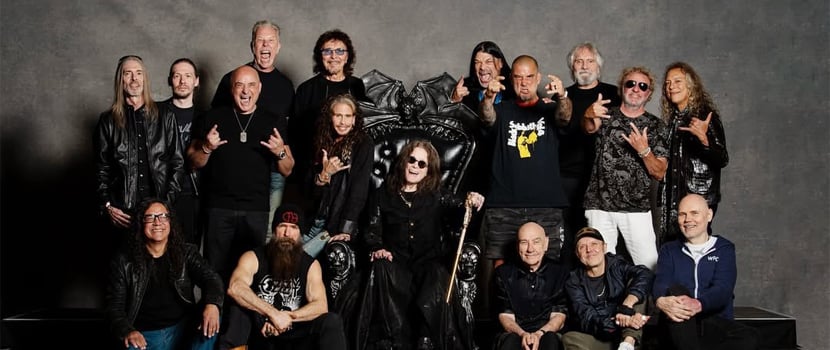
Reflecting on ‘Back to the Beginning’: Emotional and Cultural Resonance of Black Sabbath’s Final Reunion
Introduction
On July 5, 2025, the world of rock and heavy metal bore witness to an event so monumental that it instantly transcended the realm of mere entertainment, becoming a cultural touchstone for generations. “Back to the Beginning”—the final performance of both Black Sabbath and Ozzy Osbourne—was staged in their spiritual home of Aston, Birmingham, at Villa Park. Not only did the concert mark the historic reunion of the original lineup after two decades apart, but it also became a poignant farewell with Ozzy Osbourne’s death just 17 days later. In the shadow of this loss, the event resonates as both a celebration of legacy and a ritual of communal mourning and gratitude.
This essay reflects deeply on the atmosphere, performances, audience, tributes to Ozzy, and the context in which this extraordinary concert unfolded. Drawing on exhaustive eyewitness accounts, setlists, critical reviews, economic data, and cultural analyses, it explores how “Back to the Beginning” served not only as an epic send-off for heavy metal’s originators but also a testament to their enduring influence.
The Concert Atmosphere: Pilgrimage, Reverence, and Joy
Long before the first band hit the stage, the very air in Birmingham was charged with anticipation and reverence. The city was alive with the energy of fans streaming into Aston—from local Brummies relishing the homecoming to global devotees seeking to be part of history. Outside the stadium, the streets buzzed as fans queued for exclusive merchandise, posed for selfies at the newly unveiled Navigation Street mural (signed just days before by all original members), and visited landmarks tied to the band’s beginnings.
The weather, characteristically British with spells of rain, seemed only to deepen the event’s atmosphere, as thousands of “Sabbath” beach balls sailed through the crowds. Bands and fans alike engaged in rituals of commemoration: the rhythmic hum of Black Sabbath’s early recordings, tolling bells that opened the show, and the sight of fans visiting Ozzy’s childhood home turned the day into a pilgrimage. As Dr. Asya Draganova, a Birmingham City University music expert, put it, “rivers of fans on pilgrimage to the birthplace of metal…created the feeling that we were living in a festival that had spilled over onto the streets.”.
Within Villa Park, an electrifying camaraderie took hold. The stadium, with its 45,000-strong audience, never felt like just an arena gig. Instead, it was a living, breathing tapestry of shared history and devotion, a collective roar of “Ozzy! Ozzy!” often echoing between sets. From first note to final encore, the event pulsed with the knowledge that those onstage and those in the stands were closing a circle that had begun in that very city over half a century before.
Venue and Stage Design: A Modern Metal Cathedral
Villa Park, home of Aston Villa Football Club and just a stone’s throw from Black Sabbath’s origins, was an inspired choice, lending local gravitas to the send-off. Visually, the stadium was transformed into a gothic-meets-industrial spectacle befitting the occasion. The stage design, masterminded by musical director Tom Morello and production by Live Nation, borrowed from the playbook of epochal events like Live Aid.
Central to the concert’s logistics and its immersive flow was a revolving stage, drawing comparisons to the “Lazy Susan” effect described by critics, allowing set changes with seamless rapidity. Acts could emerge, perform, and fade back as the stage spun—a living, ever-shifting monument to metal history.
The production’s technical prowess was evident throughout: state-of-the-art sound and lighting, visually dramatic throne for Ozzy (necessitated by his declining health), custom video backdrops, and sensory flourishes like rain and bells opening and closing the show. Between sets, screens played both somber and humorous video montages, including well-wishes and comedic cuts from the Osbourne family’s archive, balancing levity and pathos.
Beyond the physical stage, the venue’s amenities and infrastructure were tested—and generally passed—with queues for food and drink snaking for hours, signaling both the epic scale and the feverish demand that marked the day.
Setlist and Structure: A Marathon of Metal’s Greatest Hits and Deep Cuts
The event’s programming reflected a meticulous attention to both legacy and innovation. Spanning over 10 hours, the running order blended classic acts with contemporary luminaries and bespoke “supergroup” jams curated by Morello. Frequent transitions, multiple surprise appearances, and heartfelt covers ensured that the concert honored Black Sabbath’s influence while weaving them into a broader metal tapestry.
Below is a summary of core performances and key moments:
Table 1: Core Setlist and Key Moments at ‘Back to the Beginning’
| Act / Artist | Notable Songs Performed (Originals/Covers) | Key Moments / Guest Features |
|---|---|---|
| Mastodon | Black Tongue, Blood and Thunder, Supernaut (Sabbath cover) | Joined by Danny Carey, Mario Duplantier, Eloy Casagrande on “Supernaut” |
| Rival Sons | Do Your Worst, Electric Funeral (Sabbath cover), Secret | Storming “Electric Funeral” tribute |
| Anthrax | Indians, Into the Void (Sabbath cover) | Joey Belladonna leading massive “whoah-ohs” crowd moments |
| Halestorm | Love Bites (So Do I), Rain Your Blood On Me, Perry Mason (Ozzy cover) | Lzzy Hale’s vocals praised as best of the day |
| Lamb of God | Laid to Rest, Redneck, Children of the Grave (Sabbath cover) | Randy Blythe hurling shoes into the crowd |
| Supergroup A (Morello) | The Ultimate Sin, Shot in the Dark, Sweet Leaf (Sabbath cover), Believer, Changes (Sabbath cover) | Lzzy Hale, David Draiman, Jake E. Lee, Frank Bello, Yungblud |
| Alice in Chains | Man in the Box, Would?, Fairies Wear Boots (Sabbath cover) | Intense, Sabbath-inspired set |
| Gojira | Stranded, Silvera, Mea Culpa (Ah! Ça ira!), Under the Sun (Sabbath cover) | With Marina Viotti, recreating their 2024 Olympics moment |
| Drum-Off | Symptom of the Universe (Sabbath cover – instrumental) | Travis Barker, Chad Smith, Danny Carey, Morello and Sarzo |
| Supergroup B (Morello) | Breaking the Law (Priest), Snowblind (Sabbath), Flying High Again, Bark at the Moon, Train Kept A-Rollin’ | Billy Corgan, KK Downing, Steven Tyler, Papa V Perpetua |
| Pantera | Cowboys From Hell, Walk, Planet Caravan (Sabbath cover), Electric Funeral (Sabbath cover) | Jason Momoa leads mosh pit; deep Sabbath covers |
| Tool | Forty Six & 2, Hand of Doom (Sabbath cover), Aenema | Psychedelic, spiritual set; “Hand of Doom” lauded as best cover |
| Slayer | Disciple, War Ensemble, Wicked World (Sabbath cover), South of Heaven, Raining Blood, Angel of Death | Six circle pits, renewed aggression |
| Guns N’ Roses | It’s Alright (Sabbath cover), Never Say Die, Junior’s Eyes, Sabbath Bloody Sabbath, Welcome to the Jungle, Paradise City | Deep-cut Sabbath covers; Axl’s keys and vocals |
| Metallica | Hole in the Sky (Sabbath cover), Creeping Death, For Whom the Bell Tolls, Johnny Blade (Sabbath), Battery, Master of Puppets | Hetfield’s tribute “without Sabbath, there would be no Metallica” |
| Ozzy Osbourne (solo) | I Don’t Know, Mr. Crowley, Suicide Solution, Mama, I’m Coming Home, Crazy Train | Seated on throne; emotional “Mama, I’m Coming Home” |
| Black Sabbath | War Pigs, N.I.B., Iron Man, Paranoid | Original lineup; fireworks; last ever performance |
Supergroup Guests: Lzzy Hale, David Draiman, Billy Corgan, Steven Tyler, Nuno Bettencourt, Jake E. Lee, Adam Wakeman, Chad Smith, Travis Barker, Papa V Perpetua, and others.
This setlist, described as “a living obituary to someone who is still with us” and “a fast-spinning Lazy Susan of metal history,” was orchestrated not just for spectacle, but for profound narrative effect. Each featured band performed short, dizzyingly intense sets—often including a Sabbath or Ozzy cover as if to pay personal respects at the altar.
The headliners—Ozzy’s solo act and Sabbath’s reunion—capped the night with thunderous, crowd-led versions of timeless classics. Songs like “War Pigs,” “Iron Man,” and “Paranoid” effectively drew the curtain on rock’s greatest legacy with dignity and finality.
Notable Moments and Performance Highlights
“Back to the Beginning” was ripe with unforgettable moments that alternately electrified, amused, and drew tears from the crowd and viewers worldwide:
-
Ozzy’s Grand Entrance: Seated on a gothic black throne that rose from the stage through a trap door, Ozzy opened his set with “Let me hear you. Are you ready? Let the madness begin!” The gesture and visual resonated with fans aware of his six-year struggle with Parkinson’s and spinal injuries.
-
Yungblud’s Cover of “Changes”: Universally lauded by critics and fans alike, Yungblud’s performance of Sabbath’s ballad “Changes” was cited as the event’s most “gut-punching” sing-along—a sea of lighters and tears as the entire crowd joined in song.
-
Drum-Off Spectacle: The mid-show “drum-off” with Travis Barker, Chad Smith, and Danny Carey, joined by Morello on guitar, was an exhilarating instrumental break, demonstrating both virtuosity and camaraderie across genres and generations.
-
Jack Black’s Video Tribute: Unable to attend in person, Jack Black sent a pre-recorded version of “Mr. Crowley,” replete with Ozzy cosplay and young musicians, earning the “biggest laughs of the day” and capturing the spirit of theatrical homage.
-
Steven Tyler’s Showstopping Set: The Aerosmith frontman, with Rolling Stones’ Ronnie Wood and others, brought the house down with renditions of “The Train Kept A-Rollin’” and “Whole Lotta Love,” layering blues legacy upon metal’s birthright.
-
Emotional Farewell: As Black Sabbath closed with “Paranoid” amid fireworks and confetti, Ozzy—overwhelmed and tearful—thanked the crowd one final time, while fans chanted his name into the Birmingham night.
Tributes to Ozzy Osbourne: Celebration, Mourning, and Gratitude
The concert became a living memorial for Ozzy Osbourne—a man whose life and art have become inseparable from the history and identity of heavy metal itself. The sense of farewell was heightened knowing that Ozzy was visibly frail, performing seated on a throne, yet refusing to rely on backing tapes, choosing vulnerability over perfection. This earned him deeply emotional ovations and left many spectators in tears, especially during “Mama, I’m Coming Home”.
Tributes poured in not only from artists performing on the night but also in video messages from luminaries unable to attend, including Elton John, Dolly Parton, AC/DC, Def Leppard, and others. Across every performance, artists inserted personal dedications, recognition of Ozzy’s immense influence, and thanks for inspiring entire generations.
Perhaps most moving were Ozzy’s own words to the crowd: “It’s so good to be on this f** stage. You have no idea. I f** love you all. Let me see your hands in the air. You are the best, each and every one of you. God bless you all.” He paused, visibly emotional, to add, “I don’t know what to say, man, I’ve been laid up for six years. You have no idea how I feel – thank you from the bottom of my heart. You’re all f** special. Let’s go crazy, come on”.
After his passing, the line “No playback, no lipsync. He went out doing what he’d done his whole life. What a legend” trended across platforms, encapsulating the respect earned by his rawness and honesty on stage that night.
Audience and Fan Reactions: Communal Catharsis
For fans, the experience was nothing short of spiritual. Social media and press coverage overflowed with accounts of tears, hugs with strangers, spontaneous mosh pits, and stadium-wide singalongs that dwarfed even the decibel levels of the performing bands. As one attendee wrote: “This is more than a concert. It’s a pilgrimage; it’s a family reunion of the heavy metal tribe.” The diversity of the crowd—fans young and old, local and global—underscored the genre’s universal appeal and Black Sabbath’s foundational place within it.
There were, however, also voices expressing discomfort—some were unsettled by Ozzy’s visible frailty and the rawness of his final performance, feeling it was both heroic and sad. “It’s obviously the end of an era, but I felt conflicted seeing him like this,” wrote one fan. The mixed emotional response only highlighted the depth of the connection and the reality of saying goodbye.
Musicians in attendance and onstage echoed the sense of finality and honor. Metallica’s James Hetfield declared from the stage: “Without Black Sabbath, there would be no Metallica.” Lamb of God’s Randy Blythe posted, “The overwhelming energy at this show…was something I have never felt before, and I know I never will again. It was something DIFFERENT, something very, very special”.
Critical Reception: Universal Acclaim and Minor Controversies
Reviews from critics were overwhelmingly glowing. Mark Beaumont of The Independent rated the show five out of five stars, singling out the humility and sense of occasion: “There’s precious little ego and plenty of heartfelt humility among the huge names on display. Everyone handles their Sabbath covers like sacred texts, to be splattered with their own brands of vivifying savagery but never completely chewed up and spat in the fire”.
Rhys Buchanan of Rolling Stone also gave the show a perfect rating, emphasizing the once-in-a-lifetime nature of the gathering and singling out Yungblud’s “Changes” as a “stadium-stopping” moment. Michael Hann of The Guardian (4/5 stars) highlighted the magnitude of the event, remarking that the performances of Black Sabbath, Gojira, Guns N’ Roses, Metallica, and Yungblud were the standout moments.
A few controversies punctuated the festivities: David Draiman of Disturbed was booed by portions of the crowd, partly due to recent political controversies, while a video tribute from Marilyn Manson was criticized due to ongoing allegations against the artist. Some noted the scarcity of female performers on the bill, with only four women appearing across the nearly dozen-hour show. Yet, these “blips in an otherwise triumphant event” as one review put it, did not materially dampen the overwhelming sense of occasion and joy.
Emotional and Cultural Significance: Legacy, Closure, and Continuity
A Homecoming and a Farewell
More than an entertainment spectacle, “Back to the Beginning” served as a cultural homecoming and a ritual of collective closure. Holding the concert in Birmingham—within walking distance of the pub where Sabbath first played—was a deliberate return to roots, connecting past, present, and future before the band finally laid down its instruments.
The symbolism was deepened when the four original band members were awarded the Freedom of the City in the week leading up to the concert—testimony to their impact on both Birmingham’s identity and the world at large. Large-scale city art projects (like the mural on Navigation Street), temporary exhibitions at the Birmingham Museum and Art Gallery, and even the naming of the city’s mechanical “Ozzy the Bull” all reinforced the idea that Black Sabbath’s legacy transcends music, representing working-class creativity and perseverance.
Economic and Civic Impact
University of Birmingham economists estimated that the concert directly contributed over £28 million to the West Midlands economy, with tens of thousands of international fans traveling for the event and “hundreds of millions” raised for charity when livestream revenues and global merchandise sales are included. The impact, as local leaders emphasized, was both financial and symbolic: “Ozzy was always an ambassador of Birmingham, and in passing, becomes a symbol of the city’s working-class resilience, creativity and ability to reinvent itself”.
The Final Reunion—Why It Mattered Most
Unlike prior reunions, the presence of all four original members—Ozzy, Tony Iommi, Geezer Butler, and Bill Ward—was non-negotiable for this occasion. Their onstage chemistry, even as age and frailty had slowed them, signified not just music history, but healing, closure, and the reaffirmation of brotherhood born of shared struggle and triumph.
As Black Sabbath’s lineup swelled and contracted through decades of turbulence, lineup changes, and public feuds, it was this last full-circle moment—with all wounds seemingly healed and love visibly abundant—that provided not just closure for the band but for their fans. As Ozzy himself said, “The only fitting way to end Black Sabbath’s journey was together”.
A Living Legacy
With the death of Ozzy Osbourne just 17 days after the concert, the event took on yet another layer of significance. Birmingham’s mayor and civic leaders reflected on how Ozzy “put Birmingham on the world map and never forgot his roots”. City tributes multiplied, and plans for ongoing memorials and exhibitions are being discussed.
Within rock, metal, and well beyond, the concert crystallized the lasting impact of what began as four working-class kids from Aston refashioning music—and, by extension, culture itself. Dr. Draganova’s reflection is apt: “Sabbath are a fantastic source of inspiration—it’s amazing that a group of working-class boys from Aston developed a global genre and achieved mega stardom, but never forgot where they came from, and always celebrated their background”.
Legacy: The Band, the Genre, and the City
Influence on Music
Black Sabbath’s imprint is seismic: founding fathers of heavy metal, toppling walls between art and audience, inspiring bands across the entire spectrum of rock and metal. Testimonials poured in from performers on the night and the week after, illustrating this reach: from Metallica citing them as their reason for existence, to Lzzy Hale of Halestorm describing her appearance in Supergroup A as “the greatest moment in heavy metal history”.
Community and Generational Continuity
The multigenerational nature of the event—parents with children, elders with fresh fans, fans from every corner of the globe—underscored the vitality of Sabbath’s legacy. “The diversity of the crowd makes you realize: Metal is a global concern. This is probably the least white audience I’ve ever seen at a metal gig. The stands and concourses are a Tower of Babel of differing languages and cultures. Everyone is here because a single riff created a culture and genre that provided a home for the disenfranchised and devalued”.
A City and Its Icons
For Birmingham, Black Sabbath’s story is woven into the very fabric of the city. The Freedom of the City award, murals, and ongoing museum exhibitions ensure their place as torchbearers of Brummie creativity, resilience, and working-class roots. Sabbath’s impact, as stated by municipal leaders, is “a fitting tribute to the band, marking their importance to Birmingham’s cultural landscape and the pride of our city as their hometown.”
Philanthropy and Civic Pride
Charitable legacy is equally robust; profits from the concert have gone to causes close to Ozzy’s heart—Cure Parkinson’s, Birmingham Children’s Hospital, Acorn Children’s Hospice—cementing an ethos of giving back to home that mirrors their ongoing gratitude to their fiercely loyal fanbase.
Conclusion: The End as a New Beginning
As the final notes of “Paranoid” faded against a sky lit by fireworks and the roar of 45,000 fans, the sense of ending was inescapable but also generative—a “final bow” that doubled as an invitation for reflection, gratitude, and continuity. The legacy of Black Sabbath, and of Ozzy Osbourne as its emblematic frontman, remains unassailable: not just in record sales or musical innovation, but in the bonds of community, identity, and belonging that their music inspired.
“Back to the Beginning” did more than bid goodbye; it reaffirmed the living, beating heart of a culture Black Sabbath helped create—one that will echo down the years as new generations pick up the riffs and keep moving forward, always aware of where it began.
End.