I remember where I was when “Not Like Us” dropped. Not because the song itself demanded that kind of recall — it’s a bouncy Mustard beat with a chant-along hook, the kind of thing that sounds like it was written in fifteen minutes — but because of what happened around it. Within hours, the track had escaped hip-hop. It was on sports broadcasts. It was in group chats from people who hadn’t listened to a rap song since “In Da Club.” The Democratic Party used its cover art to mock the Trump–Epstein connection. The US men’s ice hockey team played it after beating Canada at the 2026 Winter Olympics. A diss track about a Canadian rapper had become the closest thing my generation has to a universal signifier for dominance.
That should have been the end of the story. But it wasn’t. What followed — the lawsuits, the Super Bowl, the three-album counteroffensive, the federal judge calling Drake’s case “logically incoherent” — turned a rap feud into something stranger and more consequential: a referendum on what hip-hop is actually for. And the answer to that referendum says something uncomfortable about what the culture has become.
I. The Original Sin: Ghostwriting and Authenticity
Hip-hop’s obsession with authenticity is not arbitrary. It is structural. Unlike rock or jazz, where the instrument mediates between performer and audience, rap is naked language. The MC stands on stage with nothing but words — their words, presumably — and the audience’s trust rests on the premise that those words are theirs. When that premise breaks, something fundamental breaks with it.
This is why the ghostwriting question has haunted hip-hop since its golden age, and why it matters to the Drake–Lamar feud in ways that go far beyond Quentin Miller.
The Precedents
Big Daddy Kane co-wrote some of Biz Markie’s best-known lyrics. The two had been friends since 1984, both members of the Queens-based Juice Crew collective, and Kane — already recognized as one of the most technically gifted MCs in the genre’s history — lent his pen to his friend’s recordings. Brian Coleman’s Check the Technique documents this on page 47. The arrangement was collaborative and open, the kind of creative exchange common in a scene where crews functioned as artistic units. Nobody called it fraud. It was understood as community.
Dr. Dre’s relationship with ghostwriting is more systematic and more revealing. As RBX explained in the book How to Rap, writing The Chronic was a “team effort” — RBX himself ghostwrote “Let Me Ride.” “Dre doesn’t profess to be no super-duper rap dude,” RBX said. “Dre is a super-duper producer.” The D.O.C. wrote lyrics for Dre during the N.W.A era. Jay-Z ghostwrote “Still D.R.E.” (1999), and Snoop Dogg confirmed the full story: “He wrote Dre’s shit and my shit and it was flawless… It was Jay-Z and he wrote the whole fucking song.” Dre himself told Blaze magazine that when Jay-Z first submitted the lyrics, “he wrote about diamonds and Bentleys. So I told Jay to write some other shit. Jigga sat for 20 minutes and came back with some hard-ass, around-the-way L.A. shit.”
Wikipedia acknowledges that “most of Dr. Dre’s raps are written for him by others, though he retains ultimate control over his lyrics and the themes of his songs.” Aftermath producer Mahogany described the process: “It’s like a class room in [the booth]. He’ll have three writers in there. They’ll bring in something, he’ll recite it, then he’ll say, ‘Change this line, change this word,’ like he’s grading papers.”
The Dre model — producer-as-auteur, rappers-as-interpreters — is a tradition that hip-hop has mostly made peace with, because Dre’s genius was never in the words. It was in the sound. The vocals were one instrument among many, and Dre’s control over the final product was understood as compositional rather than performative. He wasn’t pretending to be something he wasn’t.
The Quentin Miller Leaks
Drake did not have that alibi.
In June 2015, Meek Mill accused Drake of not writing his own raps, claiming that a previously unknown Atlanta rapper named Quentin Miller had been ghostwriting for him. The accusation landed differently than the Dre stories, because Drake’s entire brand was built on personal confession — on the premise that his lyrics were diaries, that the vulnerability was real, that the voice was his and his alone. Miller had writing credits on several tracks from Drake’s If You’re Reading This It’s Too Late (2015), but the “co-writing” framing masked what reference tracks revealed: Miller had recorded full demos — complete verses, performed in a flow and cadence meant to be replicated — that Drake then re-recorded with minor variations. On July 30, 2015, Funkmaster Flex leaked Miller’s reference track for “R.I.C.O.,” Drake’s verse on Meek Mill’s Dreams Worth More than Money. The reference was damning: not a sketch or a suggestion but a near-complete performance, with Drake’s final version following Miller’s cadence and wordplay closely enough that calling it “collaboration” required a generous definition of the word.
Drake responded with “Charged Up” and “Back to Back,” and the hip-hop community regarded him as the victor over Meek Mill. But the wound never fully closed. In 2018, Pusha T’s “Infrared” likened Drake’s use of Miller to “Donald Trump winning with Russian assistance” — a metaphor that captured the essential accusation: illegitimate power, gained through hidden manipulation. On “Duppy Freestyle,” Drake tried to flip the narrative by noting that he had helped write Kanye West’s lyrics on “30 Hours” (2016). It was a curious defense: I’m not a ghostwriter’s client, I’m a ghostwriter myself. Pusha T responded with “The Story of Adidon,” which Pitchfork’s Sheldon Pearce described as character assassination — revealing Drake’s hidden son, attacking his racial identity, and using a photo of Drake in blackface as cover art. Drake never released a response track and, in 2019, conceded that he lost.
The pattern was set: Drake could win the popularity contest, but every time the question of authenticity was raised, he lost something that charts couldn’t measure.
Lamar’s Clean Slate
Kendrick Lamar has never faced a ghostwriting accusation. He is the sole credited writer on “Not Like Us” — one of the only chart-topping singles in modern history penned by a single person. This is not incidental to his brand. It is his brand. Lamar’s entire artistic identity rests on the premise that his words are his and his alone, and that the density, literary quality, and emotional specificity of those words derive from a mind that cannot be replicated by committee. When Lamar criticized rappers who use ghostwriters on “King Kunta” (2015), media outlets interpreted it as a shot at Drake — and they were probably right.
II. Two Models of the Rapper
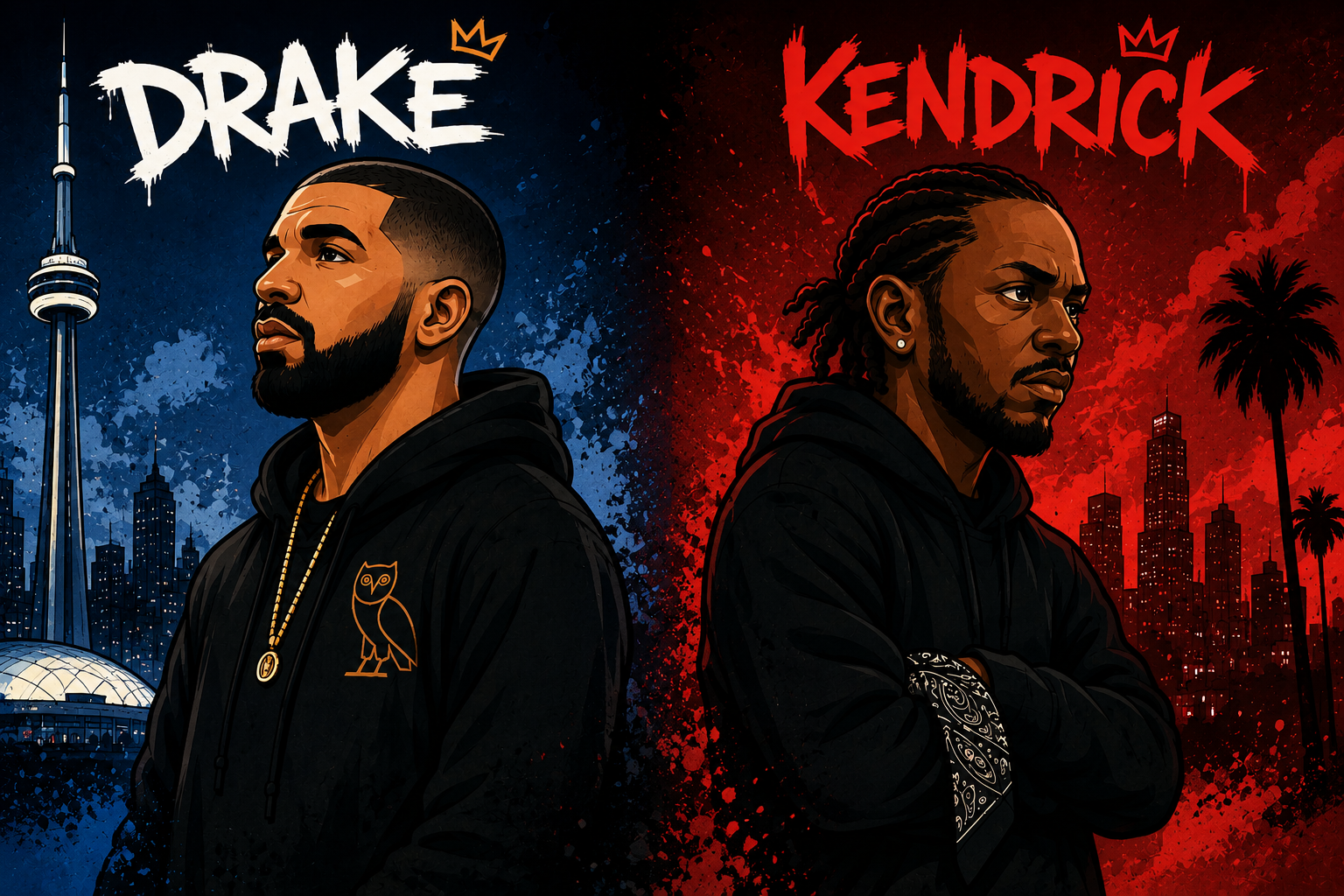
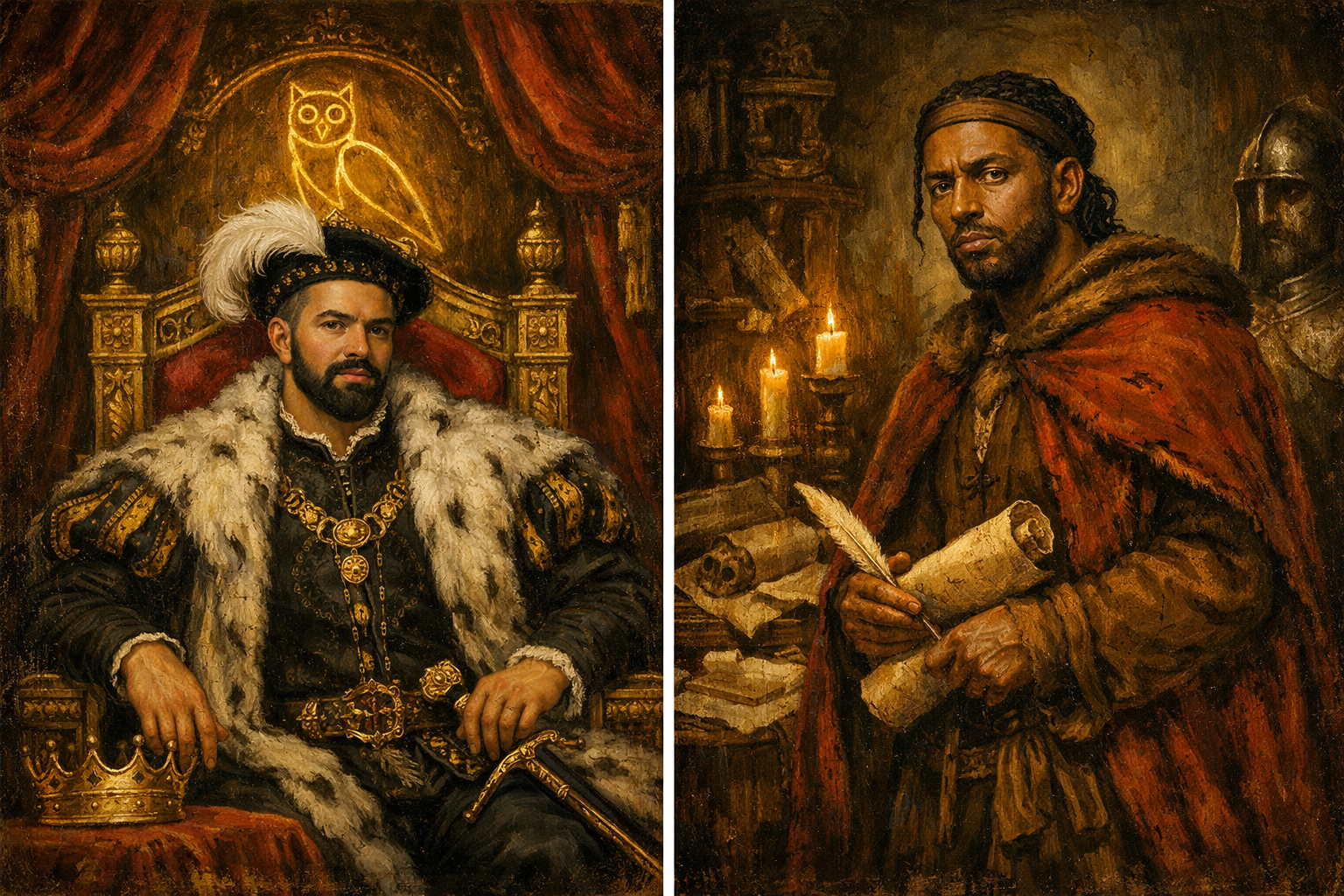
Drake and Lamar didn’t just feud. They embodied two fundamentally different theories of what a rapper should be.
Drake: The Pop Empire
Drake’s model is pop crossover through maximal collaboration and relentless output. He works with dozens of writers and producers. He releases music at a pace that makes his peers look inactive. He absorbs trends — Atlanta trap, Afrobeats, UK drill, dancehall — with an eclecticism that Doreen St. Félix, writing for The New Yorker, described as a “complicated virtue out of riding genres and trends” that made him “oddly impervious to attempts to puncture his credibility.” Rolling Stone and MSNBC characterized his approach as a “rapper turned pop star” trajectory, comparable to 50 Cent, LL Cool J, and Nelly: catchy, broad-appeal, released regularly, but “inauthentic to hip-hop culture” in the eyes of its gatekeepers.
The model works. By 2026, Drake has broken Michael Jackson’s record for most number-one hits on the Hot 100 (his 14th, “Janice STFU,” from the album Iceman). He became the first artist to hold the top three positions on the Billboard 200 simultaneously, with Iceman, Habibti, and Maid of Honour all released on May 15, 2026. Iceman debuted at number one with 463,000 units. By any metric the music industry recognizes, Drake is the most commercially successful rapper alive.
Lamar: The Literary Tradition
Lamar’s model is the literary tradition — concept albums, singular authorial voice, depth over frequency. The Ringer compared his trajectory to Nas, Tupac Shakur, and the literary wing of Kanye West: focused on profundity and ambition, challenging, released less frequently. His albums are events, not products. good kid, m.A.A.d city (2012) was a short film. To Pimp a Butterfly (2015) was a jazz-inflected dissertation on Black identity. DAMN. (2017) was a structural experiment that could be played in reverse. GNX (2024) was a surprise drop that debuted at number one with 319,000 units and saw all twelve tracks hit the Hot 100, occupying the entire top five.
When Barack Obama was asked in January 2016 whether Drake or Lamar would win a rap battle, he answered: “Got to go with Kendrick. I think Drake is an outstanding entertainer. But Kendrick — his lyrics…” The trailing ellipsis did more work than any complete sentence could have. The President of the United States, however informally, had identified the fault line: entertainer versus lyricist, performance versus substance.
The Foundational Text
The fault line was visible from the beginning. “Buried Alive Interlude,” the two-minute track Lamar recorded for Drake’s Take Care (2011), was the original wound. Lamar, then relatively unknown, shared how meeting Drake felt like an introduction to the tempting but potentially harmful world of celebrity, luxury, and fame. He expressed complex feelings — both desiring and fearing what success might bring, especially after witnessing Drake’s life of luxury — and shared his impatience at discovering he was the same age as Drake, who had already achieved everything Lamar was still reaching for. GQ described the track as foreshadowing the themes that would eventually lead to their feud. Lamar’s fraught relationship with fame became a recurring theme in his music, and it always stood in contrast with Drake’s celebration of it.
The parallel was not lost on commentators. The Ringer compared the Drake–Lamar divide to the Nas–Jay-Z feud of 2001 — another battle between authenticity and commerciality — and to Michael Jackson versus Prince: “numbers versus ‘real’ art.” These comparisons were not exact, but they captured something essential: the two men represented not just different styles but different value systems, and the culture was being asked to choose.
III. The 2024 Escalation
J. Cole lit the fuse. On Drake’s “First Person Shooter” (October 2023), Cole named himself, Drake, and Lamar the “big three” of modern hip-hop. According to DJ Akademiks, Lamar was annoyed by the request to appear on the track and began writing diss lyrics. On March 22, 2024, he appeared on Future and Metro Boomin’s “Like That” and rejected the “big three” framing entirely: “motherfuck the big three, nigga, it’s just big me.”
Cole responded with “7 Minute Drill” on April 5, then immediately apologized and removed it from streaming. Slate called the apology “artistic cowardice.” Cole later explained that he had wanted to “say just enough to where it looked like I said something” without damaging his relationship with Lamar. Billboard observed that Cole’s withdrawal “cleared the way” for a direct confrontation between Drake and Lamar.
What followed, between April 13 and May 5, was the most concentrated exchange of diss tracks in hip-hop history:
- April 13: Drake’s “Push Ups” leaked, mocking Lamar’s height, his collaborations with Taylor Swift, and his stature relative to other rappers. Drake officially released it on April 19, alongside “Taylor Made Freestyle” — which used AI-generated vocals imitating Snoop Dogg and Tupac Shakur to goad Lamar into responding. Shakur’s estate threatened legal action, and Drake took the track down on April 26.
- April 30: Lamar released “Euphoria” — a six-minute dismantling of Drake’s character, mocking his AI stunt, his parenting, his cosmetic procedures, and his rapping ability. The title referenced the HBO series on which Drake is an executive producer.
- May 3: Lamar posted “6:16 in LA” on Instagram, parodying Drake’s timestamp song series, revealing that members of Drake’s camp were leaking information to him, and threatening to expose Drake’s darkest secrets if he didn’t withdraw.
- May 3: Drake released “Family Matters,” alleging that Lamar was a domestic abuser and that his creative partner Dave Free was the biological father of one of Lamar’s children. Twenty minutes later…
- May 3: Lamar released “Meet the Grahams,” accusing Drake of sexual predation, running a sex trafficking ring, and — building on Pusha T’s 2018 revelation — having fathered a secret child.
- May 4: Lamar released “Not Like Us.” It accused Drake of pedophilia and of exploiting Atlanta’s hip-hop culture. It was catchy, danceable, and devastating.
- May 5: Drake released “The Heart Part 6,” denying Lamar’s allegations and reiterating his own. Lamar did not respond. The exchange was over.
The verdict was near-unanimous. The Ringer, Complex, Rolling Stone, Pitchfork, and virtually every major outlet declared Lamar the winner. The consensus was not merely about lyricism — though most critics found Lamar’s bars sharper and more varied — but about a kind of structural superiority. Lamar had outmaneuvered Drake at every turn: releasing “Meet the Grahams” within twenty minutes of “Family Matters,” weaponizing the delay between Drake’s recording and release, controlling the tempo of the exchange. He had, in the language of battle rap, set the time and place for every round.
IV. “Not Like Us” as Cultural Event
“Not Like Us” was not just a diss track. It was a phenomenon — the kind of cultural object that escapes its genre and becomes a shared reference point for people who have never listened to a Kendrick Lamar album.
The Numbers
The streaming records tell the story: 12.8 million single-day streams. 81.2 million weekly streams by a rapper. Fastest rap song to 100 million streams (9 days), 200 million (19 days). One billion streams by mid-January 2025. 823.5 million US on-demand streams in 2024 alone. 10 million copies sold in the US by July 2025. It debuted at number one on the Hot 100 and returned to the top spot three separate times — the first non-holiday song in history to do so. It broke “Old Town Road”’s record for most weeks atop the Hot Rap Songs chart.
These are not diss-track numbers. These are cultural-event numbers.
The Pop Out
On Juneteenth 2024, Lamar hosted The Pop Out: Ken & Friends at the Kia Forum in Inglewood. He played “Not Like Us” five consecutive times. Dr. Dre introduced the performance. Crips and Bloods danced on stage together. The concert was both a victory lap and a statement about what Lamar believed hip-hop could be: not just competition, but community. Not just destruction, but — in the most literal sense — peace. Rival gang members sharing a stage while a Compton rapper’s song about a Toronto rapper played on repeat was a spectacle that no amount of streaming data could capture.
The Grammys
On February 2, 2025, “Not Like Us” won all five of its Grammy nominations: Record of the Year, Song of the Year, Best Rap Performance, Best Rap Song, and Best Music Video. It tied as the most-awarded song in Grammy history. Lamar wore a Canadian tuxedo — a denim jacket and jeans — on the red carpet, a visual joke at Drake’s expense that required no explanation.
The Super Bowl
Nine days later, Lamar performed at the Super Bowl LIX halftime show before 133.5 million viewers — the most-watched halftime performance in history. He opened with “I wanna play their favorite song but you know they love to sue.” During “Not Like Us,” he delivered “they tried to rig the game but you can’t fake influence” while the crowd shouted “A-minor” in unison, filling in the censored word “pedophile.” Serena Williams crip walked on stage. Samuel L. Jackson appeared as Uncle Sam. The performance was not just a musical event but a political one: an entire cultural establishment — the NFL, Apple Music, the American television audience — had become complicit in the performance of Drake’s defeat. The censoring of the word “pedophile” would later become a legal argument: Drake’s amended lawsuit cited it as evidence that even Lamar’s own team recognized the lyric was defamatory.
V. The Lawsuit
Drake’s response to losing the rap battle was to sue his own record label. I want to be careful with how I frame this, because the legal questions are real and the institutional dynamics are worth taking seriously — even if the optics were catastrophic.
The Pre-Action Petitions
On November 25, 2024, Drake filed a pre-action petition in New York state court against UMG and Spotify, alleging RICO Act violations and claiming they had used “illegal tactics” to inflate “Not Like Us” streams, “deceiv[ing] consumers into believing the song was more popular than it was in reality.” The next day, he filed a second petition under Texas law, adding a defamation claim — UMG had “failed to halt release of a song falsely accusing him of being a sex offender” — and alleging a “pay-to-play” scheme between UMG and iHeartRadio. On December 20, Spotify denied “any arrangement” with UMG.
The Federal Lawsuit
On January 15, 2025, Drake filed a formal defamation lawsuit in US District Court for the Southern District of New York against UMG. Kendrick Lamar was not named as a defendant. Drake alleged that the song had caused break-in attempts at his home, forced him to hire increased security, and required him to move his son outside Toronto. He accused UMG of “choosing corporate greed over the safety and well-being of its artists.”
The key lyric at issue: “Certified Lover Boy? Certified pedophiles” — a reference to Drake’s 2021 album Certified Lover Boy, and a line that labeled not just Drake but his head of security (Chubbs), his first OVO signee (PartyNextDoor), and an associate imprisoned for human trafficking (Baka Not Nice) as “certified pedophiles.”
I understand why Drake filed. The accusation is the most damaging thing you can say about a person in the English language, and it was broadcast to over a hundred million people. If it were false — and no court has found it true — the harm is incalculable. But the venue was the problem. You cannot sue your way out of a cultural defeat, and the moment Drake walked into a courtroom, he conceded the one arena where Lamar had already beaten him: the court of public opinion.
UMG’s Motion to Dismiss
On March 17, 2025, UMG filed a motion to dismiss, arguing that “Drake lost a rap battle that he provoked and in which he willingly participated” and should “accept the loss like the unbothered rap artist he often claims to be.”
The Dismissal
On October 9, 2025, Judge Jeannette Vargas dismissed the suit. Her ruling was comprehensive and, at times, scathing:
- The case was “logically incoherent.”
- Lamar’s lyrics were “nonactionable opinion.”
- A “reasonable listener” understands that diss tracks are not “fact-checked verifiable content.”
- New York law does not permit defamation lawsuits for statements of opinion.
Drake appealed on October 29, 2025. The appeal is pending.
The dismissal was not just a legal victory for UMG. It was a cultural ruling on the nature of rap itself. Judge Vargas effectively confirmed what the hip-hop community had always understood: diss tracks are a rhetorical form with their own conventions, their own logic, and their own relationship to truth. To treat “Certified Lover Boy? Certified pedophiles” as a literal factual assertion was, in the court’s view, to misunderstand the genre entirely. The ruling meant that rappers could continue to say outrageous things about each other without fear of litigation — but it also meant that the most damaging accusation in the English language, leveled in the most public possible way, was legally just “opinion.” That is a result worth sitting with, regardless of which side you were on.
VI. The Fan War
The Drake–Lamar feud was not just a dispute between two artists. It was an ideological proxy war fought by millions of fans who had never met either man.
Vice noted that fans “vehemently oppose playing the other’s music,” a tribalism that distinguished the feud from the Jay-Z–Nas era, where many listeners were fans of both. Metro Boomin contrasted the two eras explicitly, suggesting that the current stan culture made the conflict more zero-sum: you were on one side or the other, and your choice signaled not just musical preference but moral and aesthetic values. Pablo Hawkins, a cultural critic, observed that fans were being judged by the passion of their fandom rather than the quality of the music itself — a dynamic that replaced aesthetic judgment with loyalty testing.
I find this the most troubling dimension of the whole affair. In the Jay-Z–Nas era, you could admire The Blueprint and Stillmatic simultaneously. The music was the music, and the beef was the beef, and the two were separable. The Drake–Lamar feud made them inseparable. To stream “Not Like Us” was to declare allegiance. To listen to Drake at all was to be suspect. The music became a loyalty oath, and the loyalty oath became a referendum on what hip-hop ought to be — as though the genre were a monolith with a single correct answer, rather than a tradition capacious enough to contain both Illmatic and The Blueprint, both To Pimp a Butterfly and Take Care.
The weaponization went beyond music. The Democratic Party referenced “Not Like Us”’s cover art to criticize the Trump–Epstein relationship. Kamala Harris’s 2024 presidential campaign and the Democratic National Convention invoked the song. The US men’s ice hockey team played “Not Like Us” after defeating Canada at the 2026 Winter Olympics. The Cleveland Cavaliers used it when eliminating the Toronto Raptors from the 2026 NBA playoffs. The song had become a kind of universal signifier for dominance — “we beat you, and you are not like us” — detached from its original context and repurposed for any conflict with a sufficient power imbalance.
Lamar himself seemed ambivalent about the song’s cultural metastasis. On “Watch the Party Die” (September 2024), he expressed a desire to shift hip-hop away from glorifying luxury and toward deeper meaning — a mission statement that sat uneasily alongside the spectacle of playing “Not Like Us” five times at a concert while Crips and Bloods danced on stage. The tension between Lamar’s stated values and his willingness to weaponize the feud’s most crowd-pleasing moments was real, and it pointed to a problem that no diss track could resolve: once a cultural object enters the stream, it belongs to everyone, and its author’s intentions become irrelevant.
VII. The Current State: 2026
Both artists are bigger than they were before the feud. This is the paradox that nobody predicted: the most destructive conflict in modern hip-hop history left both combatants richer, more famous, and more culturally central than they were when it started.
Drake: Iceman
On May 15, 2026, Drake released three albums simultaneously: Iceman, Habibti, and Maid of Honour. Iceman debuted at number one on the Billboard 200 with 463,000 units. “Janice STFU” became his 14th number-one on the Hot 100, breaking Michael Jackson’s record. He was the first artist to hold the top three positions on the Billboard 200 concurrently.
The music itself told a complicated story. “What Did I Miss?” called out DeMar DeRozan and LeBron James for their public alignment with Lamar. “Make Them Pay” dismissed the “big three” framing, criticized J. Cole, and repeated the UMG manipulation allegation. “Ran to Atlanta” defended Drake’s Atlanta collaborations and featured Future — a sign that at least one of Lamar’s 2024 allies had reconciled with him. Pinocchio imagery ran throughout the album, Drake seeming to acknowledge — or weaponize — the authenticity question rather than resolve it.
The critical reception was lukewarm. Metacritic scored Iceman at 50. Consequence called it an “unearned victory lap.” Pitchfork described it as “cold, lumpy self-pity.” Drake had won the numbers game again, but the same critique that had shadowed him since 2015 — that the music was thin, that the persona was hollow, that the commercial instincts outpaced the artistic ones — persisted.
Lamar: GNX and the Grand National Tour
Lamar’s GNX, surprise-released on November 22, 2024, debuted at number one with 319,000 units. All twelve tracks hit the Hot 100, occupying the entire top five. Metacritic scored it at 87. It received eight Grammy nominations and won Best Rap Album; “Luther” won Record of the Year. Lamar became the most-awarded rapper in Grammy history with 27 wins.
The Grand National Tour with SZA (April–December 2025) grossed $358.7 million across 47 shows with 1.7 million attendees — the highest-grossing co-headlining tour ever. The Seattle show broke the record for highest-grossing hip-hop concert at $14.8 million. The tour included a deposition skit referencing Drake’s lawsuit — a theatrical mockery of the legal proceedings that underscored Lamar’s comfort with the feud’s narrative.
J. Cole: The Peacemaker Who Wasn’t
J. Cole’s The Fall-Off, released in February 2026, was nearly finished before the feud escalated. Lamar had been set to appear on two tracks, but Cole removed the collaborations after the falling-out. The album’s centerpiece, “What If,” depicted an alternate timeline where Tupac and Biggie made amends — a gesture that read as both wistful and impotent, the confession of an artist who had withdrawn from the fight and now watched from the sidelines as the culture burned without him.
VIII. What It All Meant
The Drake–Kendrick Lamar feud was not primarily about who wrote whose raps, or who streamed more, or who won more Grammys, or whether a federal court would let a rapper sue his label over a diss track. It was about two irreconcilable visions of what hip-hop is and what it ought to be.
Drake’s vision is expansive and democratic: rap as pop, as entertainment, as a vessel for melody and collaboration and cross-genre experimentation, measured by its reach. More listeners, more streams, more hits, more features, more albums. The model works — it works so well that Drake is now the most commercially successful rapper in the history of the medium — and its defenders can point to the numbers as proof that the music connects with people on a scale that purist alternatives never will.
Lamar’s vision is rigorous and aristocratic: rap as literature, as confession, as a singular authorial statement, measured by its depth. More craft, more meaning, more cultural weight, more permanence. The model works too — it works so well that Lamar is now the most critically decorated rapper alive, with a Pulitzer Prize, 27 Grammys, and a Super Bowl halftime show that 133.5 million people watched — and its defenders can point to the cultural resonance as proof that the music matters in ways that streaming numbers cannot capture.
I land on the literary side, and I want to be honest about that. Not because pop is illegitimate — it isn’t, and Drake’s catalogue contains genuinely great songs — but because the literary tradition is what makes hip-hop an art form worth defending rather than merely a content delivery system. When rap is at its best — when it is Lamar constructing a multi-album narrative about Black identity, or Nas painting Compton block by block, or Outkast turning the South into a mythological landscape — it does something that no other art form can do. It makes language itself into an instrument. That capacity depends on a relationship between the artist and their words that is intimate and unmediated. The moment you treat the MC as a performer of other people’s ideas — the moment you make the voice interchangeable — you lose the thing that makes the art form irreplaceable.
These two visions have always coexisted in hip-hop, and they have always been in tension. The Jay-Z–Nas feud was their first great articulation. The Michael Jackson–Prince comparison is their pop-cultural analogue. What made the Drake–Lamar feud different was its scale: the streaming era’s incentive structures, social media’s tribalizing dynamics, and the legal system’s reluctant engagement with rap as a rhetorical form combined to create something that was not just a feud but a cultural reckoning.
Judge Vargas’s ruling was the final paradox. By declaring that “Not Like Us” was “nonactionable opinion” — that a reasonable listener understands diss tracks are not “fact-checked verifiable content” — she affirmed the genre’s autonomy at the exact moment that the genre’s most popular practitioner was trying to use the courts to settle an artistic dispute. The law said: this is art, not fact. The marketplace said: this is content, not art. The fans said: this is war, not content. And the two artists, richer and more famous than either of them could have imagined in 2011, when a young Compton rapper recorded a two-minute interlude about fame on a Toronto pop star’s album, continued making music on opposite sides of a divide that no verdict, no streaming record, and no Super Bowl performance could bridge.
They are not like each other. They never were. That was the whole point.
End.