Content Warning
This essay contains descriptions of human experimentation, biological warfare, and wartime atrocities. The historical facts are presented without gratuitous detail, but the subject matter is inherently disturbing.
Introduction: The Silence After the Storm
In December 1945, three months after Japan’s surrender, Lieutenant Colonel Murray Sanders of the U.S. Army Medical Corps sat across a table from a man who had overseen some of the most horrific experiments in human history. His name was Shirō Ishii.
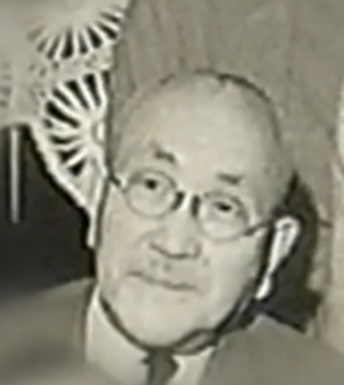
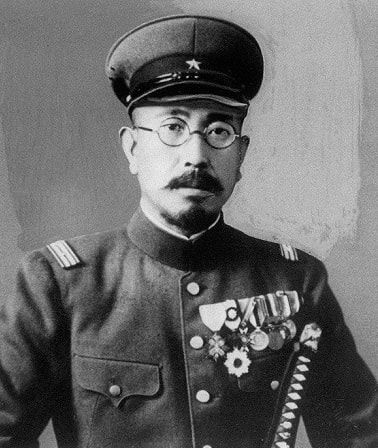
He was the commander of Unit 731, a secret biological warfare research facility hidden in the frozen plains of Manchuria.
Sanders had a choice. He could prosecute Ishii for crimes against humanity. Or he could offer him immunity in exchange for the data—the results of nearly a decade of human experimentation on prisoners who never had names, only numbers.
The choice was made. The data was handed over. And one of the largest atrocities of World War II began its long, quiet slide into historical obscurity.
This is not just a story about what happened inside Unit 731’s walls. It is a story about why so few people know about it. About how atrocities committed in the name of science and empire were erased from collective memory through deliberate political calculation. And about how the Cold War’s opening moves determined which war crimes would be prosecuted, and which would be purchased, catalogued, and concealed.
Unit 731 was not a minor footnote. It was a sprawling network of facilities employing over 3,000 personnel across Manchuria and China. It killed an estimated 200,000 to 500,000 people through biological warfare attacks alone. It conducted systematic human experimentation on at least 3,000 prisoners within its facilities—men, women, and children subjected to vivisection without anesthesia, deliberate infection with plague and syphilis, frostbite testing, and weapons trials using human subjects as living test objects.
And yet, when most people think of World War II atrocities, they think of the Holocaust. They think of Auschwitz, of Dachau, of the Tokyo Trials’ condemned generals. They do not think of a facility in Harbin, Manchuria, where prisoners were called “logs” (丸太,maruta) because the official cover story was that the compound was a lumber mill.
Why? How does an atrocity of this magnitude become—seventy years later—a historical footnote, mentioned in passing if at all?
The answer lies not in the absence of evidence, but in its deliberate suppression. Not in ignorance, but in calculation. This is the story of Unit 731, and the silence that followed.
I. The Architecture of Atrocity: What Unit 731 Was
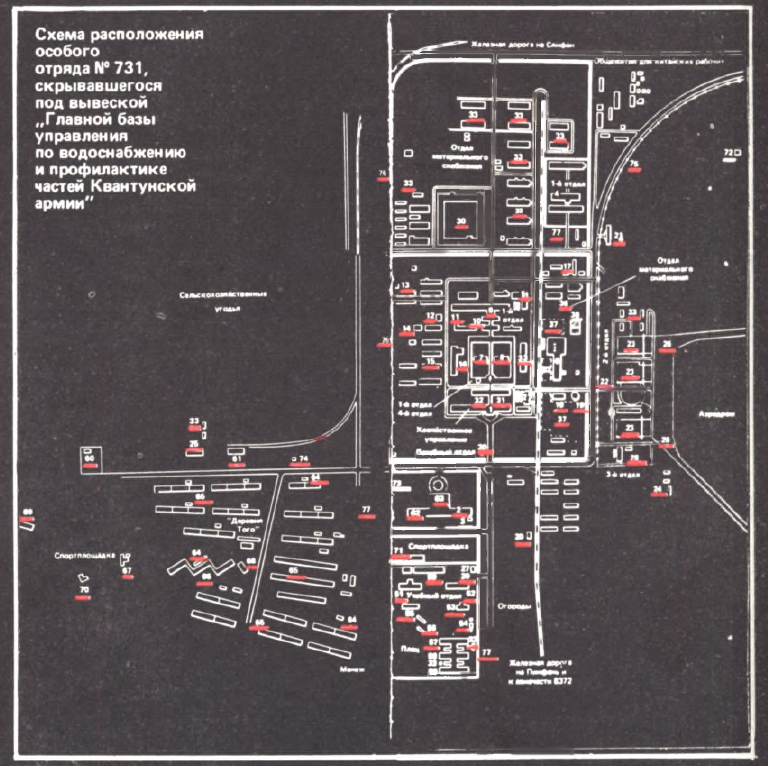
Unit 731 was not a single facility. It was a network—a system of research centers, production facilities, and field test sites stretching across Japanese-occupied Asia. At its heart was the main compound in Pingfang, 24 kilometers south of Harbin in what was then Manchukuo, Japan’s puppet state in Manchuria.
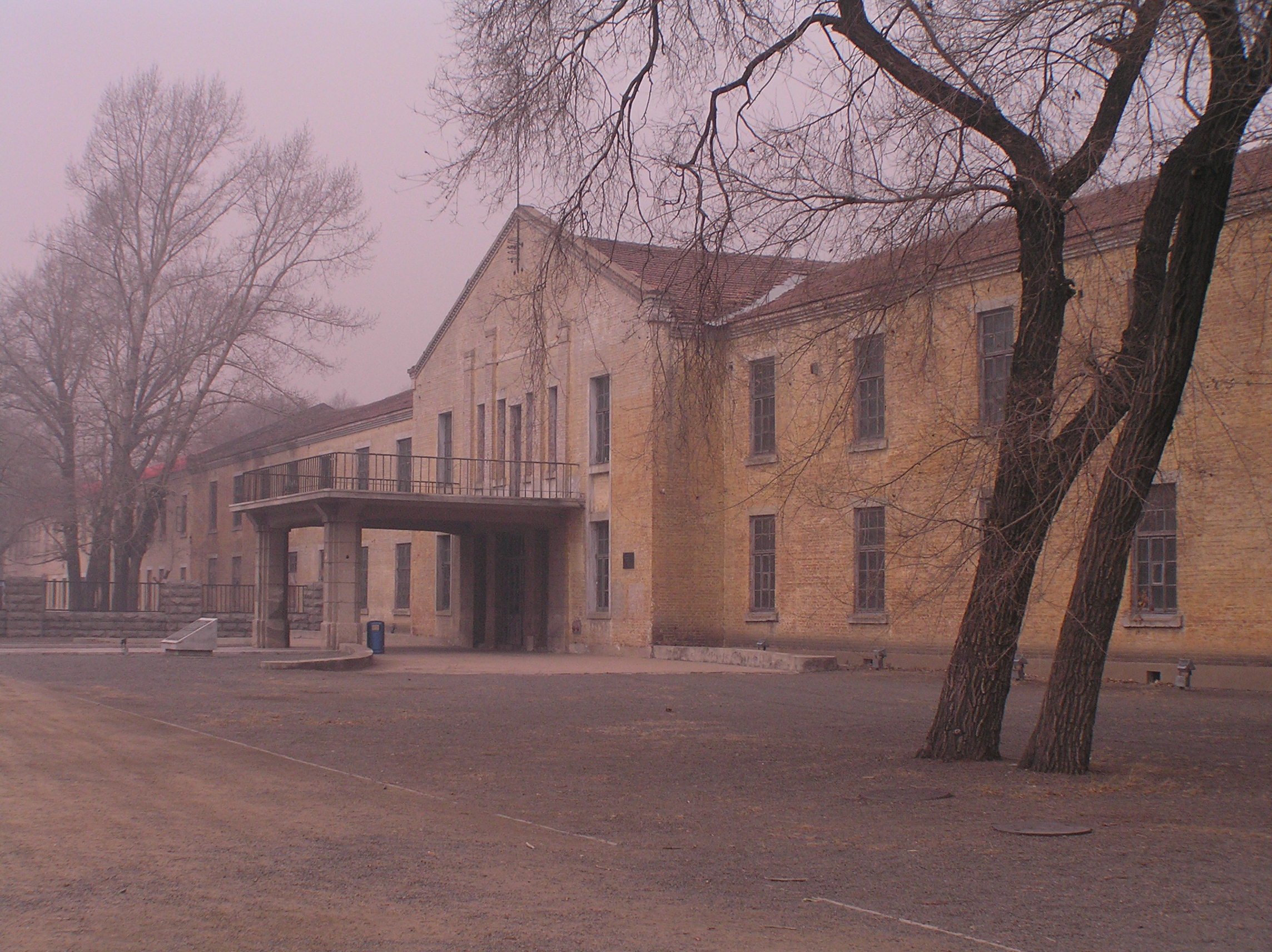 The Unit 731 facility in Harbin, Manchuria. The complex covered over 6 square kilometers and employed more than 3,000 personnel.
The Physical Plant
The Harbin complex was enormous. It covered approximately 6 square kilometers and included over 150 buildings. There were barracks for staff, administrative offices, research laboratories, production facilities for biological agents, animal breeding facilities for plague-infected fleas and mice, crematoria, and prison blocks where victims were held before experimentation.
The facility was designed with chilling efficiency. The research laboratories were arranged around the detention area, allowing researchers to observe prisoners while conducting their work. The prison blocks could hold up to 600 detainees at a time. There were specialized rooms for vivisection, for frostbite experiments, for hypobaric chamber testing that simulated high-altitude conditions. There were production lines for biological agents—plague, anthrax, cholera, typhoid, paratyphoid, dysentery, glanders.
The scale was industrial. Unit 731 could produce, at its peak, hundreds of kilograms of plague bacteria per month. It bred millions of fleas in specialized incubators. It maintained colonies of infected animals—mice, rats, rabbits—used both for research and as delivery mechanisms for biological weapons.
The Network
Unit 731 was the headquarters, but it was not alone. It was part of what became known as the “Ishii Network,” named after its founder and commander, Lieutenant General Shirō Ishii. The network included:
- Unit 100 in Changchun, focused on animal diseases and some human experimentation
- Unit 516 in Qiqihar, dedicated to chemical warfare research
- Unit 1855 in Beijing
- Unit Ei 1644 in Nanjing
- Unit 8604 in Guangzhou
- Unit 9420 in Singapore, with operations across Southeast Asia
At its height, the network employed over 10,000 personnel. It stretched from Manchuria in the north to Singapore in the south. It was not a rogue operation. It was authorized by imperial decree from Emperor Hirohito himself in 1936, integrated into the Kwantung Army’s command structure, and funded by the Japanese state.
The People
Shirō Ishii was not a monster in the conventional sense. He was a trained medical doctor, a graduate of Tokyo Imperial University’s medical school. He was charismatic, intelligent, and utterly convinced of the necessity of his work. He had traveled extensively in Europe and the United States in the 1920s, studying biological warfare programs. He returned to Japan convinced that biological weapons were the future of warfare—and that Japan had fallen behind.
Ishii’s conviction was shared by many in Japan’s military and medical establishment. Unit 731 was not staffed by outliers or sadists alone. It included some of Japan’s leading medical researchers, university professors, and military physicians. They came from prestigious institutions—Tokyo Imperial University, Kyoto Imperial University, the Army Medical College. They published their findings in peer-reviewed journals. They attended conferences. They were, in every conventional sense, respectable scientists.
Shirō Ishii, commander of Unit 731 from its founding in 1933 until Japan’s surrender in 1945. He was granted immunity by the United States in exchange for research data.
Among them was Masaji Kitano, Ishii’s deputy and successor, who took over command in 1942. Kitano was a specialist in pathology and had studied in Germany before the war. He was, by all accounts, a meticulous administrator who expanded Unit 731’s operations even as Japan’s military situation deteriorated.
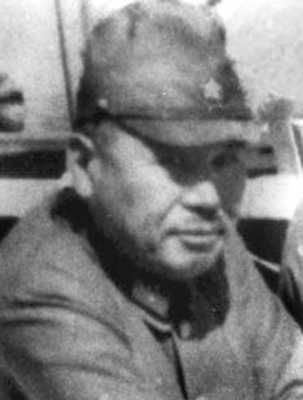
There were university professors who rotated through Unit 731 for research stints. There were young medical graduates who saw assignment to Unit 731 as a career opportunity. There were military officers who saw biological warfare as Japan’s asymmetric advantage against numerically superior enemies.
None of them were anonymous. Their names are on the records. Their faces are in photographs. And most of them—like Ishii himself—would never face trial for what they did.
II. The Experiments: What They Did
The historical record of Unit 731’s activities comes from multiple sources: survivor testimonies (rare, from staff rather than victims), postwar interrogations, the Khabarovsk Trial transcripts, declassified U.S. intelligence documents, and Japanese researchers’ own publications. The picture they paint is one of systematic dehumanization and industrialized cruelty.
Human Experimentation
Prisoners at Unit 731 were not prisoners of war in the conventional sense. They were maruta—”logs.” The term was not incidental. It reflected a deliberate process of dehumanization that made the subsequent experimentation psychologically possible for the researchers.
Victims were drawn from multiple populations: Chinese civilians and soldiers (the majority), Russian prisoners, Korean independence activists, Mongolian herders, and occasional Western POWs. They included children. They included pregnant women. They included entire families rounded up in security sweeps.
The experiments fell into several categories:
Vivisection. Prisoners were subjected to surgical procedures without anesthesia, often while still conscious. Organs were removed to study the effects of disease. Limbs were amputated and reattached to opposite sides of the body. Stomachs were surgically removed and esophagi reattached to intestines. These were not emergency procedures. They were deliberate experiments, conducted to observe physiological processes in real time.
One former Unit 731 member, speaking anonymously to The New York Times in 1995, described his first vivisection:
“The fellow knew that it was over for him, and so he didn’t struggle when they led him into the room and tied him down, but when I picked up the scalpel, that’s when he began screaming. I cut him open from the chest to the stomach, and he screamed terribly, and his face was all twisted in agony. He made this unimaginable sound, he was screaming so horribly. But then finally he stopped. This was all in a day’s work for the surgeons, but it really left an impression on me because it was my first time.”
The procedure he described was not unusual. Ken Yuasa, a Japanese Army surgeon, estimated that at least 1,000 Japanese medical personnel were involved in vivisection practices across China during the war. He stated plainly that such procedures were “routine.”
Biological Weapons Testing. Prisoners were deliberately infected with plague, cholera, anthrax, typhoid, and other pathogens to study disease progression and test potential treatments. The infections were not therapeutic. They were fatal by design. Some prisoners were injected with diseases disguised as vaccinations. Others were exposed through aerosol dispersal, contaminated food and water, or infected fleas.
Frostbite Testing. Limbs were exposed to freezing conditions to study frostbite and test treatments. Prisoners’ arms and legs were submerged in freezing water, left exposed in subzero temperatures, or subjected to controlled frostbite followed by various “treatments.” The research was ostensibly for the benefit of Japanese soldiers fighting in northern China and Manchuria, but the methods were indiscriminately lethal.
Weapons Testing. Prisoners were tied to stakes at various distances and used as human targets for testing biological bombs, chemical weapons, and conventional explosives. Some were placed in low-pressure chambers to simulate high-altitude conditions, observing how long they could survive before suffocating.
Other Experiments. Prisoners were subjected to blood transfusions with animal blood, forced consumption of seawater to test survivability, exposure to extreme heat and radiation, and deliberate malnutrition studies. Women were impregnated and then vivisected to study fetal development under various conditions.
Field Testing and Biological Warfare
The experiments inside Unit 731’s facilities were only part of the story. The facility’s ultimate purpose was the development and deployment of biological weapons—and those weapons were used, repeatedly, against Chinese civilian and military targets.
Unit 731 developed multiple delivery systems:
-
Infected Fleas. The most notorious was the “plague flea” bomb. Unit 731 bred millions of plague-infected fleas in specialized incubators. These fleas were then loaded into ceramic bombs designed to break open at low altitude, releasing the fleas to infect human populations below.
-
Contaminated Supplies. Food, water, and clothing were deliberately contaminated with pathogens and distributed to civilian populations or left in areas where they would be found.
-
Aerial Dissemination. Aircraft dropped bombs containing biological agents over cities and villages. Some were conventional bombs modified to disperse pathogens. Others were specialized containers designed to release infected insects or contaminated materials.
The results were catastrophic. Historical epidemiological studies have linked Unit 731’s activities to multiple plague outbreaks in China during the war:
- Changde, 1941. Unit 731 aircraft dropped plague-infected fleas over Changde, causing an epidemic that killed thousands.
- Ningbo, 1940. Similar attacks caused plague outbreaks in Ningbo and surrounding areas.
- Multiple locations, 1942-1945. Unit 731 personnel conducted field tests across occupied China, with documented outbreaks following their operations.
Estimates vary, but conservative assessments suggest that biological weapons developed and deployed by Unit 731 caused between 200,000 and 500,000 deaths. These were not combat casualties. They were civilians—farmers, merchants, children—killed by weapons designed to weaponize disease itself.
III. The Cover-Up: Immunity for Information
In August 1945, as Japan’s surrender became inevitable, Unit 731’s leadership took deliberate steps to destroy evidence. Buildings were demolished. Documents were burned. Prisoners still alive were killed. Staff were dispersed, instructed never to speak of their work.
But the physical destruction of evidence was only half the story. The other half was being written in Washington and Tokyo, in negotiations that would determine whether Unit 731’s personnel would face justice—or freedom.
The American Decision
Lieutenant Colonel Murray Sanders arrived in Japan in September 1945 as part of the Allied occupation forces. His assignment: investigate Japan’s biological warfare program. He quickly identified Unit 731 as the central organization. He also identified Shirō Ishii as the key to understanding what had happened.
Sanders made a recommendation that would shape the postwar fate of Unit 731’s personnel. He suggested that immunity be offered to Ishii and other senior researchers in exchange for their data. The reasoning was straightforward: the information was unique, potentially valuable for American biological warfare research, and unobtainable through any other means. Human experimentation on this scale was ethically unthinkable—and scientifically unprecedented.
The offer was made. Ishii accepted.
Over the following months, U.S. authorities conducted extensive interrogations of Unit 731 personnel. They collected thousands of pages of documentation, photographs, and research data. They confirmed the basic outlines of Unit 731’s activities. And they made a deliberate decision to conceal what they had learned.
The arrangement was formalized in 1946-1947. Unit 731 researchers would receive immunity from prosecution. Their data would be classified and incorporated into American biological warfare research. In return, they would provide complete information about their work. The U.S. government would pay stipends to former Unit 731 personnel—between 150,000 and 200,000 yen per person, a substantial sum at the time.
The arrangement was not public knowledge. It was not discussed at the Tokyo Trials. When evidence of biological warfare and human experimentation emerged, it was downplayed or suppressed. The Soviet Union, which had captured some Unit 731 personnel in Manchuria, would hold its own trials in 1949—but Western powers dismissed them as communist propaganda.
The Soviet Response
While the United States pursued immunity arrangements, the Soviet Union took a different approach. During their occupation of northern Manchuria, Soviet forces captured twelve Unit 731 personnel. In December 1949, these individuals were tried in Khabarovsk, in the Russian Far East.
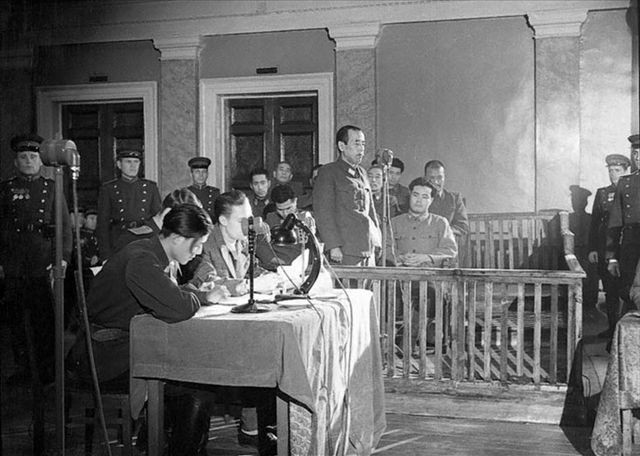 The Khabarovsk War Crimes Trials, December 1949. Twelve Unit 731 personnel were tried by Soviet authorities. All were convicted, receiving sentences ranging from 2 to 25 years in labor camps.
The Khabarovsk Trial produced extensive documentation. Eighteen volumes of interrogations and evidence were compiled. The defendants—including Major General Kiyoshi Kawashima, former chief of Unit 731’s medical services—provided detailed testimony about Unit 731’s activities, the chain of command, and the scope of operations.
All twelve defendants were convicted. Sentences ranged from two to twenty-five years in labor camps. But the trial was dismissed in the West as a communist show trial, despite the fact that the evidence presented was consistent with what American investigators had already gathered.
Historian Sheldon Harris, author of the definitive study Factories of Death, noted that the relatively light sentences suggested the Soviets had also struck a deal—information for leniency. The defendants were released by 1956 and repatriated to Japan.
The Logic of Concealment
Why did the United States make this decision? Several factors converged:
Cold War Priorities. By 1946-1947, the Soviet Union was emerging as America’s primary geopolitical rival. Biological warfare data was seen as strategically valuable. Prosecuting Japanese researchers would have meant public trials, international scrutiny, and potentially losing access to the data.
Scientific Value. Unit 731’s data was unique. No other country had conducted human experimentation on this scale. The opportunity to study the effects of plague, anthrax, frostbite, and other conditions on human subjects was, from a purely scientific perspective, unprecedented—and ethically tainted beyond redemption.
Political Expediency. Public trials would have been explosive. They would have required acknowledging the extent of Japanese atrocities in Asia—atrocities that had been downplayed during the war to maintain domestic support. They would have complicated the occupation of Japan, which increasingly focused on rebuilding Japan as a Cold War ally rather than punishing wartime crimes.
Reciprocal Silence. There is evidence that the U.S. also wanted to protect its own biological warfare research from scrutiny. Acknowledging and condemning Japanese practices might have opened uncomfortable questions about American research programs.
The result was a deliberate, calculated erasure. Unit 731 would not be prosecuted. Its crimes would not be central to the historical narrative. The data would be absorbed, classified, and used. And the perpetrators would walk free.
IV. The Perpetrators: Lives After Atrocity
What happened to the people who ran Unit 731?
Shirō Ishii returned to Japan after the war. He was never prosecuted. He lived quietly, reportedly providing occasional consulting to American intelligence. He died in 1959 at age 67, officially of throat cancer, though some accounts suggest he may have been assassinated by former colleagues who feared he might talk.
Masaji Kitano, Ishii’s successor, also escaped prosecution. He went on to work in the pharmaceutical industry, eventually becoming president of a major Japanese pharmaceutical company. He died in 1986, never having faced trial for his role in Unit 731’s operations.
Other Personnel. Many former Unit 731 members went on to successful careers in Japanese medicine, academia, and industry. Some became university professors. Some ran hospitals. Some worked in pharmaceutical companies. Their wartime service was not discussed. It was not on their resumes. It was a secret they carried—or a silence they accepted.
The immunity deal had an additional, unspoken component: former Unit 731 personnel were expected to maintain silence about their work. They were not to publish. They were not to discuss their experiences. The data belonged to the Americans now. The past was to remain buried.
This silence held, largely, until the 1980s. Then, a combination of factors began to break it open:
- Japanese journalists and historians began investigating wartime atrocities more openly
- Former Unit 731 members, aging and facing mortality, began to speak
- Declassified U.S. documents became available through Freedom of Information Act requests
- Chinese and Korean researchers published documentation previously inaccessible
But even today, seventy years later, the full extent of Unit 731’s activities remains debated. The Japanese government has never fully acknowledged the scope of the program. Official apologies have been limited and qualified. And in the West, Unit 731 remains what it has been since 1945: a historical footnote, mentioned in passing if at all, while the Holocaust occupies the central place in our collective memory of wartime atrocity.
V. The Memory Gap: Why We Don’t Know
Here is the central question: Why is Unit 731 not a household name?
The Holocaust killed six million Jews and millions of others. Unit 731 killed, by conservative estimates, 200,000 to 500,000 people through biological warfare alone, with thousands more killed in experiments. Both were systematic, state-sponsored atrocities. Both were enabled by ideologies of racial superiority. Both involved industrialized killing.
But one is central to our understanding of World War II. The other is barely mentioned.
This is not an accident. It is the result of deliberate political calculation.
The Geography of Memory
The Holocaust was committed by Germany, the defeated enemy. It was thoroughly documented by the perpetrators themselves (the Nazis were meticulous record-keepers) and by liberating Allied forces. It was central to the Nuremberg Trials. It fit neatly into the moral narrative of the war: good versus evil, democracy versus fascism.
Unit 731 was committed by Japan, also a defeated enemy. But the geopolitical context was different. The Tokyo Trials focused on conventional war crimes, not biological warfare. The United States had its own reasons to suppress evidence. And the Cold War transformed Japan from enemy to ally, making prosecution inconvenient.
Moreover, the victims of Unit 731 were primarily Chinese, Korean, and other Asian populations. Their suffering was, in the calculus of Western memory, less visible, less central, less real than the suffering of European Jews. This is not to diminish the Holocaust’s centrality—it is and must remain the paradigmatic case of modern genocide—but to acknowledge that Western historical memory has always been selective about Asian suffering.
The Politics of Forgetting
The American cover-up was not just about protecting data. It was about controlling narrative. If Unit 731’s crimes were fully acknowledged, several uncomfortable truths would have to be confronted:
- The United States had purchased immunity for perpetrators of crimes against humanity
- Biological warfare research continued after the war, using data that could only have been obtained through atrocities
- The moral clarity of “the good war” was compromised by pragmatic deals with war criminals
- The victims were Asian, and their lives were discounted in the geopolitical calculus
None of these truths served the postwar order. So Unit 731 was suppressed. Not denied—that would have been too obvious. Just… not discussed. Not taught. Not remembered.
The Historiographical Silence
Even in academic circles, Unit 731 received limited attention until the 1980s. Several factors contributed:
- Language barriers. Primary sources were in Japanese, Chinese, and Russian. Western historians often lacked the linguistic tools to access them.
- Classification. U.S. documents remained classified for decades.
- Cold War politics. Researching Japanese war crimes was politically sensitive in a U.S.-Japan alliance.
- Disciplinary boundaries. The history of science, military history, and East Asian studies were separate fields. Unit 731 sat at their intersection.
It took the work of journalists like Nicholas Kristof (whose 1995 New York Times investigation brought Unit 731 to Western attention), historians like Sheldon Harris and Yuki Tanaka, and survivor testimonies to piece together the full picture.
VI. The Historical Context: Atrocity in the Japanese Empire
Unit 731 did not emerge in a vacuum. It was the product of specific historical, ideological, and institutional forces within Imperial Japan.
Imperial Ideology
The Japanese Empire was built on ideologies of racial and cultural superiority. The concept of Yamato-damashii (Japanese spirit) positioned the Japanese as inherently superior to other Asian peoples. Chinese, Koreans, and other colonized populations were viewed as inferior, expendable, less than fully human.
This ideology made atrocities possible. It is not that Japanese culture uniquely enabled cruelty—every nation has produced atrocities under specific conditions—but that the imperial ideology created a framework in which certain populations were deemed unworthy of moral consideration.
The Precedent of Chemical Warfare
Japan had experimented with chemical weapons during World War I and had signed the 1925 Geneva Protocol banning chemical and biological warfare. But like other signatories, Japan had not ratified the biological warfare provisions—and had no intention of abiding by them.
Chemical warfare research began in the 1920s. Unit 731 was its logical extension. The same ideological framework that enabled chemical weapons research enabled biological warfare. The same dehumanization of victims made both possible.
The Medical Establishment’s Role
One of the most disturbing aspects of Unit 731 is the involvement of Japan’s medical and scientific establishment. This was not a rogue operation. It was supported by leading universities, research institutions, and professional organizations.
Physicians who participated in Unit 731 did not see themselves as monsters. They saw themselves as scientists pursuing knowledge. The fact that the knowledge required killing human subjects was, in their calculus, a regrettable but necessary cost.
This is not unique to Japan. The same pattern appears in Nazi medical experiments, in American Tuskegee syphilis studies, in countless other cases where science has been divorced from ethics. But the scale of Unit 731—the industrial nature of the killing, the systematic approach to human experimentation—makes it a particularly stark example of what happens when science loses its moral compass.
VII. The Legacy: What Remains
Unit 731 ended in 1945, but its legacy persists in multiple forms.
Unaccountable Crimes
No Unit 731 personnel were prosecuted by Allied powers. The Khabarovsk defendants served time in Soviet labor camps but were released by 1956. Ishii, Kitano, and the leadership walked free.
This impunity sent a message: that certain crimes, if useful enough, would not be punished. That data obtained through atrocities would be valued over justice for victims. That the lives of Asian civilians were worth less than strategic advantage.
Continued Biological Warfare Research
The data from Unit 731 did not disappear. It was incorporated into American and Soviet biological warfare programs. The knowledge gained—about plague dispersal, anthrax weaponization, frostbite treatment—was used to develop more effective biological weapons.
The United States maintained an active biological warfare program until 1969, when President Nixon renounced biological weapons. The Soviet program continued much longer. China developed its own biological warfare capabilities. The knowledge from Unit 731 contributed to all of these programs.
Historical Memory and Denial
In Japan, Unit 731 remains controversial. Some Japanese historians and activists have worked to document and acknowledge the atrocities. But official government statements have been qualified and limited. Textbook controversies continue, with some Japanese textbooks minimizing or omitting discussion of wartime atrocities.
In China and Korea, Unit 731 is central to national memory of Japanese occupation. Museums and memorials exist at former Unit 731 sites. But these are largely unknown in the West.
Ethical Lessons
Unit 731 raises enduring ethical questions:
- What obligations do scientists have to ensure their work is not used for atrocities?
- How should societies balance the value of scientific knowledge against the means by which it was obtained?
- When is it acceptable to use data obtained through unethical means?
- How do we remember atrocities that were deliberately concealed?
These are not abstract questions. They apply to contemporary debates about AI ethics, genetic engineering, and dual-use research. Unit 731 is a case study in what happens when science is completely divorced from moral constraints.
VIII. Conclusion: The Price of Silence
Seventy years after Unit 731’s dissolution, the question remains: why does this history matter?
It matters because the victims deserve to be remembered. They were not statistics. They were individuals—farmers, students, children, parents—killed in the service of an ideology that deemed them unworthy of life. To forget them is to complete the dehumanization that Unit 731 began.
It matters because impunity has consequences. The decision to grant immunity to Unit 731’s perpetrators set a precedent: that certain knowledge is too valuable to be constrained by ethics, that certain crimes are too useful to be punished. This precedent echoes in contemporary debates about torture, surveillance, and military secrecy.
It matters because historical memory is political. What we choose to remember—and what we choose to forget—shapes our understanding of the present. Unit 731’s obscurity is not accidental. It is the result of deliberate choices by governments that prioritized strategic advantage over justice, data over dignity.
And it matters because the conditions that made Unit 731 possible have not disappeared. Dehumanization, ideological extremism, the separation of science from ethics—these are not historical artifacts. They are recurring patterns. Unit 731 is not just a story about what happened. It is a warning about what can happen again.
The silence around Unit 731 is not ignorance. It is a choice. And it is a choice we continue to make, every time we prioritize comfort over confrontation, every time we accept official narratives without questioning them, every time we allow the victims of yesterday’s atrocities to remain nameless.
The least we can do is remember their names. Even if the only names we know are the ones they were never allowed to speak: the logs of Unit 731, the men, women, and children who died so that others could call themselves scientists.
Sources and Further Reading
Primary Sources:
- Materials on the Trial of Former Servicemen of the Japanese Army Charged with Manufacturing and Employing Bacteriological Weapons (Foreign Languages Publishing House, 1950)
- U.S. National Archives, Record Group 331: Allied Operational and Occupation Headquarters, World War II
- Declassified U.S. intelligence reports on Unit 731 (available via National Archives)
Secondary Sources:
- Harris, Sheldon H. Factories of Death: Japanese Biological Warfare, 1932-1945, and the American Cover-up (Routledge, 2nd ed. 2002)
- Gold, Hal. Unit 731: Testimony (Charles E. Tuttle, 1996)
- Barenblatt, Daniel. A Plague Upon Humanity: The Secret Genocide of Axis Japan’s Germ Warfare Operation (HarperCollins, 2004)
- Kristof, Nicholas D. “Unmasking Horror—A Special Report: Japan Confronting Gruesome War Atrocity.” The New York Times, March 17, 1995
- Nie, Jing-Bao. “The West’s Dismissal of the Khabarovsk Trial as ‘Communist Propaganda’: Ideology, Evidence and International Bioethics.” Journal of Bioethical Inquiry 1, no. 1 (2004): 32-42
- Williams, Peter, and Wallace, David. Unit 731: Japan’s Secret Biological Warfare in World War II (Free Press, 1989)
- Yuma, Totani. Justice in Asia and the Pacific Region, 1945-1952: Allied War Crimes Prosecutions (Cambridge University Press, 2015)
Documentary Films:
- Unit 731: Did the Emperor Know? (BBC, 2002)
- The Truth About Unit 731 (Al Jazeera, 2015)
Museums and Memorials:
- Unit 731 Museum, Harbin, China
- Museum of the War of Chinese People’s Resistance Against Japanese Aggression, Beijing
- Unit 731 Exhibition Hall, Tokyo (private museum)
End.
“Evidence introduced during the hearings was based on eighteen volumes of interrogations and documentary material gathered in investigations over the previous four years. Some of the volumes included more than four hundred pages of depositions…. Unlike the Moscow Show Trials of the 1930s, the Japanese confessions made in the Khabarovsk trial were based on fact and not the fantasy of their handlers.”
— Historian Sheldon Harris, Factories of Death
“It is a bitter experience for me to be informed now that centrally ordered Japanese war criminality of the most disgusting kind was kept secret from the court by the U.S. government.”
— Judge Bert Röling, Tokyo Tribunal, 1981