Introduction: The Man Who Never Left the War
In November 2001, as the United States Air Force C-17 Globemaster III headed for Afghanistan, a 71-year-old man sat aboard carrying 110 pounds of equipment, weapons, grenades, and communications gear. He was heading into one of the most dangerous environments on earth—mountainous terrain where temperatures plunged to -5 degrees, hunting the most wanted man in the world.
Most men his age were retired, enjoying grandchildren and quiet evenings. Billy Waugh was just getting started.
Waugh’s career spanned more than fifty years—through Korea, Vietnam, and Afghanistan, across sixty-four countries, in operations both declared and denied. He conducted the first combat HALO (High Altitude, Low Opening) parachute jump in military history. He tracked Osama bin Laden through the streets of Khartoum. He was shot in the head and left for dead in a Vietnamese rice paddy. He helped capture Carlos the Jackal. And at Tora Bora, he came within thirty meters of bin Laden—close enough, as he later said, “to have killed him with a rock.”
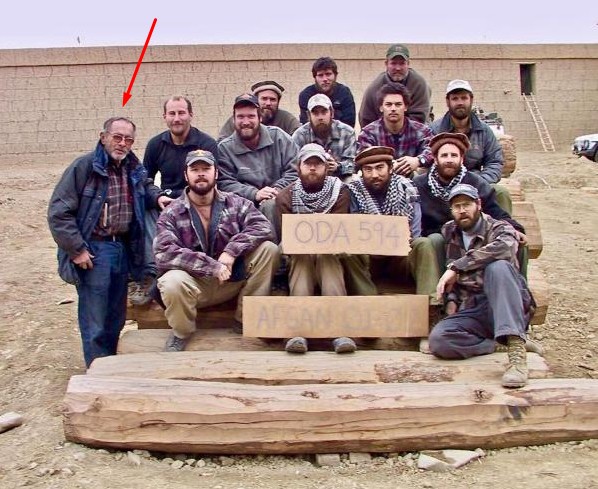 ODA 594 team in Afghanistan, 2001. Billy Waugh (left, indicated by arrow in original) with the team. At 71, Waugh was the oldest operator on the ground during Operation Enduring Freedom.
His story is not just one man’s biography. It is the story of American special operations itself—from the birth of the Green Berets in the 1950s through the Global War on Terror. It is a story of patriotism, sacrifice, and the moral ambiguities that come with fighting in the shadows. And it raises uncomfortable questions about the methods used in America’s secret wars, and the toll they take on those who wage them.
Billy Waugh died on April 4, 2023, at the age of 93. He was, by any measure, a legend. But legends are complicated. And Waugh’s legacy is no exception.
I. The Making of a Warrior: Early Years and Korea
William Dawson Waugh was born on December 1, 1929, in Bastrop, Texas. His childhood was modest—his mother was a college-educated woman who worked constantly to support the family; his father, by Waugh’s own account, was “not-so-focused.” Billy worked from the age of eight, pumping gas, stacking groceries, popping popcorn at the local theater, lifeguarding at the state park.
Military men were his heroes. The story goes that in 1945, at age 15, Waugh met two local Marines who had just returned from fighting in the South Pacific during World War II. Something about them—their bearing, their stories, their sense of purpose—ignited a fire in the young Texan. He decided then and there to enlist.
Somehow, Waugh got the idea that the enlistment age in California was 16. So he hitchhiked from Texas to Los Angeles, hoping to slip past the recruiters. He made it as far as Las Cruces, New Mexico, where a police officer stopped him for having no identification and refusing to give his name. He was jailed, then sent home to his mother.
The attempt failed, but the ambition did not fade. Waugh threw himself into high school, graduating with a 4.0 GPA, waiting for his chance. In 1948, six months after his 18th birthday, he enlisted in the U.S. Army.
He attended Airborne School in December 1948, becoming a paratrooper with the 82nd Airborne at Fort Bragg, North Carolina. But Waugh wanted combat. In 1951, he re-enlisted specifically to get an assignment with the 187th Airborne Regimental Combat Team (the “Rakkasans”), which was then fighting in Korea.
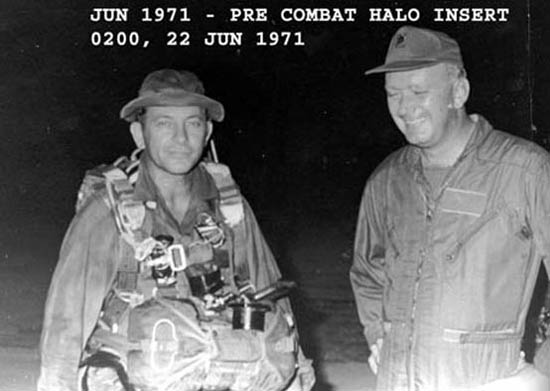 Billy Waugh in 1971, during his MACV-SOG era. This was around the time he conducted the first combat HALO jumps in military history.
The Korean War taught Waugh what combat was about. “I learned what made men tick,” he later wrote. “I learned what combat was all about.” But it was after Korea, while stationed in Germany, that Waugh’s career took its decisive turn.
Riding a train in 1954, Waugh met a couple of NCOs from the 10th Special Forces Group. They explained the opportunities that existed for NCOs in the unit—what Special Forces was all about. Waugh volunteered immediately. He entered the training pipeline and earned his Green Beret in 1954, joining the 10th Special Forces Group in Bad Tölz, West Germany.
He had found his home.
II. Vietnam: The First HALO Jump and the Battle of Bong Son
Waugh’s first deployment to Vietnam came in 1961, part of the early U.S. advisory mission codenamed White Star. He worked alongside Civilian Irregular Defense Groups (CIDGs)—tribesmen and local fighters trained by Special Forces to combat Viet Cong insurgents. He would return to Vietnam multiple times over the next decade, but nothing prepared him for what happened in June 1965.
The Battle of Bong Son
On June 18, 1965, Waugh was the team sergeant for A Team, 5th Special Forces Group. Intelligence had reported a few hundred North Vietnamese Army (NVA) troops in the target area near Bong Son, Binh Dinh Province. The estimate was catastrophically wrong.
When Waugh and his team of 86 Vietnamese “mercenaries,” as he called them, raided the encampment after midnight, they discovered not hundreds but more than 4,000 NVA troops, including Chinese regulars. The engagement that followed was a slaughter.
Waugh’s ammunition ran low. He was struck in the knee by a Soviet-made RPK bullet. As he tried to crawl to cover, he was hit again—in the ankle and foot. Then came the worst wound: a bullet that sliced across the right side of his forehead.
“I don’t know for sure, but I believe the bullet ricocheted off the bamboo before striking me,” Waugh later recalled. “It sliced in and out of a two-inch section of my forehead, and it immediately started to bleed like an open faucet. It sounds like the punch line to a bad joke, but you know it’s a bad day when the best thing about it is getting shot in the head.”
Waugh went unconscious. The NVA stripped him of his clothing, gear, and Rolex watch, then left him for dead with the other casualties. He was rescued by his team leader, Captain Paris Davis, who dragged him to safety under fire. Davis would be awarded the Medal of Honor for his actions in 2023—58 years after the fact.
Waugh spent much of 1965 and 1966 recuperating at Walter Reed Army Hospital in Washington, D.C. He received a Silver Star and his sixth Purple Heart for the battle. But the wounds were severe—head, legs, ankle, foot—and most men would have retired.
Waugh returned to Vietnam in 1966.
MACV-SOG and the HALO Innovation
After his recovery, Waugh joined the Military Assistance Command, Vietnam—Studies and Observations Group (MACV-SOG), the most classified special operations unit of the Vietnam War. SOG conducted cross-border reconnaissance, prisoner snatches, and unconventional warfare against the NVA along the Ho Chi Minh Trail.
“There was no rest at SOG,” Waugh wrote in his 2019 book Surprise, Kill, Vanish. “Only war, recon, rescue, sleep.”
It was with SOG that Waugh pioneered one of special operations’ most enduring techniques: the combat HALO jump. HALO—High Altitude, Low Opening—is a parachuting method designed for rapid, undetected insertion into hostile territory. Jumpers exit aircraft at altitudes up to 30,000 feet, freefall to just above the ground, then open their parachutes and land silently.
In October 1970, Waugh’s team made a practice combat infiltration into NVA-owned War Zone D in South Vietnam—the first HALO jump in a combat zone. Waugh broke his right ankle on that jump (the eighth or ninth time he’d broken it) but completed the mission anyway.
The first actual combat HALO operation against the Ho Chi Minh Trail was led by SFC Melvin Hill in November 1970. Waugh led the third combat HALO insertion on June 22, 1971—the last combat special reconnaissance parachute insertion by American Special Forces HALO parachutists into NVA-occupied territory.
“We HALO’d in from 19,000 feet, into the jungle, at 0300 in the rain,” Waugh recalled. “All perfect for the HALO infiltration.”
The mission was not without cost. One of Waugh’s four-man team, Sergeant Madison Strohlein, was killed in action. The other three continued the mission, having completely surprised the NVA in the area.
Waugh retired from active military duty on February 1, 1972, at the rank of Sergeant Major (E-9). His awards included the Silver Star, four Bronze Stars, four Army Commendation Medals, 14 Army Air Medals, and eight Purple Hearts. He had served 24 years in the Army, much of it in combat.
Most men would have walked away. Waugh spent the next five years as a letter carrier for the U.S. Postal Service.
“After nearly twenty years in SF, much of it in combat, sorting mail doesn’t scratch the same itch,” he wrote. “Not even close.”
III. The CIA Years: Libya, Sudan, and the Hunt for Terrorists
In 1977, Waugh accepted an offer from Edwin Wilson, a former CIA officer, to work in Libya training that country’s special forces. The assignment was complicated: Wilson was not acting with official CIA authorization, and Waugh might have faced prosecution had he not simultaneously been approached by the actual CIA to work as an asset while in Libya.
Waugh chose the latter. While ostensibly training Libyan forces, he photographed military installations, surface-to-air missile sites, and personnel, providing the CIA with intelligence on Soviet military assistance to Libya. The arrangement likely protected him from prosecution when Wilson was later indicted and convicted in 1979 for illegally selling weapons to Libya.
Waugh’s CIA career spanned nearly three decades. He worked in the Marshall Islands tracking Soviet small boat teams attempting to steal U.S. missile technology. He conducted surveillance operations across Africa, the Middle East, and Southeast Asia. And in the 1990s, he became one of the central figures in the hunt for two of the world’s most wanted terrorists: Carlos the Jackal and Osama bin Laden.
Khartoum: The Jackal and the Saudi
In the early 1990s, Waugh was stationed in Khartoum, Sudan, working alongside Cofer Black (later the CIA’s Counterterrorist Center chief) on surveillance operations. His targets: Ilich Ramírez Sánchez, known as Carlos the Jackal, and Osama bin Laden.
Waugh’s cover was that of a madman—a white American jogger running through the streets of Khartoum at midnight in desert heat and pollution. “I used jogging as a cover,” Waugh explained. “If you imagine the majority of the population of Khartoum are African, then I stood out! I used to go jogging between midnight and 4:00 AM every night to keep an eye on him.”
He established observation posts, photographed targets, and gathered intelligence. In January 1994, Waugh spotted a bodyguard of Carlos the Jackal. He followed the bodyguard, identified the vehicle, and on February 8, 1994, photographed Carlos on the streets of Khartoum—the first confirmed photos of the terrorist in years.
Waugh and his team found the apartment where Carlos lived and established a four-month observation post 100 meters away. They took over 2,000 photos of Carlos, his wife, his bodyguards, and visitors. The information was passed to the French DST (Direction de la Surveillance du Territoire).
On August 13, 1994, Carlos was drugged during minor surgery, bundled up, and handed to the French DST. He was sentenced to life in prison, where he remains today.
“He is in a high-security prison in France for life thanks to Billy,” said Enrique Prado, retired CIA chief of operations for the Counterterrorist Center.
Bin Laden: The One That Got Away
But there was another target in Khartoum. In early 1992, Waugh was tasked with surveilling Osama bin Laden, who was then living in Sudan after being expelled from Saudi Arabia.
Waugh placed bin Laden under surveillance for nearly a year. He saw him every day as bin Laden drove to support sites across the street from Waugh’s clandestine position.
“I could have waxed UBL with not one problem,” Waugh said later, using the acronym for Usama bin Laden. But authorization for a kill mission never came.
“I was within 30 meters of him,” Waugh recalled. “I could have killed him with a rock.”
The proposal Waugh favored was straightforward: a two-car team would smash into bin Laden’s vehicle, and CIA operators in the second car would shoot bin Laden and his driver with suppressed MP-5 submachine guns. But the CIA would not authorize the mission. Bin Laden would later mastermind the 1998 embassy bombings in East Africa, the 2000 attack on the USS Cole, and the September 11, 2001 attacks that killed nearly 3,000 people.
Waugh would get another chance. But it would take the horror of 9/11 to make that possible.
IV. Afghanistan: The Last War at Age 71
On September 11, 2001, Waugh was 71 years old. Most men would have retired decades earlier. Waugh contacted his former CIA colleagues and volunteered for deployment to Afghanistan.
He was assigned to ODA 594—Operational Detachment Alpha 594—a combined CIA and Special Forces unit tasked with hunting Taliban and al-Qaeda fighters. In November 2001, Waugh deployed to Afghanistan as part of the Northern Alliance Liaison Team led by Gary Schroen.
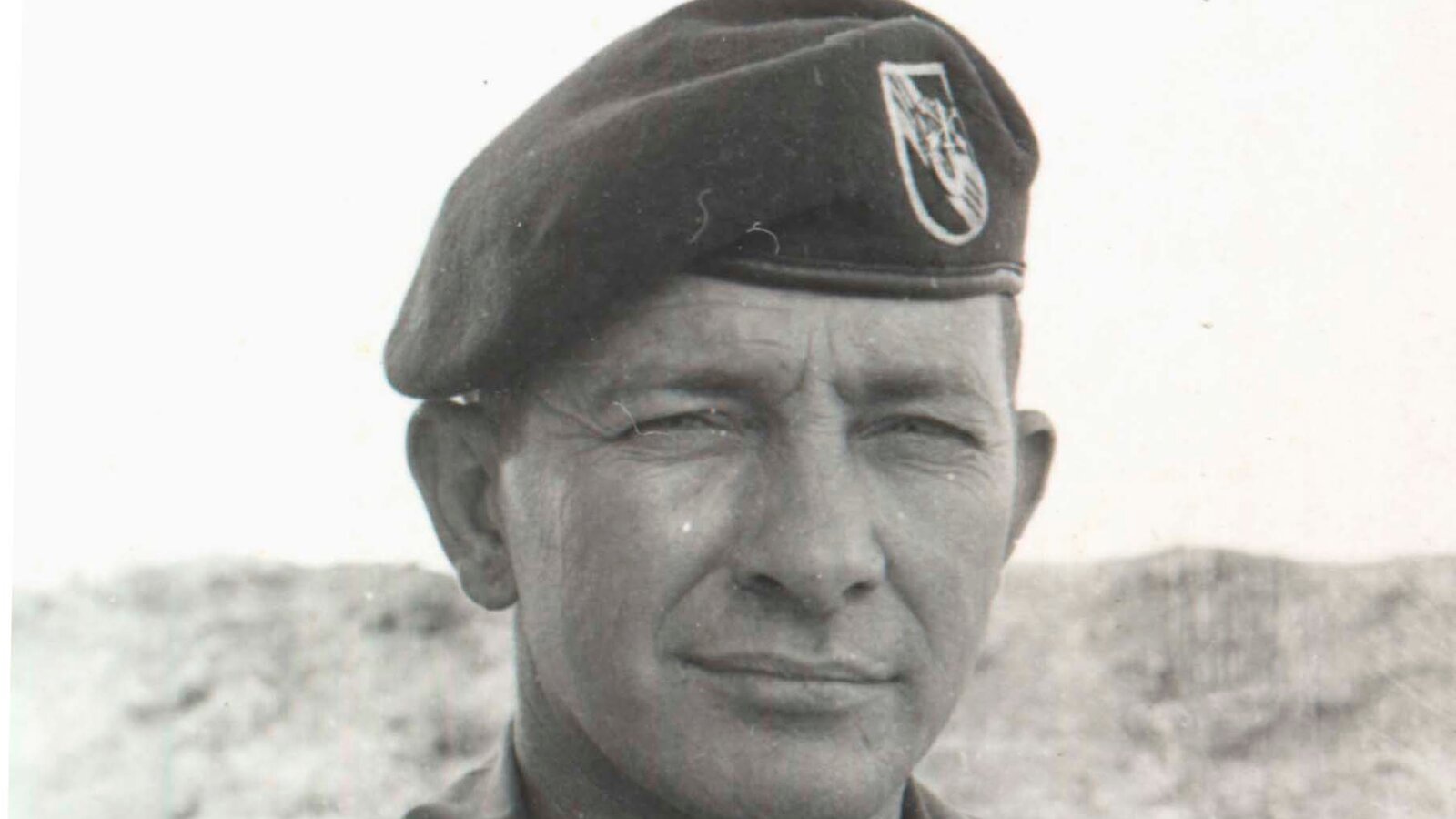 Billy Waugh in his Green Beret. Waugh served for over 50 years in Special Forces and the CIA, from Korea to Afghanistan.
The deployment was brutal. Each operator carried 110 pounds of equipment through mountainous terrain in freezing temperatures. They kicked in doors, conducted raids, and gathered intelligence. Waugh was at the Battle of Tora Bora, where bin Laden narrowly escaped capture.
“Two weeks earlier, when the United States Air Force C-17 Globemaster III headed for Afghanistan lifted off with me aboard, our country was officially embarking on its War on Terror,” Waugh wrote. “I, however, had been at war against terror for quite some time. To me, Operation Enduring Freedom was a natural extension of the work I’d been conducting for close to fifty years.”
Waugh spent two months in Afghanistan before rotating out. He would continue working as a contractor and mentor to special operations personnel for years afterward. But Afghanistan marked his final operational deployment.
V. Controversies: The Shadow Side of Shadow Wars
Billy Waugh’s career was not without controversy. The methods he used—and the broader programs he served—are subjects of intense ethical and legal debate.
The Edwin Wilson Connection
Waugh’s initial CIA work in Libya came through Edwin Wilson, a former CIA officer who was later convicted in 1979 for illegally selling weapons to Libya. Wilson’s convictions were overturned in 2003 after it was revealed that the Department of Justice had relied on a false affidavit during prosecution. Wilson was freed the following year.
Waugh’s involvement with Wilson raised questions about the extent to which the CIA was aware of his activities—and whether Waugh was acting as an official asset or a rogue operator. The official line is that Waugh was simultaneously approached by the CIA to work as an asset while in Libya, which likely protected him from prosecution. But the details remain murky.
Enhanced Interrogation and Torture Allegations
More seriously, Waugh’s career intersected with the CIA’s post-9/11 “enhanced interrogation” program. While there is no direct evidence that Waugh personally conducted torture, his work as a CIA contractor placed him in the same ecosystem as the program’s architects and operators.
The CIA’s use of waterboarding and other coercive techniques on detainees like Khalid Sheikh Mohammed and Abu Zubaydah has been widely condemned as torture. According to declassified documents, Abu Zubaydah was waterboarded 83 times. Khalid Sheikh Mohammed and Abu Zubaydah were waterboarded a combined 266 times.
Waugh never publicly commented on these techniques. But his long association with the CIA’s Special Activities Division—and his work in the same counterterrorism circles as Cofer Black, who later became the CIA’s Counterterrorist Center director—raises questions about what he knew, and what he may have participated in.
In 2008, CIA Director Michael Hayden confirmed that the CIA had used waterboarding “on only three detainees” since September 11, 2001: Khalid Sheikh Mohammed, Abu Zubaydah, and Abd al-Rahim al-Nashiri. All three were in CIA custody during the period when Waugh was working as a contractor in the War on Terror.
The broader question is whether Waugh’s legendary status—as a patriot, a warrior, a man who served his country for fifty years—overshadows the moral complexities of that service. Waugh himself seemed to embrace this ambiguity. “My craving is, and always has been, to be involved in actions conducted to ensure America remains strong, safe, and free of those who have its destruction as their goal,” he said.
But at what cost? And who decides which actions are justified in the name of national security?
VI. Legacy: The Godfather’s Shadow
Billy Waugh’s legacy is secure as one of the most decorated and accomplished special operators in American history. He served in Korea, Vietnam, and Afghanistan. He conducted the first combat HALO jump. He helped capture Carlos the Jackal. He hunted Osama bin Laden across three continents. He inspired generations of special operations personnel.
But his story also raises uncomfortable questions about the nature of American power in the post-World War II era. About the men who carry out the nation’s shadow wars, often without public accountability. About the moral compromises made in the name of security. And about the personal toll of a life spent in the shadows.
Waugh never fully retired. He worked as a mentor, lecturer, and contractor, passing on his knowledge to younger operators. He published two books: Hunting the Jackal (2005), his autobiography, and contributions to Surprise, Kill, Vanish (2019), Annie Jacobsen’s history of CIA paramilitary operations.
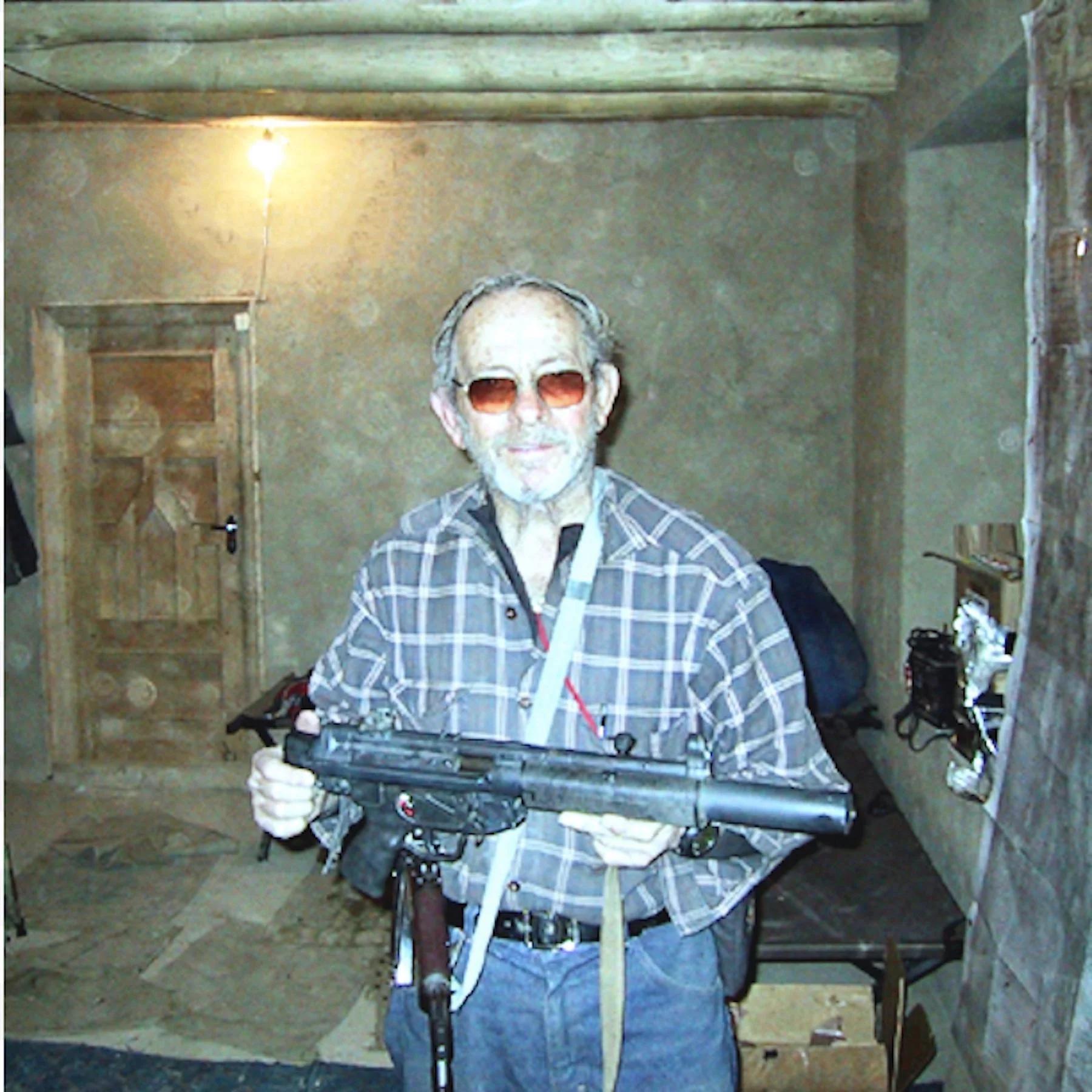 Billy Waugh in his later years. The legendary operator died on April 4, 2023, at the age of 93. “You’ve been in my life for so long I’ll work at that job until I join you.”
He died on April 4, 2023, at the age of 93. His passing was confirmed by 1st Special Forces Command, which called him a “true warrior” who had “inspired a generation of special operations.”
In his autobiography, Waugh dedicated his life’s work to fallen comrades: “You’ve been in my life for so long I’ll work at that job until I join you.”
He kept that promise. For fifty years, Billy Waugh was at war. And when the wars ended, he found new ones.
Sources and Further Reading
Primary Sources:
- Waugh, Billy, with Marvin J. Wolf. Hunting the Jackal: A Special Forces and CIA Soldier’s Fifty Years on the Frontlines of the War Against Terror. Wiley, 2005.
- Waugh, Billy. Contributions to Surprise, Kill, Vanish: The Secret History of CIA Paramilitary Armies, Operators, and Assassins by Annie Jacobsen. Little, Brown and Company, 2019.
- U.S. Army Special Operations Command. “Billy Waugh Biography.” Special Warfare Center and School, 2011.
Secondary Sources:
- HistoryNet. “Billy Waugh, Famed Special Forces Warrior and CIA Legend, Dies At 93.” April 10, 2023.
- Military.com. “From Korea to Afghanistan: Special Forces Legend Billy Waugh’s Amazing Career Spanned Five Decades.” April 6, 2023.
- Military Times. “The Legend of Billy Waugh: Special Forces Soldier, CIA Contractor.” June 30, 2023.
- Task & Purpose. “Billy Waugh, Special Forces Legend, Passes Away at 93.” April 4, 2023.
- SOFREP. “Billy Waugh: The Legendary 71-Year-Old Osama bin Laden Hunter.” August 30, 2021.
- War History Online. “Billy Waugh Couldn’t Walk Away From the US Military, Not Even After Being Shot In the Head.” October 19, 2022.
- Dangerous Magazine. “Soldier in the Shadows: Billy Waugh Turns 83.” December 1, 2012.
On Controversies:
- Mayer, Jane. The Dark Side: The Inside Story of How the War on Terror Turned into a War on American Ideals. Doubleday, 2008.
- U.S. Senate Select Committee on Intelligence. “Committee Study of the Central Intelligence Agency’s Detention and Interrogation Program.” 2014.
- JURIST. “CIA Chief Confirms Use of Waterboarding on 3 Terror Detainees.” February 6, 2008.
Documentary Films:
- The Secret History of the CIA (various documentaries featuring Waugh’s operations)
- Tora Bora: The True Story (History Channel)
End.
“There was no rest at SOG, only war, recon, rescue, sleep.”
— Billy Waugh, Surprise, Kill, Vanish
“I had been at war against terror for quite some time. To me, Operation Enduring Freedom was a natural extension of the work I’d been conducting for close to fifty years.”
— Billy Waugh, on deploying to Afghanistan at age 71
“I was within 30 meters of him. I could have killed him with a rock.”
— Billy Waugh, on coming close to killing Osama bin Laden in Sudan
“You’ve been in my life for so long I’ll work at that job until I join you.”
— Billy Waugh’s dedication to fallen Special Forces comrades